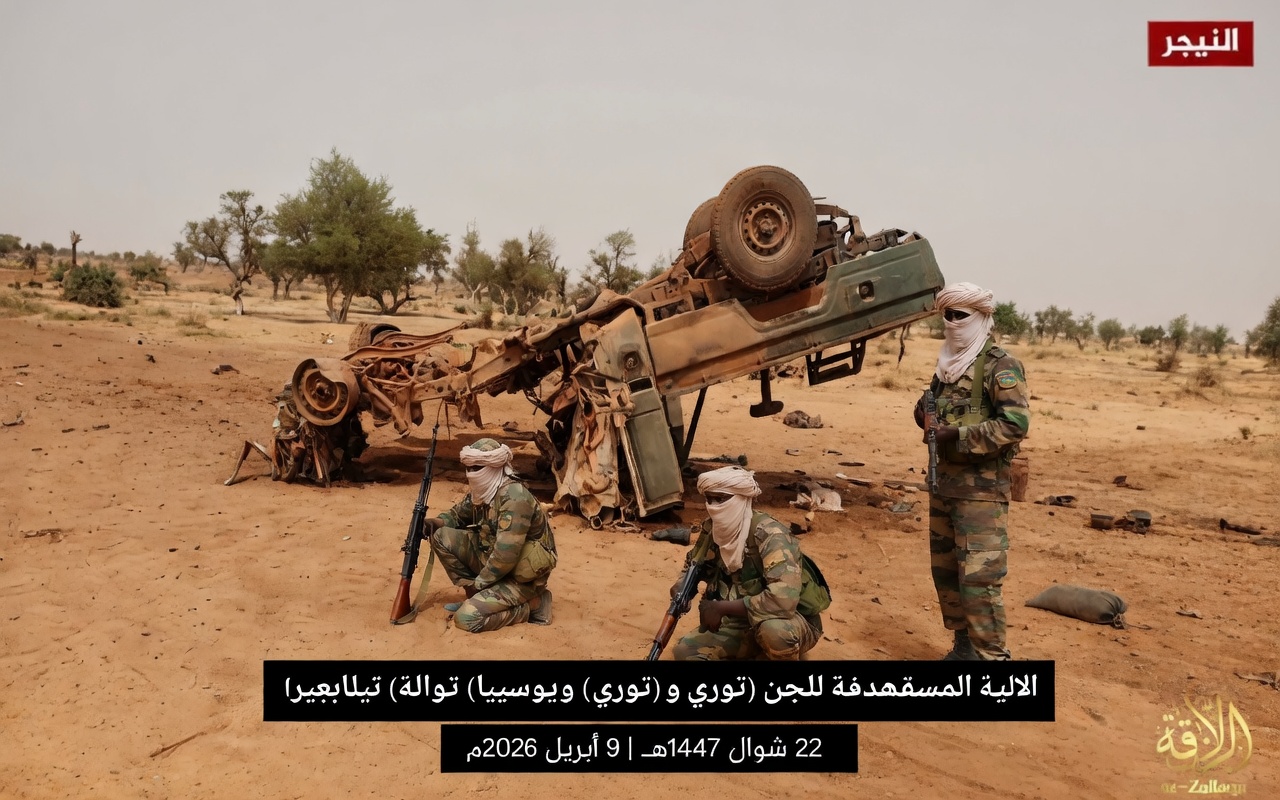
The Group for the Support of Islam and Muslims (JNIM), the primary armed wing of Al-Qaeda in the Sahel, has claimed responsibility for two coordinated assaults in western Niger that resulted in multiple casualties and infrastructure damage.
In a statement released via its usual propaganda channels, the JNIM detailed the operations, which targeted security forces along two critical routes. The attacks highlight the persistent security challenges in a region already grappling with instability.
two deadly attacks strike key nigerien routes
explosive device targets patrol convoy near touré
The first incident involved the detonation of an improvised explosive device (IED) along the Touré road. While the group did not immediately disclose the exact number of casualties, it confirmed that the blast was aimed at a military patrol convoy. Such roadside bombs have become a frequent and deadly tactic used by insurgents to disrupt military movements and hinder civilian travel in remote areas.
lethal ambush claims three military lives in say
The second attack unfolded near the town of Say, where the JNIM executed a well-planned ambush that left three soldiers dead. The area, close to the W National Park—a region that spans borders with Burkina Faso and Benin—has long been a hotspot for armed groups seeking to exploit porous borders and ungoverned spaces. The park’s dense forests provide cover for insurgents, enabling surprise attacks on security personnel and civilians alike.
jnim’s strategy: disrupting security and undermining stability
The JNIM’s dual assault underscores its harassment and attrition strategy, which includes:
- IEDs and roadside bombs to disrupt supply chains and limit troop mobility.
- Mobile ambushes targeting security forces to exhaust and demoralize them.
- Symbolic control over rural areas to challenge government authority.
These tactics are designed to stretch the military thin while maintaining a visible presence in zones perceived as vulnerable to government influence.
government response and ongoing risks
As of now, Niger’s Ministry of Defense has not issued an official statement to verify the JNIM’s claims. However, the government continues to bolster security measures, particularly along the right bank of the Niger River, where insurgent activity has been concentrated.
Civilian travelers and logistics operators are urged to exercise extreme caution when using roads in the affected regions. The threat of further attacks remains high, posing risks to both local communities and regional stability.
With the region’s security landscape remaining volatile, authorities are working to restore confidence while countering the evolving tactics of jihadist groups.