Gabon’s parliament asserts its role in shaping the new republic
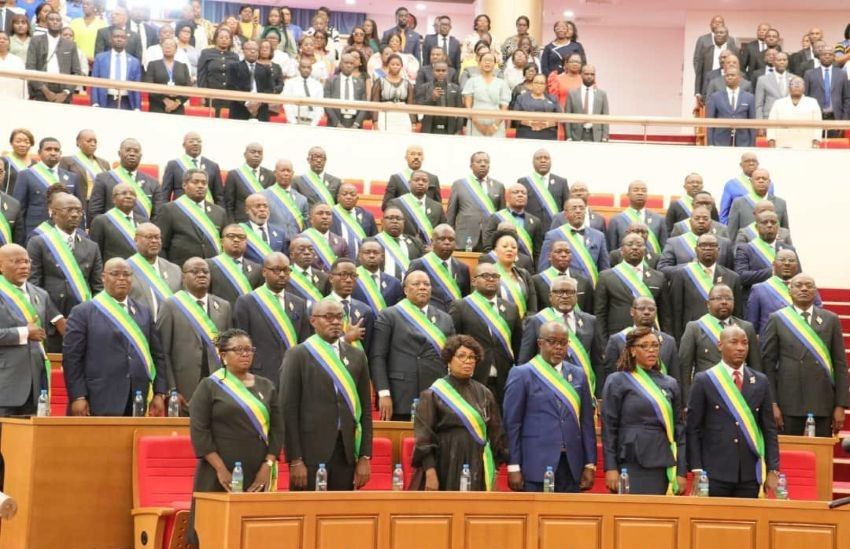
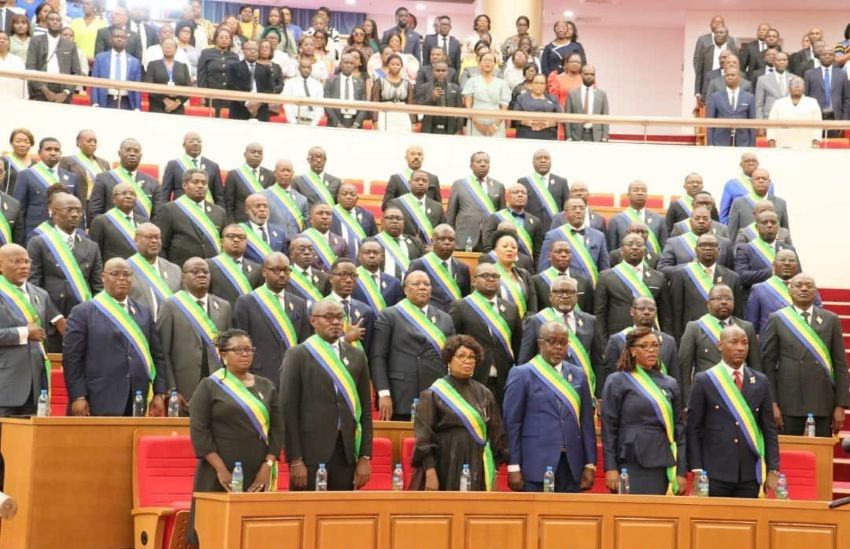
Libreville, July 1, 2026 — Four months after its installation under Gabon’s Fifth Republic, the National Assembly has concluded a session that will be remembered as one of the most transformative in the country’s recent institutional history.
With the official closing of the first ordinary session, dubbed the “legislative session,” at the Léon-Mba Palace on Tuesday, Parliament did more than mark the end of a parliamentary cycle. It signaled the emergence of a legislative body determined to fully exercise its constitutional mandate amid the nation’s ongoing reconstruction since August 30, 2023.
Under the leadership of President Michel Régis Onanga M. Ndiaye, deputies delivered a robust legislative agenda, intensified diplomatic engagement, and above all, demonstrated a clear commitment to defending their legislative prerogatives against an executive branch pursuing sweeping reforms. Beneath the statistics and speeches lies a pivotal question: How will Gabon’s new Republic balance government efficiency with democratic accountability?
A foundational session for the Fifth Republic
The closing ceremony brought together top state officials, heads of constitutional institutions, the Vice-President of the Government, cabinet members, the diplomatic corps, and prominent civil and military figures.
This session carried special significance as it coincided with the gradual implementation of institutions under the Fifth Republic’s Constitution. In his address, the Assembly President presented a comprehensive review of legislative work: 23 out of 33 bills were reviewed and adopted, with many directly impacting citizens’ daily lives and supporting the establishment of the new institutional framework.
Beyond legislative output, Michel Régis Onanga M. Ndiaye emphasized the political responsibility of deputies. He underscored that their role extends beyond voting on laws to actively enriching, amending, and even returning legislation to the executive when public interest demands it.
This assertion of independence marks a notable shift in Gabon’s parliamentary landscape. The new Assembly appears determined to avoid the pitfalls of becoming a mere rubber-stamp institution—a criticism often leveled at legislative bodies across several African nations.
The debate on ordinances takes center stage
One of the most significant moments during the closing ceremony was the Assembly President’s warning regarding the government’s use of ordinances. While acknowledging their constitutional validity, he stressed that ordinances should remain reserved for truly urgent situations—a clear defense of parliamentary debate.
This stance comes as executive-led reforms sometimes require accelerated procedures. For the Assembly President, public policy effectiveness must not come at the expense of democratic deliberation.
The message is unambiguous: the success of the Fifth Republic hinges on both the quality of reforms and the processes through which they are developed. This commitment to preserving parliamentary space stands out as a key takeaway from the session, reflecting a quest for institutional balance where Parliament remains a central player in decision-making.
An institution focused on oversight and openness
The National Assembly also highlighted its role in institutional dialogue and international engagement. The June 15 Parliament Congress, featuring President Brice Clotaire Oligui Nguema’s first State of the Nation address to both chambers, was a highlight of the session.
During this address, the Head of State outlined priorities including salary adjustments, reimbursement for Poste SA depositors, expansion of social protection, restructuring of the SEEG utility company, and transportation development.
Yet beyond diplomatic activities, the core message of the closing ceremony centered on responsibility—responsibility of elected officials to their constituents, responsibility of the government to the national representation, and responsibility of the media to deliver accurate information.
By concluding this first ordinary session, the National Assembly sent a powerful signal: the Fifth Republic will not be built solely through executive reforms. It will also be forged through institutions’ ability to engage in dialogue, mutual oversight, and accountability to citizens.
The session has ended. The real work, however, has only just begun. In any emerging democracy, laws are merely the starting point. Results remain the only true measure of success.