Libreville — Africa has entered a new chapter of its economic story. For decades fragmented by colonial-era borders, the continent is now striving to build the world’s largest integrated market by number of countries.
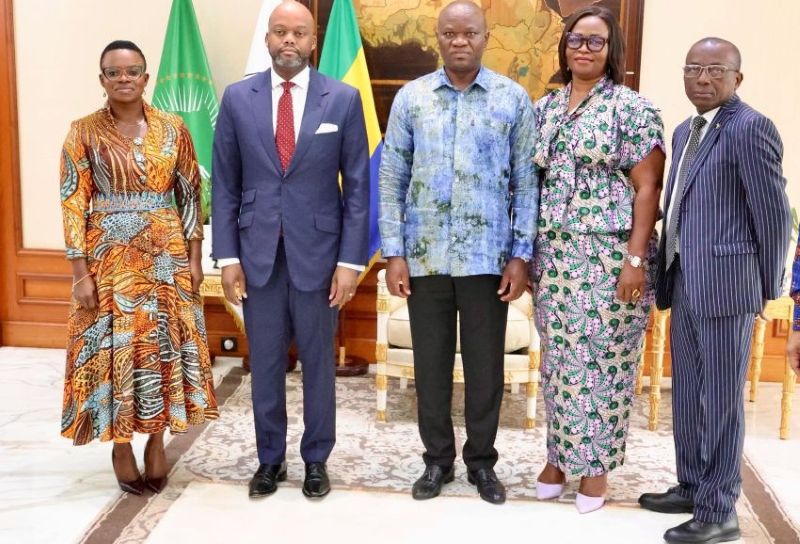
Against this backdrop, the audience granted Friday in Libreville by President Brice Clotaire Oligui Nguema to the secretary-general of the African Continental Free Trade Area, Wamkele Mene, goes well beyond a routine institutional meeting. It underscores a deeper ambition: positioning Gabon as a central player in Africa’s emerging economic architecture.
At a time when global powers are reshaping supply chains and regional blocs are deepening integration, the question is no longer whether Africa should trade more with itself, but how each nation intends to carve out its role in this historic transformation.
A market of 1.4 billion consumers
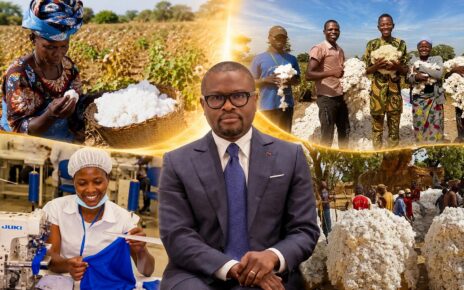
With over 1.4 billion people and a combined gross domestic product exceeding $3 trillion, the African Continental Free Trade Area (AfCFTA) stands as one of the most ambitious economic projects of the 21st century. Its goal, simple on the surface, is to progressively eliminate trade barriers and boost intra-African commerce.
Yet despite its vast potential, Africa remains one of the world’s regions where cross-border trade between neighbours is weakest. While intra-European trade accounts for more than 60% of the continent’s exchanges and Asia’s reaches roughly 50%, Africa struggles to surpass 15%. It is precisely this gap that the AfCFTA aims to close.
Discussions between the Gabonese head of state and Wamkele Mene focused on mechanisms to help Gabon fully capitalise on this continental opening. Customs modernisation, improved border infrastructure, updated regulatory frameworks, and institutional reinforcement topped the list of priorities.
Nkok, Gabon’s industrial trump card
The AfCFTA secretary-general particularly highlighted a strategic advantage often underestimated regionally: the Nkok Special Economic Zone.
Over a few years, this platform has become one of Central Africa’s leading industrial hubs, hosting dozens of companies active in wood processing, metallurgy, and manufacturing. It offers tangible proof of the country’s determination to move away from a model based on raw material exports and toward local value creation.
This direction aligns perfectly with the AfCFTA’s spirit. The success of free movement of goods will depend less on exporting natural resources and more on building a competitive industrial base.
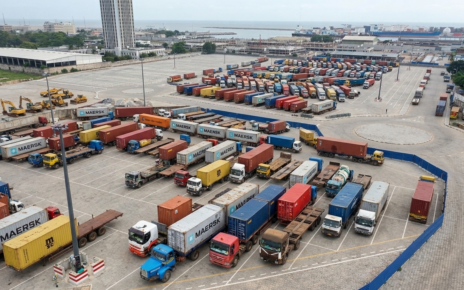
In this context, Gabon’s geographic position also emerges as a major asset. Located in the heart of the Gulf of Guinea, equipped with modern port infrastructure, and involved in several large-scale logistics projects, the country has the necessary features to become a regional trading hub.
Transformation as economic doctrine
During the meeting, Brice Clotaire Oligui Nguema reaffirmed the main lines of the National Growth and Development Plan. This vision rests on three fundamental pillars: local processing of resources, economic diversification, and accelerated digital transition.
This strategy marks a break from traditional economic models based solely on resource extraction. It reflects a desire to prepare the country for the new demands of global competition.
Because the true challenge of the AfCFTA is not limited to tariff reduction. It is about nurturing African economies capable of producing, transforming, innovating, and exporting on a large scale.
The discussion between the Gabonese president and the AfCFTA secretary-general thus comes at a decisive moment. The continent now has a common legal framework. What remains is to turn this political ambition into economic reality.
For Gabon, the stakes are strategic. The country no longer seeks merely to join the free flow of goods. It aims to become one of its major beneficiaries. The AfCFTA opens a door to an unprecedented continental market. But only states that anticipate industrial, logistical, and digital changes will truly reap the dividends. Libreville appears determined to be among them.