The upcoming GEX 2026 multinational military exercise—set for November 2026 in Côte d’Ivoire and Gabon—might look like just another drill on the surface. But beneath the surface simmers something far more consequential: a seismic shift in regional stability, economic security, and military partnerships that will ripple through West Africa.
With over 2,000 troops, advanced naval and aerial assets, and the participation of observers from four additional African nations, GEX 2026 is more than a tactical training ground. It signals a new era in which France is adapting its military footprint not through permanent bases, but through strategic collaboration—reshaping how nations like Côte d’Ivoire and Gabon secure their coastlines, borders, and economic lifelines in the Gulf of Guinea.
Why this military exercise could redefine regional security—and economies—for millions
The Gulf of Guinea is not just a patch of ocean. It is the backbone of West Africa’s economy, home to critical oil fields, bustling ports like Abidjan and Port-Gentil, and a web of trade routes connecting Africa to Europe and the Americas. Yet this region faces growing threats: piracy, illegal trafficking, coastal terrorism, and the spillover of instability from the Sahel.
That’s why GEX 2026 is being staged in two high-stakes locations—first in Yamoussoukro, Côte d’Ivoire (November 7–14), then in Libreville, Gabon (November 24–29). These are not random choices. Both nations sit on the front line of the Atlantic-facing frontier, where security threats can cripple trade, deter investment, and push migrant flows into Europe.
By coordinating forces across land, sea, and air, the exercise aims to do more than rehearse combat. It seeks to forge a shared defense ecosystem that protects civilians, sustains commerce, and deters crises before they erupt. For instance:
- Ivorian forces are integrating new amphibious and aerial coordination skills, vital for responding to coastal attacks.
- Gabon’s navy will practice securing offshore platforms and intercepting smuggling networks.
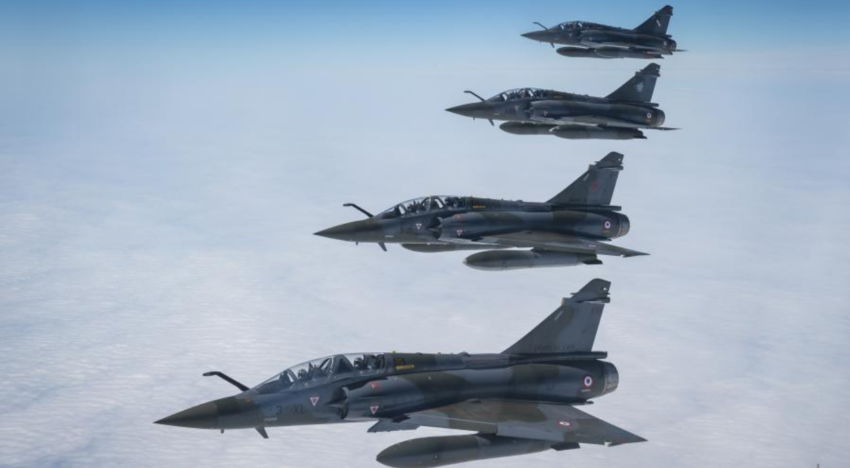
- French naval assets like the Mistral and Mirage 2000 combat jets will simulate rapid deployment and support in crisis zones.
More than 1,180 Ivorian soldiers, 850 French troops, and around 100 Gabonese personnel are expected to take part, with observers from Benin, Guinea, Liberia, and Senegal adding regional depth. The message is clear: security here is indivisible.
From permanent bases to partnerships: France’s new military footprint
GEX 2026 arrives at a pivotal moment. After the withdrawal from Mali, Burkina Faso, and Niger, France is no longer anchoring its African strategy on large, fixed bases. Instead, it is pivoting toward flexible, relationship-based security partnerships. The return of Port-Bouët military base to Côte d’Ivoire in 2025 wasn’t a retreat—it was a pivot toward sovereignty and joint command.
This shift is about sustainability, trust, and mutual capability. France still brings advanced technology and training, but now with a focus on building lasting African-led defense systems. That means less emphasis on presence, more on partnership. Less command, more collaboration.
For Côte d’Ivoire and Gabon, this could not come at a better time. Both nations are deepening their defense industries, investing in naval surveillance drones, and upgrading port security. GEX 2026 gives them a battlefield—so to speak—to test these assets under real-world conditions, and to integrate them into a broader regional defense architecture.
The hidden cost of inaction: what’s at stake for citizens and businesses
Failure to secure the Gulf of Guinea carries a heavy price tag—not just in lives lost, but in stalled development and missed opportunities.
For local communities:
- Fisheries collapse due to illegal fishing and piracy, sinking livelihoods in coastal villages.
- Rising displacement as communities flee coastal zones plagued by militant attacks or smuggling.
- Diminished access to healthcare and education as NGOs and transport routes are disrupted.
For economies:
- Port congestion in Abidjan or Libreville raises shipping costs, reduces export competitiveness, and deters foreign investors.
- Energy sector risks: offshore oil platforms are prime targets for sabotage or hijacking, threatening national revenues and regional electricity supplies.
- Tourism and trade decline: insecurity scares off visitors and chokes supply chains, undermining GDP growth.
GEX 2026 isn’t just a military show. It’s a preventive economic safeguard. A message that West Africa’s fastest-growing economies cannot afford to wait for crises to arrive.
Can Africa lead its own defense future? The autonomy challenge
The greatest test of GEX 2026 won’t be the number of maneuvers completed. It will be whether the exercise leads to permanent, African-led defense mechanisms.
Key areas of progress include:
- Shared maritime surveillance: pooling radar and drone data to track illegal vessels across borders.
- Joint rapid response units: trained to deploy within hours—not days—across multiple countries.
- Standardized command protocols: so that when a crisis hits in Togo or Ghana, forces from Benin and Côte d’Ivoire can integrate without delay.
Observers from four West African nations are already involved. If this momentum continues, GEX 2026 could become the seed of a regional security compact—one that reduces dependency on external powers and shifts power to local decision-makers.
But success hinges on continuity. Training must lead to institutions. Exercises must become doctrine. And temporary coalitions must harden into lasting alliances. Without follow-through, even the most impressive drills will fade into symbols without substance.
A new chapter in France-Africa defense ties—or just another drill?
GEX 2026 stands at the intersection of three forces: strategic necessity, economic urgency, and geopolitical evolution.
France is rewriting its military playbook. Côte d’Ivoire and Gabon are strengthening their sovereignty. And the Gulf of Guinea’s millions of citizens and businesses are watching closely.
The real outcome won’t be measured in headlines after November 2026. It will be judged in the calmer waters, safer ports, and thriving markets that follow—if the partnerships forged in this exercise survive beyond the closing ceremony.