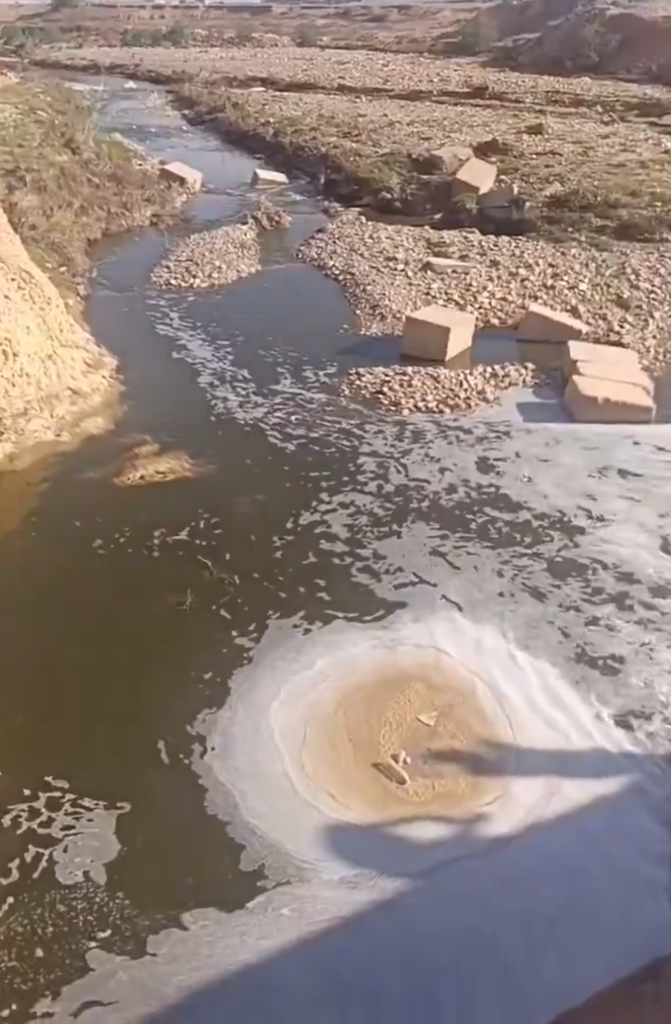
The escalating pollution in Algeria’s oued Mouilah, a vital water source for Tlemcen’s residents and businesses, has become a flashpoint in the already strained relations between Algeria and Morocco. Algerian authorities allege that industrial and domestic waste from Moroccan territory is contaminating the waterway, posing severe environmental, health, and economic risks that could reverberate across the region.
Environmental crisis threatens Tlemcen’s water supply
The contamination of oued Mouilah, which feeds into the Hammam Bougara dam—a critical water source for multiple communities—has raised alarm bells. Authorities in Tlemcen report alarming levels of chemical pollutants, including nitrites, heavy metals, and traces of pharmaceutical residues, all of which threaten both ecosystems and public health. Without urgent intervention, the crisis could escalate into a broader water scarcity problem, exacerbating existing challenges in Algeria’s western region.
Transboundary pollution: whose responsibility?
Algerian officials have pointed to Morocco as the source of the pollution, claiming that industrial and domestic waste from Moroccan territory flows through oued Isly before reaching Algerian waters. However, verifying these claims requires rigorous scientific investigation and independent analysis to trace the exact origin of the contaminants. Establishing irrefutable evidence will be crucial in determining accountability and preventing further damage to the shared water system.
Potential international legal action looms
With diplomatic relations between Algeria and Morocco already at a low point, the pollution crisis could become another contentious issue dividing the two nations. Algerian lawmakers and officials have floated the possibility of taking the matter to international bodies, citing transboundary environmental damage frameworks. While such a move has not yet been formalized, the gravity of the situation underscores the need for legal recourse to address environmental harm that transcends national borders.
Broader implications for regional water security
The dispute over oued Mouilah highlights the deepening water challenges faced by the Maghreb, where climate change and population growth are straining already scarce resources. Both Algeria and Morocco are grappling with water shortages, making the preservation of shared waterways a matter of strategic importance. Failure to address this pollution could lead to irreversible damage, not only to the environment but also to the socio-economic stability of the region.
Cooperation or conflict: what lies ahead?
As tensions simmer, the priority remains protecting the oued Mouilah’s ecosystem and ensuring safe water for millions of people. The crisis presents an opportunity for both countries to collaborate on scientific analysis, joint monitoring, and long-term solutions. However, if diplomatic and legal avenues fail to yield results, the pollution issue could further strain Algerian-Moroccan relations, turning a purely environmental concern into a geopolitical flashpoint.
The coming months will be decisive. Will oued Mouilah become a symbol of environmental stewardship and cooperation, or will it remain a cautionary tale of transboundary neglect and conflict?