Washington has issued a stark warning to Madagascar over its deepening military cooperation with Russia, citing the failure of Moscow’s security model in the Sahel as a cautionary tale. In a recent high-level address, a senior US military official highlighted concerns that a similar approach in the Indian Ocean could exacerbate regional instability, undermine maritime safety, and distort geopolitical balances.
US cautions Madagascar against replicating Russia’s controversial Sahel model
In a virtual press briefing following a diplomatic tour of Madagascar and Mozambique, Lieutenant-General John Brennan, deputy commander of US Africa Command (AFRICOM), expressed reservations about Russia’s plan to export its Sahel security strategy to new African shores. The model, deployed in Mali, Burkina Faso, and Niger, has shown limited success in curbing jihadist violence despite extensive military support.
Brennan emphasized that Washington does not wish to see this approach replicated in the Indian Ocean region, where Madagascar’s stability directly impacts critical maritime routes. The US fears the approach may backfire, deepening insecurity rather than resolving it.
The Sahel precedent: A costly experiment in regional security
After a series of military coups, Sahel nations shifted their security partnerships from Western allies toward Russia. Through structures like Africa Corps—Moscow’s answer to Wagner—Russia increased its military footprint, supplying arms, training, and advisory support. Yet despite this commitment, militant attacks have continued unabated in northern Mali, eastern Burkina Faso, and western Niger, exposing the limits of this model.
The persistence of violence raises questions about the long-term viability of externally driven security solutions. Brennan described Russia’s Sahel strategy as largely ineffective, warning that its externalization could trigger new waves of instability across the continent.
Madagascar’s strategic pivot toward Moscow draws US scrutiny
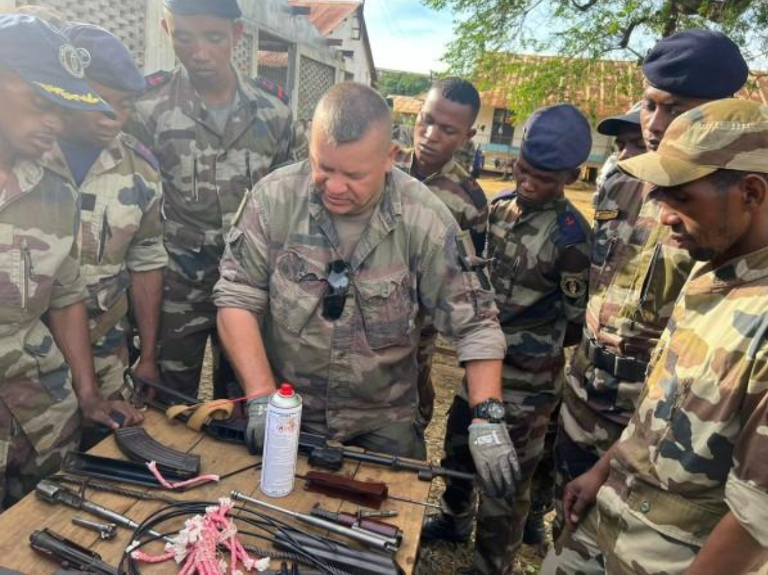
Since President Colonel Michaël Randrianirina came to power in 2025, Madagascar has strengthened ties with Moscow. The shift includes arms deliveries—drones and small arms—and training programs conducted by Russian military instructors. In early 2026, Randrianirina traveled to Moscow, where he met with President Vladimir Putin. The visit culminated in the signing of multiple defense and economic cooperation agreements during the Russia-Africa Summit in October 2026.
For Washington, these developments carry significant implications given Madagascar’s location astride key shipping lanes in the Indian Ocean, a region the US views as central to global trade and energy flows.
Mozambique’s insurgency adds pressure on Indian Ocean stability
The region’s vulnerabilities extend beyond Madagascar. In northern Mozambique, Islamic State-affiliated groups have intensified attacks on civilian and commercial targets, including liquefied natural gas facilities. According to US assessments, these militants are adapting their tactics and expanding their reach, posing a rising threat to maritime navigation and economic interests.
Brennan stressed that unchecked insecurity in the Mozambique Channel could disrupt global supply chains and invite further destabilization, urging both Madagascar and Mozambique to prioritize security cooperation with Washington.
Between Moscow and Washington: Can Antananarivo find a balanced path?
Despite its concerns, Washington has stopped short of imposing penalties or coercive measures on Madagascar. Instead, it has emphasized the need for Antananarivo to weigh the risks of deepening ties with Russia against the benefits of diversifying partnerships. The US aims to preserve its own influence in the Indian Ocean while urging Madagascar to avoid replicating Moscow’s Sahel playbook.
For Madagascar, the challenge lies in balancing sovereignty, national interests, and the expectations of international partners. Can the island nation carve out a middle ground, or will it find itself pulled into a widening contest between great powers? The stakes are high, not only for defense and diplomacy, but for the very stability of the Indian Ocean.