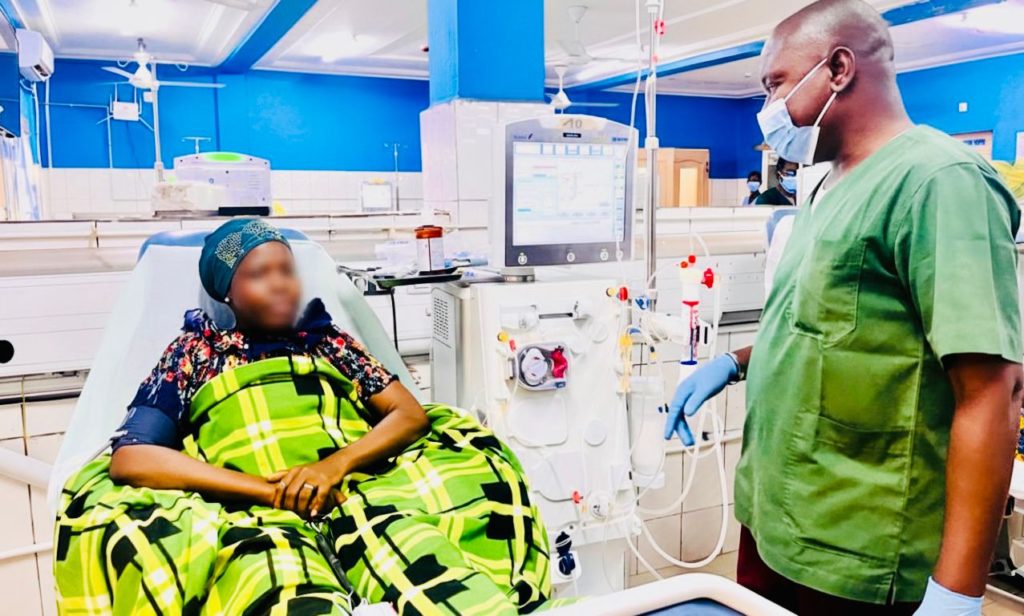
For countless Burkinabè, seeking medical care was once a daunting financial challenge. The divide between illness and treatment stretched far wider than geography—it was measured in overwhelming costs. Since March 13, 2024, Burkina Faso’s government has taken decisive action to bridge that gap. By slashing fees for critical diagnostic exams and eliminating advance payment requirements for dialysis in public hospitals, the state has redefined healthcare accessibility for thousands of families. A closer look at hospitals across the country reveals how these reforms are reshaping lives.
In the bustling corridors of public health facilities, the weight of financial barriers lingers in every gaze and gesture. Patients arrive burdened by urgency, their hopes pinned on treatment they could once only dream of affording. The high cost of exams and prohibitive deposit fees turned healthcare into a privilege—one that too many could not claim.
from despair to relief: personal stories of change
At the bustling Centre Hospitalier Universitaire de Bogodogo, Madi Diallo waits by the admissions desk, his expression a mix of resolve and quiet sorrow. Three years ago, his sister’s life depended on emergency dialysis—but the required deposit of 500,000 FCFA was beyond their means. She passed away before treatment could begin. Today, that deposit no longer exists. “The measure is fair,” he reflects, “but for us, it comes too late.”
This individual tragedy mirrors a widespread reality across Burkina Faso, where financial constraints have long dictated who receives life-saving care. For years, the ability to pay determined access to essential treatments, leaving many families facing impossible choices between health and survival.
breaking barriers: how tariff reductions are making a difference
In response to this crisis, Burkinabè authorities launched a sweeping healthcare reform aimed at dismantling financial obstacles. Effective March 13, 2024, the government implemented significant reductions in medical examination fees across all public health facilities, delivering tangible relief to patients nationwide.
The initiative was formally announced by Dr. Robert Lucien Jean Claude Kargougou, Minister of Health, following the Council of Ministers meeting on the same date. The revised pricing structure represents a historic shift in public sector healthcare affordability.
- CT scans: reduced from 50,000 FCFA to 25,000 FCFA
- MRI exams: lowered from 100,000 FCFA to 40,000 FCFA
- Dialysis deposits: completely eliminated
Warmly welcomed by communities, the reform targets financial hurdles that have long restricted access to diagnostic imaging and specialized care, particularly for vulnerable populations.
real-world impact: what patients are saying
At the Centre Hospitalier Universitaire de Bogodogo, Dame Ouédraogo, née Nikiéma Élodie, recently underwent an MRI. She shares her experience with relief: “The new fee is very affordable. I paid only 40,000 FCFA—including supplies—whereas elsewhere, the same exam can cost up to 150,000 FCFA or more.” The savings have given her breathing room, allowing her to continue supporting community initiatives like tontines without financial strain.
According to Seydou Nombré, Director General of the CHU de Bogodogo, the changes are more than just numbers—they’re life-changing. “The MRI now costs 40,000 FCFA, and most importantly, the 500,000 FCFA deposit has been removed. Patients no longer need to pay anything upfront. For urgent dialysis, the cost is now just 2,500 FCFA.”
extending care beyond the capital: regional success stories
The reform’s impact reaches far beyond Ouagadougou. In the town of Ziniaré, at the Centre Hospitalier Régional, the same positive changes are evident. All required tests are now performed on-site at the new rates, eliminating the need for costly and lengthy transfers to the capital—a major relief for local residents.
Mady Zorné, Director General of the CHR de Ziniaré, highlights the broader benefits: “Since these measures were introduced, referrals to Ouagadougou have dropped significantly.” He emphasizes the clinical impact as well: “Clinicians now have access to necessary imaging to make accurate diagnoses, improving the entire care pathway.”
overcoming structural challenges
Despite these promising results, challenges remain. At the Centre Hospitalier Universitaire Yalgado Ouédraogo in Ouagadougou—a major health hub—the demand for services is relentless. The dialysis unit, equipped with 34 machines, serves nearly 100 patients daily through three rotating shifts. Urgent cases are accommodated beyond scheduled hours.
Tuina Nsoma Hélène, Head of the Dialysis Unit, notes a crucial improvement: “The 500,000 FCFA deposit previously required to start treatment has been abolished.” Since the reform, 16 new patients have been able to access dialysis without the financial burden—though waiting lists remain long.
Yet, structural limitations persist. “Every death frees up a spot for someone waiting,” she explains, reflecting both necessity and sorrow. While the reform has eased financial barriers, logistical constraints continue to challenge equitable access.
In the same unit, Professor Nina Astrid Ouédraogo, Head of Radiology and Medical Imaging at the CHU-YO, reports a 38% increase in CT scans performed since the reform—a clear sign of pent-up demand being met at last. “It’s a real relief for everyone,” she says.
from Bobo-Dioulasso to the nation: a growing movement
In Bobo-Dioulasso, the economic heart of Burkina Faso, the Centre Hospitalier Universitaire Sourou Sanou (CHUSS) serves as another proving ground for the reform. The facility, one of the largest in the country, draws patients from across the region and is always at full capacity.
Élie Ouattara, a patient purchasing medical supplies, expresses his gratitude: “The prices are truly affordable. It’s made a huge difference in our daily lives.” These savings extend beyond major exams, easing the financial strain on families dealing with chronic illnesses.
At the dialysis unit in Bobo-Dioulasso, Dr. Hamidou Sawadogo, a nephrologist, confirms the reform’s effectiveness but points to persistent constraints. “Most patients were already receiving treatment before the changes. Since the deposit was removed, only 17 new patients have been able to start dialysis.” He stresses the need for expanded infrastructure, more qualified staff, and additional dialysis machines to meet growing demand.
For patients like Dame Sanou, née Traoré Salimata, who has lived with kidney disease since 2018, the removal of the financial barrier is life-changing. “Before, the deposit was an impossible hurdle,” she shares. “Today, I feel like my dignity is being respected.”
Youl Sié, another dialysis patient, echoes the call for decentralization: “We need more dialysis centers closer to our communities. Being forced to travel far from home disrupts family life and children’s education. Health shouldn’t require leaving your roots behind.”
a step forward, but not the final destination
Progress has been made, but the journey is far from over. Long waiting lists, limited equipment, and uneven access to specialized care remain obstacles. Yet, for those who now enter public hospitals without fear of crippling bills, the relief is palpable.
In a nation known as “Land of Upright People,” healthcare is no longer a luxury reserved for a privileged few. It is becoming a right—one cautious step at a time. And as new hospitals, like the Centre Hospitalier Universitaire de Pala, come online with advanced facilities, the future of healthcare access in Burkina Faso grows ever brighter.