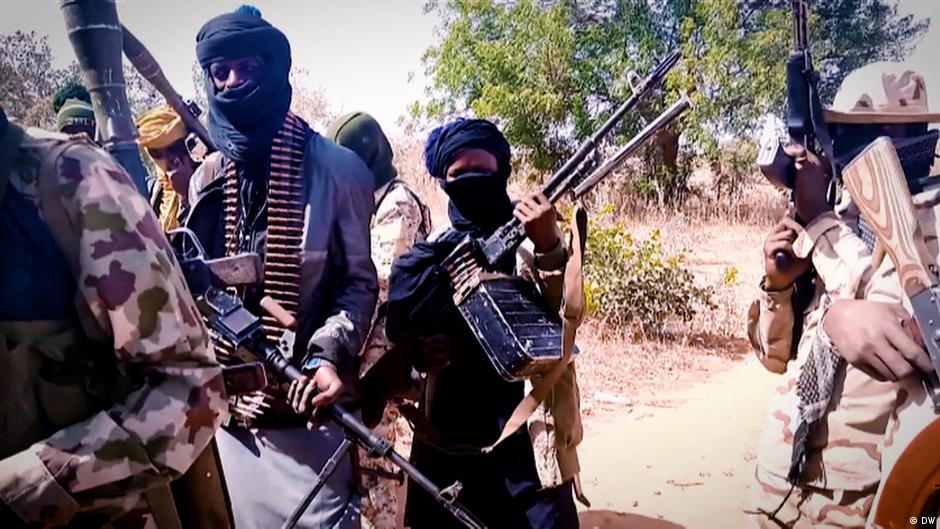
how Boko Haram funds its insurgency through kidnappings
Kidnappings have become a lucrative funding stream for Boko Haram, fueling its decade-long insurgency across Nigeria and neighboring countries. From schoolchildren to bus passengers, the group targets civilians in a calculated strategy to generate revenue through ransom demands.
the scale of the kidnapping crisis
Nigeria bears the brunt of this crisis, with security analysts describing the kidnapping industry as structured and highly profitable. Between July 2024 and June 2025 alone, nearly 4,700 people were abducted in nearly 1,000 incidents, according to SBM Intelligence, a Nigerian risk assessment firm. These attacks, often targeting schools, have left hundreds dead and spread beyond Nigeria’s northern regions into central areas.
The violence has spilled into neighboring nations as well. In Cameroon, Boko Haram claimed responsibility for abducting passengers from a bus in Ziguelé, in the Far North region, late last year. Meanwhile, in Niger, the group seized seven Chadian nationals near the border in late March, killing one and holding the rest captive.
how Boko Haram profits from abductions
According to Remadji Hoinathy, a researcher at the Institute for Security Studies (ISS), kidnappings serve two key purposes for Boko Haram: forced recruitment and financial gain. The group coerces young men, women, and entire communities into joining its ranks or serving as laborers and sex slaves. Simultaneously, ransom payments—often in the millions of naira or CFA francs—provide a steady income stream.
In one recent case, Boko Haram demanded 50 million CFA francs for the release of five Chadian hostages. For the sixth, a doctor, the group inflated the ransom tenfold to 500 million CFA francs, according to the Chadian Human Rights League. Such demands underscore the group’s exploitation of poverty and desperation in the region.
ransom payments: a controversial lifeline
Despite Nigeria’s 2022 law criminalizing ransom payments—punishable by up to 15 years in prison—many families and even state authorities continue to pay. Analysts estimate that over the past year, ransom demands in Nigeria totaled nearly $35 million, with at least $1.8 million paid out.
In November 2025, reports emerged that the Nigerian government allegedly paid Boko Haram to secure the release of 230 students and staff from a Catholic school in Niger State. While Abuja denies these claims, citing military operations instead, sources suggest the payment may have exceeded €6 million. The use of cash, transported by helicopter to a Boko Haram commander in Borno State, further fuels speculation about covert negotiations.
Experts warn that denying ransom payments plays into the group’s propaganda, allowing it to portray itself as victorious. Meanwhile, the cycle of kidnappings and payouts persists, draining resources from already impoverished communities.
Boko Haram’s regional stronghold: the Lake Chad basin
Boko Haram originated in Maiduguri, Borno State, Nigeria, in 2002, under the leadership of Mohammed Yusuf. Its name, derived from Hausa, translates to “Western education is sin,” reflecting its rejection of secular influence. Over time, the group expanded its reach into Niger, Chad, and Cameroon, establishing the Lake Chad basin as its operational heartland.
Remadji Hoinathy highlights three key reasons for the basin’s strategic importance:
- Transnational mobility: The region bridges the Sahel and Libya, serving as a corridor for arms and fighters.
- Weak state presence: Marginalized areas with limited government control offer safe havens for insurgents.
- Economic potential: Cross-border trade in agriculture and pastoralism sustains local economies, which Boko Haram exploits for recruitment and logistics.
- Geographical isolation: Dense forests, swamps, and islands provide natural camouflage during military crackdowns.
a fractured insurgency: ISWAP’s rise and rivalry
In 2016, a faction of Boko Haram broke away to form the Islamic State West Africa Province (ISWAP), rejecting the group’s indiscriminate violence under Abubakar Shekau. Aligning with the Islamic State, ISWAP adopted a more pragmatic approach, seeking alliances with local populations to consolidate power.
Today, the two groups are locked in a violent feud for control of territory and resources, deepening instability in the Lake Chad region. Their rivalry has prolonged the conflict, complicating military responses and civilian resilience.
regional responses: military and beyond
Efforts to counter Boko Haram and ISWAP involve a mix of military and developmental strategies. The Multinational Joint Task Force (MNJTF), comprising troops from Nigeria, Niger, Chad, Cameroon, and Benin, has been the cornerstone of regional defense. However, analysts argue that a decade into the conflict, the insurgency’s adaptability and resilience highlight the limitations of current approaches.
The region’s response also includes stabilization programs aimed at restoring state presence and economic opportunities in affected communities. Yet, as Remadji Hoinathy notes, Boko Haram’s ability to rebound and evade military pressure suggests that a purely security-based approach may be insufficient.
Since 2009, the insurgency has claimed over 40,000 lives and displaced two million people in Nigeria alone, according to the UN. In response, the United States has deployed approximately 200 troops to support Nigerian forces, underscoring the international stakes in this crisis.