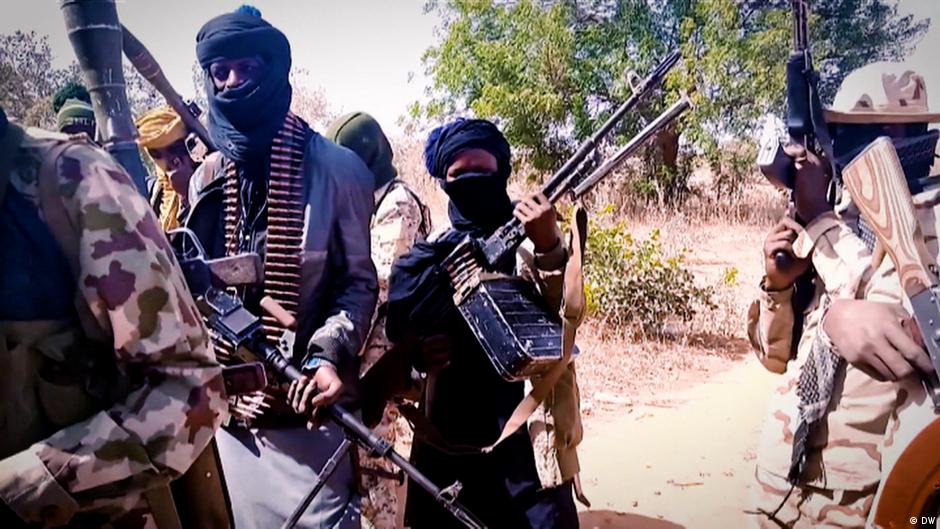
Boko Haram’s kidnapping economy: how hostage-taking fuels terror in West Africa
The kidnapping industry has evolved into a structured and lucrative financing mechanism for armed groups across West Africa. Between July 2024 and June 2025 alone, nearly 5,000 people were abducted in nearly 1,000 incidents, primarily in Nigeria’s northern and central regions. While Boko Haram remains the most notorious perpetrator, the Islamic State’s West Africa Province (ISWAP) has also been actively involved in these criminal operations.
The dual purpose of mass abductions in West Africa
According to Remadji Hoinathy, a researcher at the Institute for Security Studies (ISS), kidnappings serve two primary objectives for jihadist groups like Boko Haram. First, they facilitate forced recruitment—whether of young men, women, or entire communities—to bolster militant ranks or provide labor and sexual exploitation. Second, these crimes represent a critical revenue stream through ransom payments, often running into millions of naira or CFA francs.
Recent cases highlight the staggering sums demanded. In late March 2025, Boko Haram abducted seven Chadian nationals near the Niger border, killing one and holding the rest captive. The group initially demanded 50 million CFA francs for five hostages, but escalated to 500 million CFA francs (approximately €760,000) for the sixth—a physician. This follows earlier incidents, such as the 2024 abduction of bus passengers in Cameroon’s Far North region, also claimed by Boko Haram.
Government denials and the ransom dilemma
While Nigeria’s federal government officially prohibits ransom payments—citing a 2022 law that criminalizes such transactions with potential 15-year prison sentences—unverified reports suggest state actors and families continue to negotiate. In November 2025, following international pressure over Christian protection, authorities were accused of paying a substantial ransom—reportedly between €1.3 million and €6 million—to secure the release of 230 students and staff from a Catholic school in Niger State. The government denies these claims, attributing the liberation to intelligence operations and military action.
Experts warn that acknowledging ransom payments could embolden extremist propaganda. Yet, the financial incentive remains undeniable: over the past year, ransom demands in Nigeria alone exceeded $35 million, with an estimated $1.8 million reportedly paid by victims’ families and, allegedly, state entities.
Boko Haram’s regional expansion and the Lake Chad basin
Founded in 2002 in Maiduguri, Borno State, Boko Haram’s original goal was to establish a radical Islamic state, rejecting Western education and influence. Under the leadership of Mohammed Yusuf, the group gained traction in Nigeria’s northeast before expanding into neighboring Niger, Chad, and Cameroon—collectively forming the Lake Chad Basin region.
Remadji Hoinathy emphasizes the basin’s strategic value for militant groups. Its transnational nature facilitates cross-border movement of fighters and weapons, particularly from Libya. The area’s weak state presence, coupled with fertile agricultural and pastoral lands, creates an ideal environment for economic exploitation and concealment. Dense forests, marshes, and remote islands further enable militants to evade military pressure, sustaining their operations for over a decade.
The rivalry between Boko Haram and ISWAP
In 2016, ISWAP emerged from a schism within Boko Haram, led by dissidents opposed to the indiscriminate violence of former leader Abubakar Shekau. Aligning with the Islamic State, ISWAP adopted a more pragmatic approach, seeking local alliances rather than relying solely on terror. The two groups now compete violently for territorial control and resources in the Lake Chad Basin, deepening instability in the region.
Regional responses and ongoing challenges
Countries in the Lake Chad Basin have attempted to coordinate military efforts through the Multinational Joint Task Force (MNJTF), a regional initiative involving Nigeria, Niger, Chad, and Cameroon. However, challenges persist. Remadji Hoinathy notes that while initial responses were state-led, the MNJTF and stabilization strategies—including development programs—have yet to effectively dismantle the insurgency.
Boko Haram and ISWAP have demonstrated remarkable adaptability, frequently regrouping despite sustained military campaigns. Since 2009, the conflict has claimed over 40,000 lives and displaced two million people in Nigeria alone, prompting international support. Last year, the United States deployed approximately 200 troops to Nigeria to train and assist local forces in countering the jihadist threat.