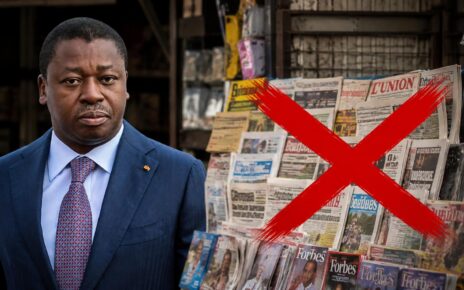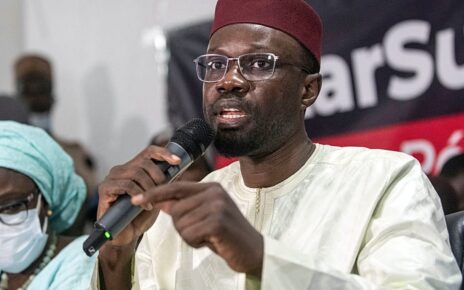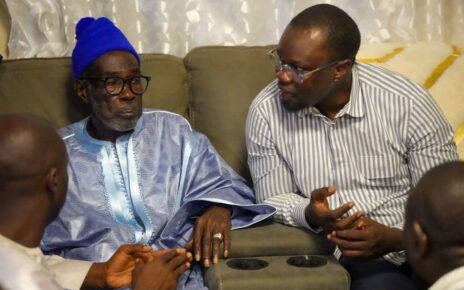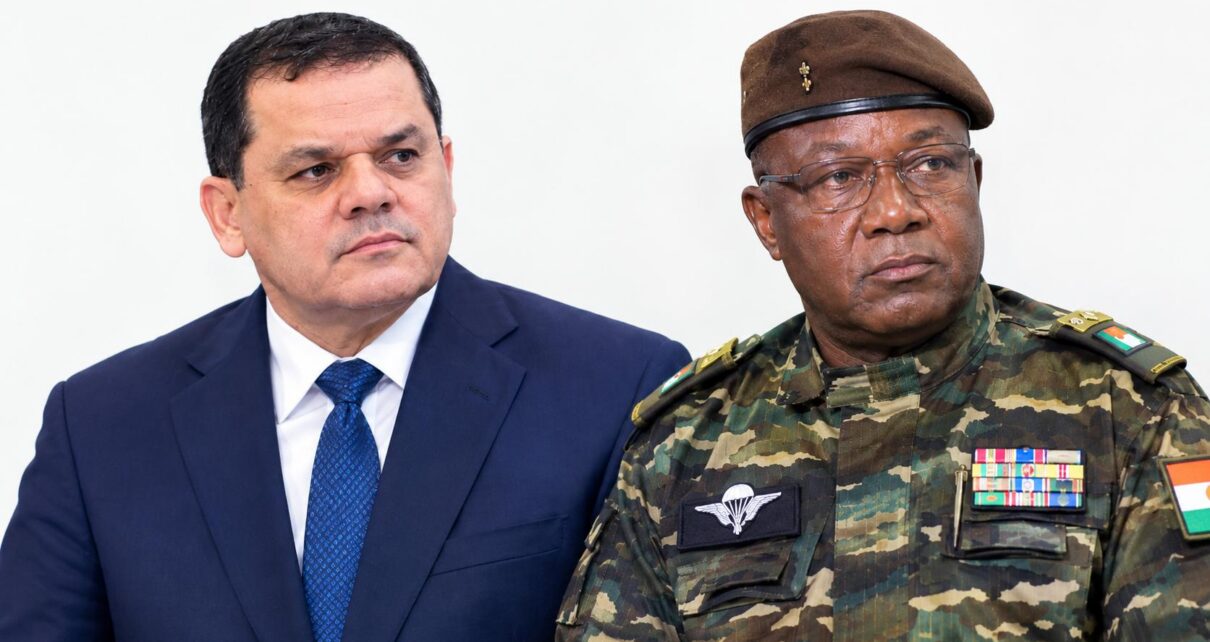
Niger’s role in southern Libya is no longer a distant diplomatic question. It is starting to look like a domestic bill that ordinary Nigeriens will be asked to pay — through fuel prices at border markets, through the security of trade convoys crossing the Sahara, and through the growing risk that the country’s armed forces get pulled into a war that is not theirs. General Abdourahamane Tiani, who spent his first years in power defending his seat in Niamey, is now watching — and quietly positioning himself — in the struggles reshaping the camp of Khalifa Haftar. At the centre of that shift stands Mohamed Wardougou, a former Haftar ally turned adversary, whose rise is opening a new space of confrontation in the south.
Why the Fezzan has become a Nigerien household concern
State borders in the Sahara have never managed to contain political and military rivalries. They cut through communities, commercial routes and armed networks stretching from Niger to Libya and Chad. For people living along the Niger–Libya frontier, the consequences arrive quickly: a closed road means a market without supplies, a new armed group means higher prices for fuel and staples, and a shift in alliances can shut down the informal trade that many families depend on.
That is the environment in which Niamey now appears willing to play a part in the realignment shaking Haftar’s coalition. The signs remain discreet, but a pattern is emerging: closer ties between Niamey and Tripoli, armed groups active along the border, and the rise of Wardougou as the main challenger to the Haftar clan.
Mohamed Wardougou: from Haftar’s border man to his armed rival
Wardougou is not a newcomer to this equation. A warlord from the Toubou community, he once worked inside Khalifa Haftar’s system, taking part in the surveillance of Libya’s southern borders. At the start of 2026 he broke with the Benghazi camp and founded the Operations Room for the Liberation of the South (COLS). Since then, his fighters have harassed positions held by the Libyan National Army (LNA), the force commanded by Haftar.
His grievances are economic as much as political. Wardougou accuses the Haftar clan of controlling Fezzan’s resources at the expense of local populations, denounces the taxes imposed in LNA-held areas and rejects the political and military dominance exercised by the marshal’s family. In June he announced he would target the clan’s fuel smuggling convoys and communication lines.
A rebellion that loosens Benghazi’s grip on the south
For Benghazi, that rebellion is a specific threat. The Fezzan is not merely empty desert: it is strategic depth linking Libya to Niger, Chad and the wider Sahel. Holding it has been essential for Haftar; for his opponents, planting a hostile force there is a way to crack his architecture from within.
Is Niger turning into a rear base?
This is where Niamey’s position becomes particularly significant. Wardougou’s forces have established rear bases on Nigerien soil, while the COLS is believed to receive support and weaponry from Tripoli, notably through security officials close to Abdelhamid Dbeibah’s government.
On 17 September, it emerged that the Libyan Government of National Unity was negotiating with Nigerien authorities over a corridor designed to ease the delivery of military equipment to Wardougou’s group. From the borderlands between Niger and Libya, his men carry out attacks on positions and facilities controlled by Haftar’s forces.
What the available evidence does show — and what it does not
On its own, that information does not establish a personal alliance between Tiani and Wardougou. It does, however, point to a strategic convergence capable of altering the balance of power in southern Libya. The talks come after months of rapprochement between Tripoli and Niamey, meaning Niger would no longer be simply a neighbour of the Libyan theatre but could gradually become a logistical space in the confrontation between Tripoli and Haftar’s camp.
Caution is still required. Nothing publicly available proves that Tiani personally ordered support for Wardougou, or that a formal alliance exists between the two men. What is documented is convergence between Nigerien authorities and the Tripoli camp — a convergence from which Wardougou could benefit.
Tiani’s calculation: border security, geopolitics and the cost of alignment
The first stake is security. Niger shares a long, hard-to-control desert frontier with Libya, and movements of fighters and trafficking in weapons, fuel and migrants have crossed it for years. Any escalation there directly affects border towns, transport operators and the informal economies built around those routes.
The second stake is geopolitical. Since seizing power in a July 2023 coup, Tiani has deeply reoriented Niger’s foreign partnerships, distancing the military regime from Western allies and moving closer to Russia while seeking new regional interlocutors. Libya is a strategic neighbour in that context, and the rivalry between Tripoli and Benghazi gives Niamey an opening to build a tighter relationship with western Libyan authorities.
The June 2026 meeting in Tripoli between Nigerien Prime Minister Ali Lamine Zeine and Abdelhamid Dbeibah illustrates that rapprochement. The relationship is now considered important enough to be described as the opening of a “new front” against the Haftar clan — a front whose economic fallout, from customs revenue to cross-border trade, would be felt far beyond the chancelleries.
Cracks inside Haftar’s southern architecture
The context is unfavourable to the marshal. After consolidating control over eastern Libya, Haftar had extended his influence into the Fezzan, and that southern foothold became one of the main pillars of his military system. That architecture is now showing fractures. In 2025, Hassan Al-Zadma, commander of the 128th Brigade, drifted away from the Haftar camp before moving closer to Tripoli. In 2026, it was Wardougou’s turn to take up arms against the LNA.
For Haftar’s adversaries, this sequence of defections is an opportunity. More importantly, it shows that the clan’s authority in the south rests on fragile local alliances that can be renegotiated whenever tribal, economic or military interests shift — an instability that makes smuggling networks, and the communities living off them, unpredictable partners.
The risk back home after the August 2026 coup attempt
Niger’s growing involvement in Libyan dynamics could carry a price. Tiani’s regime faces its own internal difficulties: on 29 August 2026, a coup attempt targeted power in Niamey. The regime survived, notably thanks to the intervention of Russian Africa Corps troops. Since then, Tiani has restructured the chain of command and carried out numerous arrests within the army.
In that context, opening a new strategic theatre around Libya looks like a calculated gamble. Involvement in the Libyan conflict can quickly escape the diplomatic frame: Saharan armed networks are cross-border, tribal alliances shift, and rebel groups are numerous. Logistical help sent to a group like Wardougou’s could therefore produce consequences that are hard to control — and hard to explain to a population already dealing with a shaken army and a fragile economy.
A new proxy war whose bill would reach Sahelian households
That may be the real issue. The confrontation between Tripoli and Haftar could gradually turn into an indirect competition over frontier territories, with Niger supplying geographic depth, Tripoli offering political and potentially material support, and Wardougou providing a military network rooted in the south. Such a configuration would make the Fezzan one of the new epicentres of Libyan rivalry.
It would also place Tiani in a delicate position. By moving closer to Tripoli and allowing a dynamic favourable to Wardougou to take hold, Niamey risks being seen as a participant in the Libyan conflict rather than a simple neighbour. The cost of that perception is not abstract: it shapes how partners invest, how border trade is policed, and how exposed communities are to reprisals.
The question is therefore no longer only who controls southern Libya. It is how far Niamey is prepared to go in the battle between Libya’s competing centres of power.
For now, no public evidence shows Tiani directing Wardougou’s operations. But the available pieces sketch a clear trajectory: Niger is edging towards one of the camps challenging Haftar’s hold, while the Niger–Libya border could become the strategic depth of that confrontation. In the Sahara, rivalries never stop exactly where borders do. For Haftar as for Tiani, southern Libya may be the next ground on which their interests are measured.