The future at stake: how digital initiatives shape nations
As nations across Africa race to secure their economic futures, two West African countries exemplify sharply divergent strategies: one invests in digital talent to build long-term competitiveness, while the other grapples with pressing social disruptions that demand immediate attention. The choices made today will determine not just tomorrow’s headlines, but the livelihoods of millions.

Benin’s digital talent pipeline: a model for economic preparedness
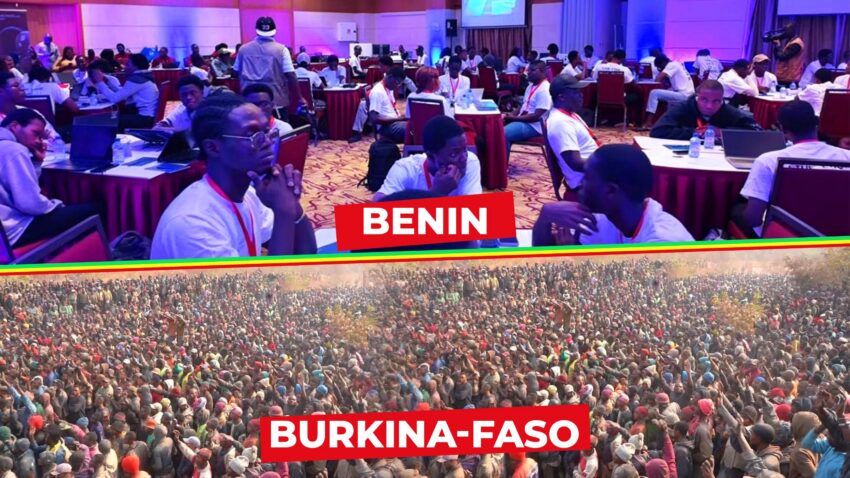
In Benin, the forward-thinking approach of nurturing young tech talent was on full display at the Cyber Africa Forum (CAF), held November 16–17. The event wasn’t just a display of innovation it was the culmination of a rigorous, months-long process designed to identify and elevate the country’s most promising digital minds. Over two months, teams were carefully selected through a series of daily challenges, culminating in a final round where only the top 20 teams competed for recognition.
What makes this process noteworthy is its emphasis on strategic preparation. Rather than a one-time spectacle, the forum reflects a broader commitment to building an ecosystem of competence one where creativity, technical skill, and problem-solving are not just celebrated but systematically cultivated. Such efforts are critical in a global economy where national competitiveness increasingly hinges on a nation’s ability to leverage technology and innovation.
By prioritizing education, fostering entrepreneurship, and creating pathways for young professionals, countries like Benin are making investments that transcend politics. These are the building blocks of sustainable growth, resilience, and future prosperity.
Burkina Faso’s pressing human crisis: a call for actionable solutions
Meanwhile, in neighboring Burkina Faso, a different kind of crisis has left thousands in limbo. The forced repatriation of gold miners from Guinea has triggered a cascade of challenges for communities already struggling with economic uncertainty. These workers, many of whom rely on artisanal mining for their livelihoods, face an abrupt loss of income and stability.
For individuals and families affected by this shift, the stakes are immediate: survival, employment, and the ability to rebuild their lives. The questions facing policymakers are starkly practical: How many workers are impacted? What plans exist to support their return? Are there programs for professional retraining or economic reintegration? The absence of clear, transparent answers only deepens the crisis.
While political debates and media narratives may dominate the national conversation, they cannot substitute for tangible action. Governance, at its core, is about delivering measurable outcomes securing livelihoods, providing safety, and enabling economic continuity. No strategic plan, no matter how ambitious, can succeed if it fails to address the daily realities of its people.
Beyond rhetoric: the real measure of national progress
It is tempting to view these contrasting situations as purely administrative two countries pursuing different paths. But the implications run deeper. Benin’s investment in digital talent is a statement of intent: it signals a commitment to preparing for an uncertain future by empowering its youth with the skills needed to thrive in a technology-driven world. Burkina Faso’s challenges, meanwhile, underscore the urgency of addressing systemic vulnerabilities that, if left unchecked, can destabilize entire communities.
Both countries face undeniable challenges, and a nuanced comparison must acknowledge their unique contexts. However, the contrast raises a fundamental question about priorities: Are nations building the foundations for long-term success, or are they merely responding to crises as they emerge?
Governance, ultimately, is not about crafting compelling narratives. It is about making decisions today that safeguard tomorrow. Africa’s future will be shaped not by the volume of its political discourse, but by the substance of its actions how well it invests in its people, protects their livelihoods, and transforms potential into progress.
Key lessons for sustainable development
Invest in human capital: Nurturing digital skills, fostering innovation, and creating opportunities for young professionals are investments in a nation’s long-term competitiveness.
Address immediate crises with concrete solutions: Social and economic disruptions demand urgent, transparent responses retraining programs, economic support, and sustainable reintegration strategies.
Prioritize governance over rhetoric: Effective leadership means translating ambition into action, ensuring that policies yield tangible benefits for citizens.
The path forward: balancing ambition and responsibility
No single model holds the key to Africa’s future. But the stories of Benin and Burkina Faso present a stark reminder: nations must balance their aspirations with the realities of their people. One country looks to the future with skilled innovators; the other scrambles to stabilize its present. The question that remains is not just what these nations will become, but how they will get there.
One thing is certain: the divisions between progress and crisis, between preparation and reaction, will define Africa’s trajectory in the decades to come.
By Martin Ngu — Journalist