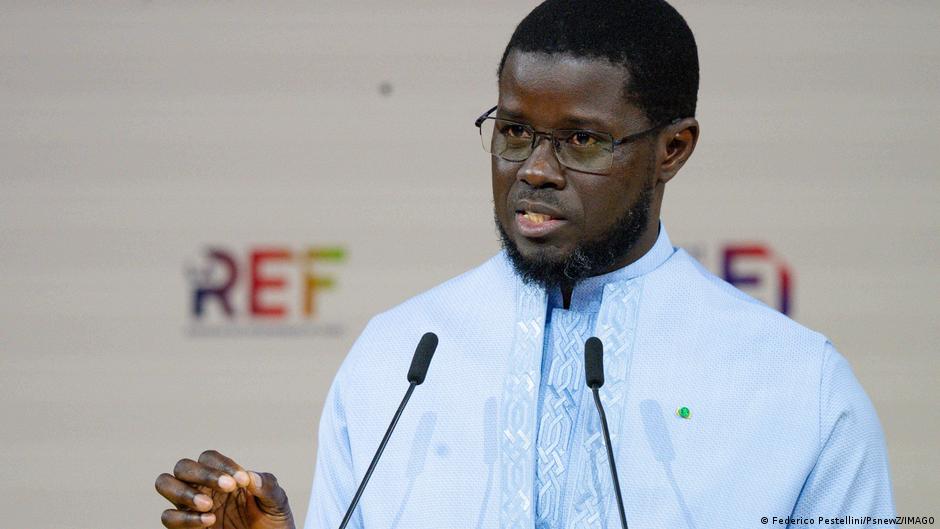
Senegal’s political landscape has entered uncharted territory this week. The spotlight shines on a rare power dynamic unfolding between President Bassirou Diomaye Faye and his former Prime Minister Ousmane Sonko. Both leaders emerged from the same political movement, yet their paths have diverged sharply, creating a tense standoff at the highest levels of government.
Ousmane Sonko’s unexpected rise to the presidency of the National Assembly marks a significant shift in Senegal’s power structure. Despite his removal from office last year by President Faye, Sonko secured a commanding majority through his party, Pastef. This electoral victory propels him to the second-highest position in the state, raising critical questions about the president’s ability to implement his agenda.
In response to this political reshuffle, President Faye has appointed Ahmadou Al Aminou Lô as the new Prime Minister. A former executive at the Central Bank of West African States (BCEAO), Lô brings economic expertise to a government facing mounting challenges. His appointment signals a strategic move to stabilize the nation’s financial situation amid persistent economic pressures.
As Senegal navigates this delicate political moment, observers are closely examining whether President Faye can govern effectively under these strained circumstances. To explore this pivotal question, a panel of experts gathered to analyze the implications of this new political configuration:
voices shaping the debate
- Mamoudou Ibra Kane — Journalist and author of the essay Third Alternance in Senegal: My Dual Perspective, offering insights from the late Mamadou Badio Camara, former president of the Constitutional Council. Kane also leads the political movement “Demain.”
- Karine Oriot — Seasoned journalist and geopolitical analyst, providing a global perspective on Senegal’s internal dynamics.
- Moussa Diaw — Eminent professor of political science at Gaston Berger University in Saint-Louis, specializing in international relations and constitutional governance.
The discussion delves into the complexities of governing in a climate of political tension, economic strain, and shifting alliances. With Sonko now holding a pivotal role in the legislature, the president’s capacity to push through reforms and maintain stability is under intense scrutiny.