Integrated health services transform lives of nomadic families in Chad
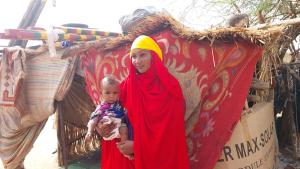
In the heart of the Mandjafa nomadic camp on the outskirts of N’Djamena, Afia arrived with her four-month-old daughter Fatma. Their journey was driven by a single purpose: to access integrated health services designed specifically for mobile communities. For this mother of five, these interventions are vital for keeping her family healthy. “Vaccinations protect my children from illness. Whenever they fall ill, I immediately take them to the health center,” she shares.
Afia’s story reflects the daily reality of thousands of nomadic families across Chad, where seasonal migration and remote living conditions often create barriers to essential healthcare. These mobile populations, representing about 3.5% of the national population, face unique challenges in accessing basic services while maintaining their pastoral livelihoods.
One Health approach bridges healthcare gaps for mobile communities
To address these challenges, Chad’s government has implemented the One Health strategy, uniting health, livestock, environmental and agricultural sectors to deliver tailored services to pastoral communities. On June 9, 2026, this approach delivered comprehensive care to 134 individuals—including 11 children—at Mandjafa. The integrated campaign combined human and animal vaccination (with 96 livestock treated), vitamin A supplementation, deworming and insecticide-treated mosquito net distribution.
Adapting healthcare to nomadic lifestyles
Professor Mahamat Béchir, National One Health Coordinator at the Ministry of Public Health, explains the genesis of this approach: “Early 2000s studies revealed vaccination coverage gaps in nomadic communities. We realized standard strategies weren’t reaching them effectively. The solution was to adapt services to their mobile lifestyle.”
The teams observed that livestock owners frequently used veterinary services. By combining animal and human health interventions, campaigns could reach more families in single visits while minimizing travel requirements. This model has proven particularly effective in reducing both human and animal disease burdens.
Strengthening livelihoods through integrated care
For pastoral households like that of Youssouf Idriss—who tends sheep, cattle and camels near Mandjafa—livestock health directly impacts food security and income. “Our animals are the foundation of our survival. Their health determines whether our children eat tonight,” he explains.
Raphaël Neni, a veterinary officer with five years of field experience, has witnessed firsthand the impact of expanded vaccination campaigns: “Since we intensified our efforts, we’ve seen disease rates drop. Herders themselves report healthier animals and reduced losses.”
Collaborative strategy addresses zoonotic risks
The One Health platform coordinates across health, livestock, environment and agriculture sectors to strengthen disease prevention and response. Professor Béchir emphasizes: “Health challenges today transcend single sectors. Zoonotic diseases, climate change and environmental factors demand integrated solutions to protect both people and animals.”
Global health partners have supported Chad’s One Health initiative through platform strengthening, International Health Regulations assessments and capacity-building for frontline workers. Dr. Tamadji Mbaïhol, with nearly two decades of experience in nomadic health outreach, attests to the effectiveness of adapted interventions: “Nomadic communities actively seek services when delivered at their locations. The key is bringing care to where they live.”
Sustainable impact through coordinated action
Years of collaboration between ministries and technical partners have solidified this approach’s foundations. As Professor Béchir notes: “Our partners’ support has strengthened inter-sectoral coordination, allowing us to address shared health priorities more effectively.”
As Afia prepares to return home with Fatma, she shares simple but powerful advice with other parents: “When your child is sick, act immediately. Timely care protects their future.”
The Mandjafa intervention demonstrates how integrated health services can transform nomadic families’ access to essential care while safeguarding the livestock that sustains their way of life. By bringing multiple services together in mobile communities, Chad is building a more resilient health system for its most remote populations.