JNIM blockade paralyzes west african trade routes from Mali
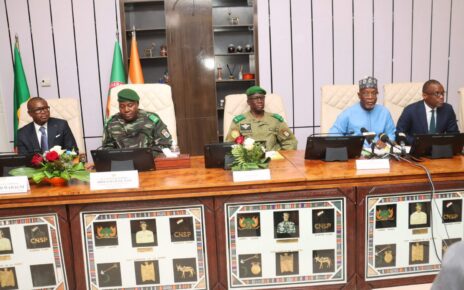
Recent coordinated assaults by the Jama’at Nusrat al-Islam wal Muslimin (JNIM) and the Front de Libération de l’Azawad (FLA) on April 25 have crippled Mali’s commercial lifelines, particularly in the western regions. Cities including Kati, Mopti, Sévaré, Gao, and Bamako bore the brunt of these strikes, resulting in significant civilian casualties and the tragic assassination of Defense Minister Sadio Camara.
In response, Malian authorities launched a decisive military counteroffensive targeting militant strongholds. Military prosecutors in Bamako confirmed multiple arrests, encompassing both civilians and active-duty personnel, including former soldiers.
Within days, the JNIM escalated its strategy by enforcing a rigorous blockade around Bamako, severing critical supply arteries. The closure of the Kita–Bamako highway left hundreds stranded, cutting off essential food and water supplies. This siege has since expanded, disrupting traffic along the Kayes–Bamako corridor and extending threats to the previously secure Conakry–Bamako route.
Economic fallout ripples across west african borders
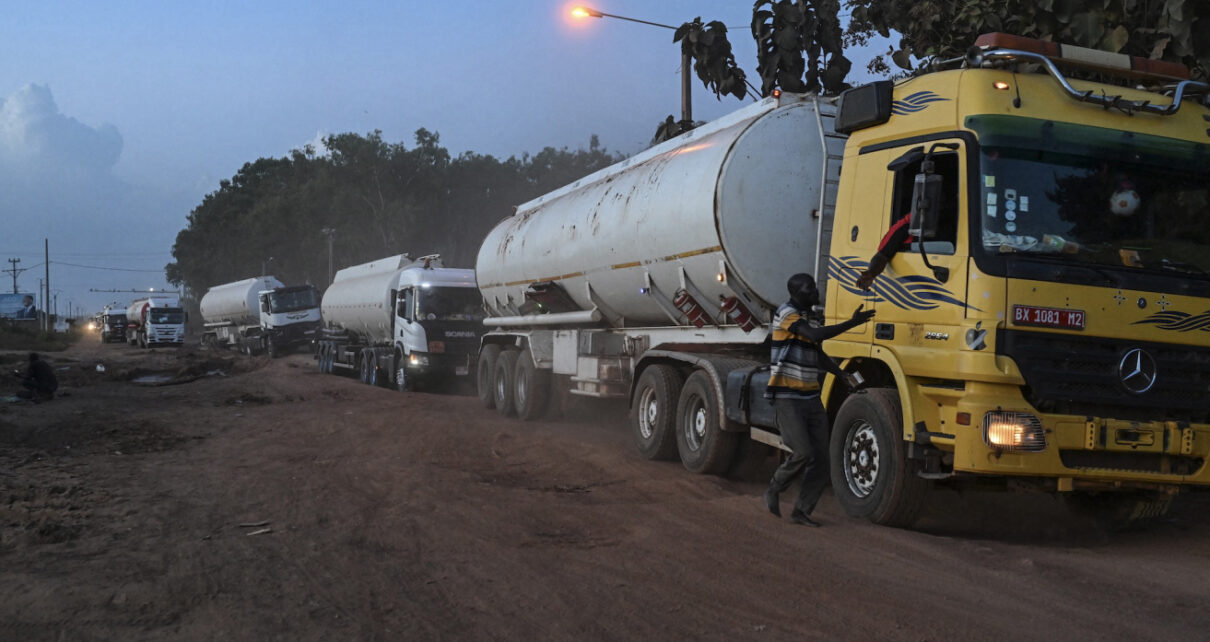
Since September 2025, the JNIM has systematically targeted fuel convoys traversing western and southern Mali, destabilizing regional trade flows. The economic repercussions are already visible, with ripple effects threatening to engulf neighboring nations dependent on these corridors.
West African economies are deeply interconnected. Coastal ports serve as the primary gateway for Sahelian nations, with road networks acting as critical arteries linking these ports to inland capitals. However, most of these routes now pass through JNIM operational zones, placing them under severe threat.
The Dakar–Bamako corridor, a vital trade bridge between Senegal and Mali, has borne the brunt of the escalating insecurity. In 2024, Mali accounted for 26.5% of Senegal’s exports—equivalent to 802.8 billion FCFA (1.42 billion USD). Yet, from January to September 2025, exports to Mali declined to 662 billion FCFA (1.17 billion USD), reflecting the growing impact of the blockade.
Between September and November 2025, the Port of Dakar saw a daily backlog of roughly 120 containers destined for Mali, costing Senegal an estimated 15 billion FCFA (26.54 million USD) per month. By late November, over 2,000 containers remained stranded in Dakar, while in February 2026, approximately 4,000 empty containers were trapped in Bamako, as drivers hesitated to risk the return journey.
Sahelian supply chains under siege
The blockade has severely disrupted Mali’s access to refined petroleum products, cement, and food staples, imperiling livelihoods across the supply chain. Other corridors, including those linking Côte d’Ivoire, Ghana, Togo, and Bénin to the Sahel, now face similar vulnerabilities.
Mali remained Côte d’Ivoire’s top trading partner within the West African Economic and Monetary Union (UEMOA) in 2025. The Abidjan–Bamako route, critical for fuel and food distribution, saw 1.47 million tonnes of goods transported in late 2025—until JNIM attacks in the Sikasso region intensified.
Côte d’Ivoire also serves as Burkina Faso’s leading African supplier of petroleum, electricity, and fertilizers, with imports routed through Ghana, Senegal, and Côte d’Ivoire itself. The February attack on Ghanaian tomato traders in Titao, Burkina Faso, underscored the broader security risks along this trade axis.
Government measures struggle against militant pressure
Facing mounting losses, Malian authorities have implemented emergency measures. Since November 2025, military escorts now accompany fuel convoys, facilitating the entry of 200 to 300 tankers weekly—down from nearly 1,200 before the blockade. A fuel rationing system has been introduced to curb black-market activity, while customs procedures have been streamlined in collaboration with local petroleum groups.
Efforts are also underway to redirect commercial flows from overburdened ports in Dakar and Abidjan to alternative infrastructures. Reports of a temporary truce with militant factions ahead of Eid al-Adha were swiftly denied by Malian officials, as attacks persisted unabated.
Regional cooperation emerges as a necessity
The April 25 assaults underscored the limitations of Mali’s military-centric counterterrorism approach. While JNIM and FLA factions have demonstrated an ability to unite for large-scale operations, regional collaboration among Sahelian and coastal states remains fragmented.
The blockade’s regional consequences highlight an urgent need for joint protection of transnational trade corridors. Regional bodies, including the Economic Community of West African States (ECOWAS), the Alliance of Sahel States (AES), the Entente Council, the Mano River Union, and UEMOA, must act decisively to prevent the expansion of this crisis to other critical routes.
Counterterrorism efforts could serve as a catalyst for reviving essential regional partnerships between Sahelian and West African coastal nations.