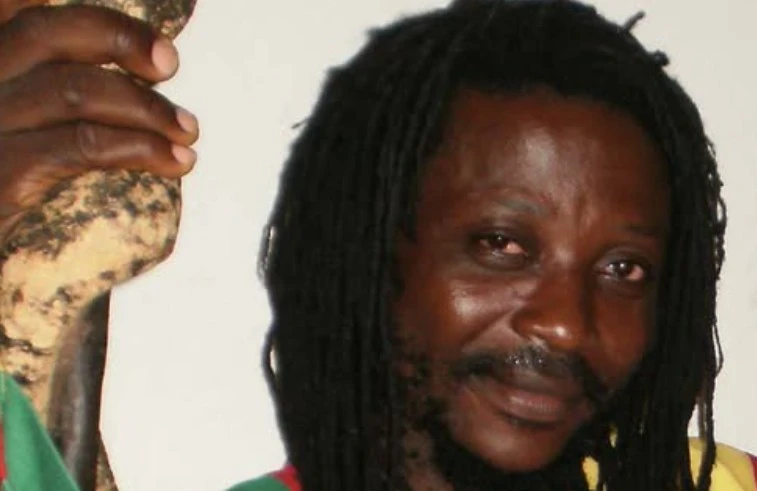
In a powerful statement released on June 26, 2026, political activist Joe La Conscience launched a direct critique against President Paul Biya. He painted a stark picture of Cameroon under Biya’s leadership, citing 43 years of what he describes as tumultuous governance, a noticeable decline in public liberties, and an alleged plan for a dynastic transfer of power. While accusing President Biya of preparing a family succession is not entirely new, La Conscience’s coining of the term “dynastocracy” introduces a fresh and provocative dimension to the debate.
four decades in power: a fractured legacy
Joe La Conscience began his analysis by examining the foundational moments of Paul Biya’s tenure. He asserted that Biya’s ascent to power in 1982 represented a significant misstep by his predecessor, Ahmadou Ahidjo. What was initially intended as a transitional mandate, according to La Conscience, gradually evolved into a deeply personal rule spanning more than four decades.
His statement outlined a bleak economic outlook for Cameroon, characterizing the governance as tribal and highlighting a steady erosion of public freedoms. These are substantial accusations, presented as the activist’s interpretations rather than findings from official investigations. Nevertheless, the tone of his argument is undeniably that of a forceful indictment.
the vice-presidency and a looming family succession
It is in this section that La Conscience’s statement takes a more precise and controversial turn. He specifically pointed to recent constitutional reforms in Cameroon, particularly the establishment of the vice-presidency, as a potential mechanism orchestrated from the highest levels to facilitate succession. He introduced the term “dynastocracy” to articulate his perception of an intent to transfer power within the presidential family circle.
The activist also alluded to supposed rivalries among individuals within the presidential entourage and various succession scenarios. While he presented these elements as hypotheses, lacking official confirmation, they are nonetheless indicative of a growing discourse, even within circles not aligned with radical opposition movements. The questions surrounding the president’s health, uncertainties about the post-Biya era, and tensions regarding a potential transition are not inventions of Joe La Conscience. Rather, he articulates these existing concerns and offers his own conclusions.
This marks a significant shift in Cameroon’s political discourse, regardless of whether institutional bodies choose to acknowledge it.