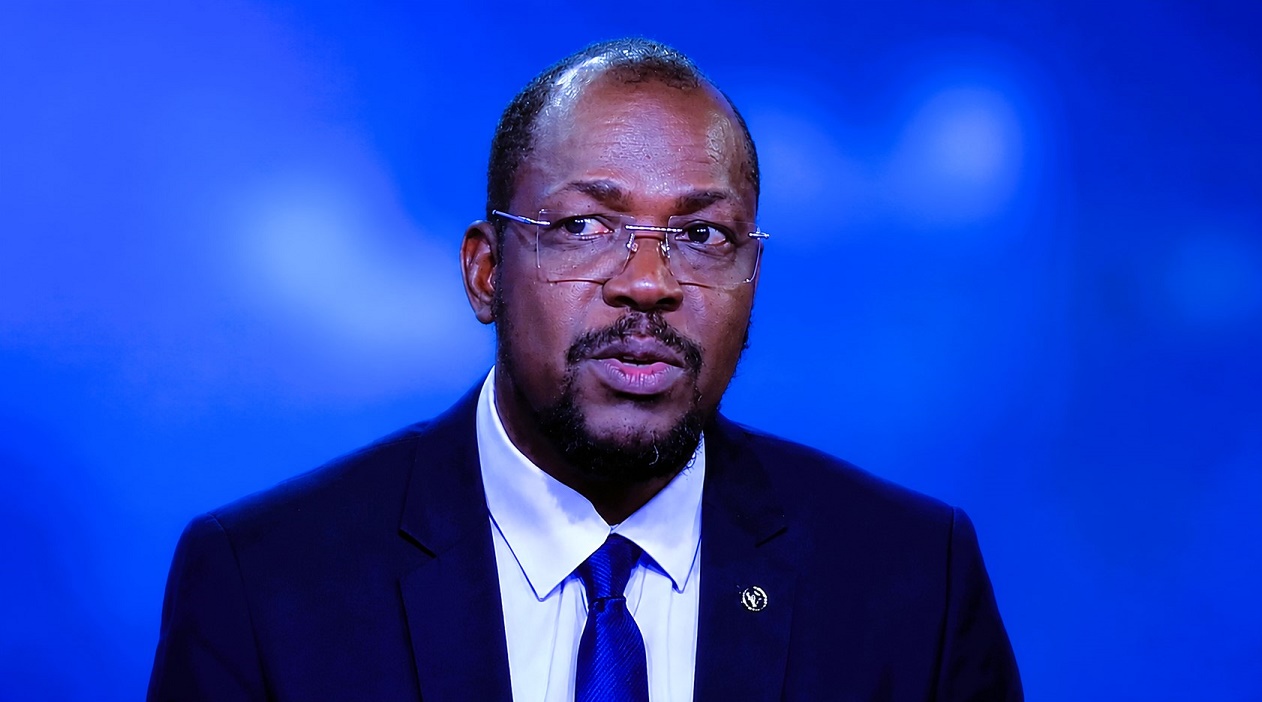
As Mali grapples with a deepening political and security crisis, the question of engaging with armed groups such as the Group for the Support of Islam and Muslims (JNIM) has moved to the forefront of national debate. In a rare interview, Étienne Fabaka Sissoko, spokesperson for the Coalition of Forces for the Republic (CFR), outlines his movement’s vision for resolving the conflict—while firmly rejecting any alliance with armed factions. Speaking with Mondafrique, Sissoko emphasizes that dialogue does not equate to capitulation or surrender, and warns against the dangers of conflating negotiation with concession.
Mali’s security crisis: when blockades harm civilians more than armed groups
Mali’s current situation is marked by a paradox. On one side, the country faces a worsening security vacuum in the north, with coordinated attacks threatening regional stability. On the other, Bamako is suffocating under a blockade that has choked supplies, hiked prices, and plunged families into uncertainty. “Calling this a strategy that ‘works’ would be a distortion,” Sissoko argues. “It’s a tactic that starves the people, not the insurgency. The real victims are civilians.”
For a landlocked nation, control over supply routes is a matter of sovereignty. Yet the CFR, a civilian-led movement advocating for a republican transition, rejects this form of warfare. “Military force alone cannot win this war,” Sissoko insists. “What’s needed is a political response—one that secures corridors, protects civilians, and creates conditions for a sustainable peace.”
“Malians want peace”—the CFR’s rise as a civic alternative
Launched in late 2025, the CFR has quickly positioned itself not as a traditional political party, but as a platform for national salvation. Though still in its early days, the movement resonates with a growing demand for leadership rooted in responsibility and transparency. “Malians are tired of the status quo,” Sissoko reflects. “They’re not looking for another strongman—they want a real pact, one that rebuilds trust and restores legitimacy through dialogue and elections.”
The CFR’s ambition is clear: to offer an alternative between prolonged military rule and the country’s drift into deeper crisis. It is neither allied with the Azawad Liberation Front (FLA) nor aligned with any armed faction. “Dialogue is not an alliance,” Sissoko states unequivocally. “We talk to all stakeholders, but we do not coordinate actions or endorse violence.”
No automatic legitimacy for armed groups—transition must be civilian-led
The April 2026 offensive by the JNIM, which threatened to destabilize the state, raised urgent questions: Was the CFR prepared to step into a power vacuum? Sissoko responds with caution. “A responsible movement must prepare for crises—but not by betting on state collapse or military victory.” He confirms that the CFR has modeled a civilian-led transition scenario, designed to restore public freedoms, secure communities, and prepare for constitutional reform ahead of elections. “The presidency should not be the starting point,” he states, “but the conclusion of a credible, inclusive process.”
He is equally firm on the role of religious leaders like Imam Mahmoud Dicko. “He is not a substitute for political leadership,” Sissoko clarifies. “His strength lies in moral authority—mediating tensions, fostering dialogue, and rebuilding social trust. But executive power must rest with elected institutions.”
Dialogue with the JNIM? No capitulation, no rewards
The CFR’s call for dialogue with the JNIM is often misinterpreted. “This is not a surrender,” Sissoko asserts. “It is a tool to end war and protect lives.” Yet he draws a red line: affiliation to Al-Qaeda makes engagement impossible. “Our non-negotiables are clear: Mali’s unity, a republican state, fundamental freedoms, and a break from transnational armed agendas.”
Regarding claims that JNIM leader Iyad Ag Ghali might abandon global jihad, Sissoko remains skeptical. “We don’t build national strategy on intentions or rumors,” he says. “Only verifiable actions matter. If any actors within JNIM wish to join a strictly Malian peace process, they must prove it: halt attacks, protect civilians, allow humanitarian access, cut ties with Al-Qaeda, and accept Mali’s territorial integrity.”
Beyond the sharia debate: CFR’s vision for decentralization
Sissoko rejects the reductionist framing of Mali’s crisis as a struggle over sharia. “The real issue is the collapse of the state at the local level,” he explains. “Where governance fails, communities turn to customary or religious authorities out of necessity.” The CFR proposes a constitutional republic that integrates local mediation—without imposing theocracy. “Our principles are non-negotiable: respect for the Constitution, equality, protection of women and children, and access to national justice.”
On federalism, Sissoko insists it is about competence and resources, not partition. “A united Mali must be more regionalized. Local authorities need autonomy and fiscal means, while the state retains its sovereign functions. Concentrating everything in Bamako is inefficient—and unsustainable.”
A roadmap for rebuilding: reopening schools, restoring justice, reviving the economy
The CFR has developed a transition program focused on restoring the ‘useful state’. Priorities include reopening schools, strengthening the judiciary, protecting civilians, and reviving the economy. “Education, justice, security, energy, and food access are the pillars of reconstruction,” Sissoko emphasizes. “Without them, there can be no durable peace.”
He also addresses the Alliance of Democrats of the Sahel (ADS), a regional civic convergence. “It’s not a military alliance or a unified command,” he clarifies. “It’s a solidarity network among Malian, Burkinabè, and Nigerien democrats facing shrinking political space. The CFR remains a Malian initiative, but we share a common belief: the Sahel will not be saved by force, but by a strong national and regional pact.”
The CFR rejects revenge, partition, theocracy, and a return to the old system. Instead, it champions a transition rooted in civic dialogue, territorial refoundation, and the restoration of popular sovereignty. “Mali’s salvation will not come from one leader,” Sissoko concludes. “It will come from a strong pact—one forged in peace, justice, and the will of the people.”