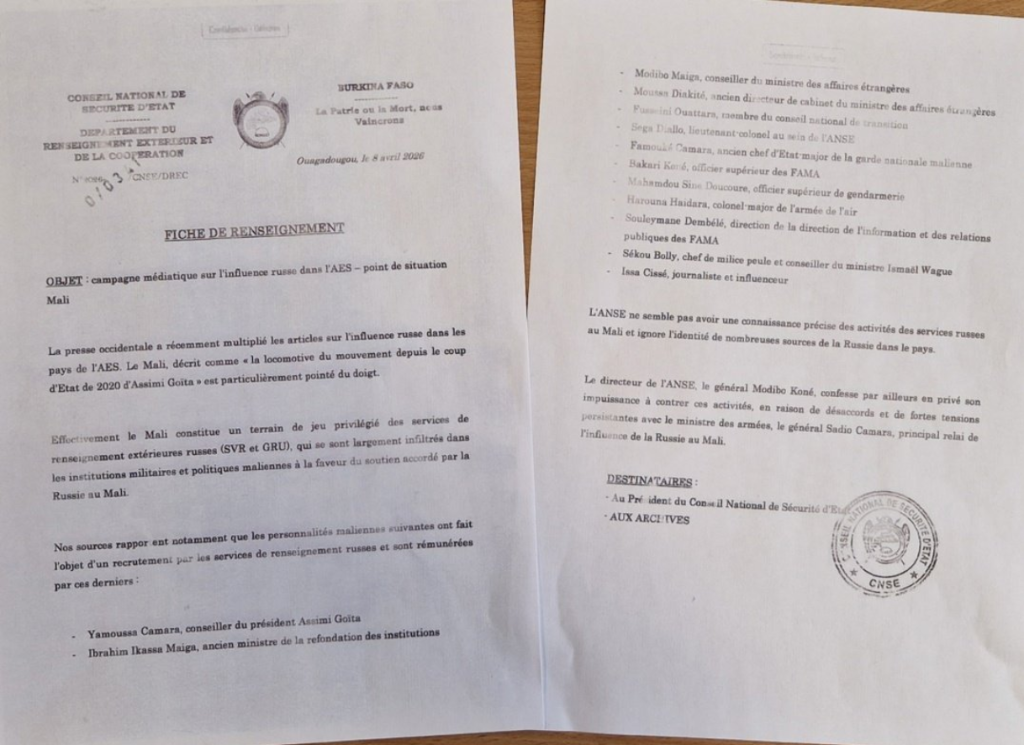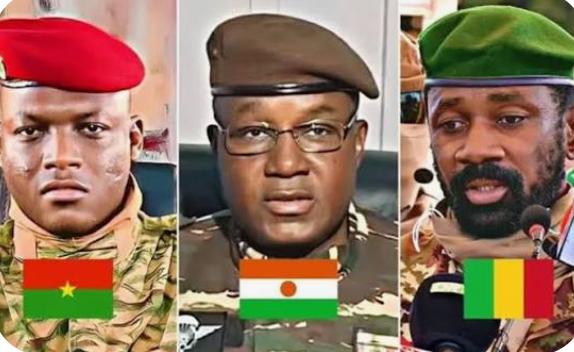
In a stunning twist, the Sahel Alliance (AES)—a coalition formed by Mali, Burkina Faso, and Niger to counter external threats—now faces an unprecedented internal crisis. While official statements emphasize unity, a leaked intelligence report from Burkina Faso has exposed a troubling reality: Mali’s leadership may no longer act independently, with Moscow’s shadow networks deeply embedded in its corridors of power.
Key Figures Allegedly Tied to Russian Influence
The Burkinabè report doesn’t just point to foreign advisors—it reveals a systematic infiltration at the highest levels of Mali’s government. Among the names cited are:
- Yamoussa Camara, a close advisor to President Assimi Goïta
- Modibo Maïga and Moussa Diakité, influential figures in administration and diplomacy
- Bakari Koré and Harouna Haidara, high-ranking military officials
- Sékou Bolly and journalist Issa Cissé, linked to media and militia networks
This web of connections suggests a deliberate effort to sway Mali’s decisions, raising alarms in Ouagadougou. If Bamako’s choices are steered by Russian interests, the entire AES strategy could be compromised.
From One Dependency to Another?
The AES was built on a promise: breaking free from Western influence. Yet, its members now question whether Mali has merely swapped one dependency for another. The growing presence of foreign mercenaries and shadowy advisors has sparked deep unease, particularly in Niger, where leaders worry that Mali’s military and political moves may no longer serve regional interests but Moscow’s geopolitical agenda.
The stakes are high. Suspicions of foreign control threaten to fracture the alliance, with Burkina Faso already distancing itself from Bamako’s leadership. The fear? That instability or externally driven decisions in Mali could destabilize the entire Sahel.
The AES at a Crossroads
The alliance’s future hangs in the balance. Can a defense pact survive when one member appears to have surrendered its sovereignty? The leaked report underscores a harsh truth: the AES risks collapse if Mali fails to reclaim control over its own destiny. For many analysts, the alliance’s survival depends on whether Bamako can sever these invisible ties—or if the alliance will crumble under the weight of its own contradictions.