Mali’s HPV vaccine campaign gains ground one year after launch
One year after introducing the human papillomavirus (HPV) vaccine in Mali, the initiative is gaining strong momentum. In Bamako and surrounding areas, an increasing number of 10-year-old girls are receiving their protective dose against cervical cancer. While challenges such as hesitancy, misinformation, and logistical hurdles persist, healthcare workers, associations, and families celebrate a major step forward for women’s health.
Overcoming skepticism through education
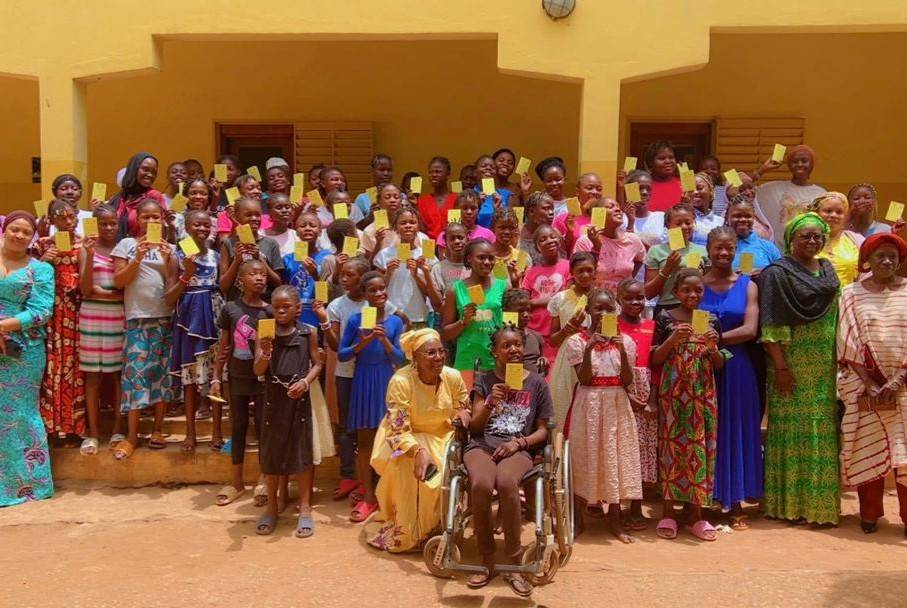
In late October, a community meeting in Korofina, Bamako, brought together women and young girls at the local civil registry. Amin Dem, a midwife, led the discussion. « Initially, there was a lot of hesitancy. Girls were afraid, and so were their parents. But with awareness-raising efforts, things have changed,» she explains.
The biggest concern remains the myth that the vaccine could cause infertility. « When we take the time to explain, especially in their own language, they understand,» Amin Dem emphasizes.
a significant leap in cervical cancer prevention
Introduced in November 2024, the HPV vaccine represents a turning point for the country. With the single-dose regimen now providing full protection, more than 145,000 10-year-old girls were vaccinated between January and September 2025. Over 113,000 of them were in school, while around 32,400 out-of-school girls were reached. Authorities acknowledge the need for additional efforts to reach the latter group, which is often at higher risk of being left behind.
Dr. Ibrahima Téguété, a gynecologist-obstetrician at the CHU du Point G, highlights how this initiative aligns with the WHO’s 90-70-90 targets: vaccinating 90% of girls against HPV, screening 70% of women at two key ages, and ensuring treatment access for 90% of those with lesions. « The vaccine’s introduction is a major achievement. It finally allows us to act in primary prevention, » he notes. However, he remains realistic about system limitations: « We only have one radiotherapy unit. Reaching the final ‘90’ will still be difficult. »
collective action drives progress
While the campaign relies on public health structures, civil society plays a crucial role. In Bamako, the NGO Solidaris223 has conducted numerous awareness sessions since the launch. « We’ve intervened in every district. Mothers came to ask where they could vaccinate their daughters, » says its president, Amina Dicko.
At the Djiguiya Center in Bamako, an entire day was dedicated to vaccination. « Seventy boarding school girls received their dose, and none experienced side effects, » confirms director Mme Togo Mariam Sidibé.Awa, 10, shares her experience: « I was afraid of the needle, but it went quickly. I’m happy because it protects us for the future. » Haby, vaccinated at school, adds: « The teacher explained why it’s important. I asked my mother, and she reassured me. I’m proud to be vaccinated. » For Dr. Téguété, these stories reflect collective commitment: « The initial supplies were used up quickly. This proves there’s a strong will to make it work. »
myths persist, but resistance is fading
Rumors about fertility continue to fuel some resistance. « Some claim the vaccine is meant to harm us. That’s completely false, » insists Dr. Téguété. Amin Dem sees daily progress: « Today, some mothers come on their own to ask for the vaccine. Taking the time to explain makes all the difference. »
Fannata Dicko’s story illustrates this shift. « I vaccinated my daughter because cervical cancer is deadly. My mother-in-law passed away from it this year. I saw how much pain it caused. Prevention is better than cure—I never want my daughter to suffer like that. »Despite progress, challenges remain. « Between Mopti and Gao, road travel is sometimes impossible, » Dr. Téguété admits. To overcome this, some supplies are airlifted to regional capitals.
further reading
The vaccine remains entirely free for all 10-year-old girls, a measure maintained through joint efforts by the government and technical and financial partners, including Gavi, which ensures affordable access. This free provision guarantees equitable access, even in remote areas. « If we can sustain this effort for a few more years, we’ll have vaccinated every girl aged 9 to 14, » the specialist estimates.
hope on the horizon, despite obstacles
Prevention efforts aren’t new. Between 2016 and 2022, the Weekend 70 program increased cervical cancer screening rates in Bamako from 15% to over 70%. But misinformation remains a major hurdle. « What people don’t know, they fear. We must keep explaining, informing, and talking, » Dr. Téguété stresses. He also praises the involvement of religious leaders. « Their support has reassured many families. » In Bamako, results are visible: parents are more confident, and more girls are getting vaccinated. « Bamako isn’t Mali, but it’s a good indicator of what we can achieve together. » Amin Dem shares this optimism: « Before, people asked why we were talking about cancer here. Now, they come seeking answers. »
For professionals and associations alike, the HPV vaccine marks the beginning of a profound transformation in women’s health in Mali. As Dr. Téguété reminds us, « Behind every vaccinated girl, a woman is saved. »