Fada N’Gourma – While poliomyelitis remains a formidable threat, it is entirely preventable through immunization. Across Burkina Faso, dedicated mothers are taking a stand, ensuring their children receive life-saving protection against diseases that can be stopped with a simple vaccine.
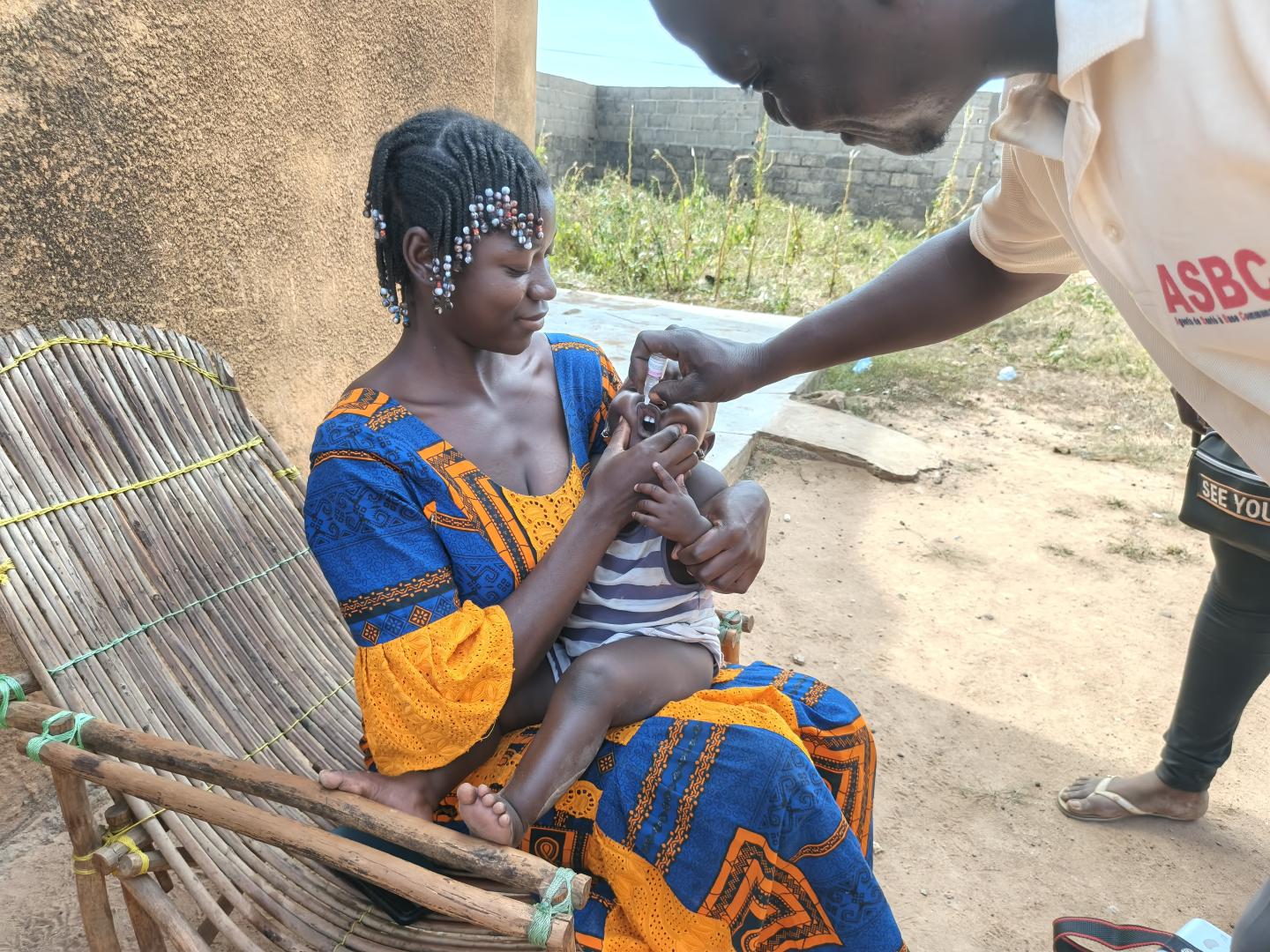
In the Sector 9 Health and Social Promotion Center (CSPS) area of Fada N’Gourma, Nadège Thiombiano is a model of maternal vigilance. As soon as the latest polio immunization drive was announced, she prepared her 13-month-old daughter, Mouzaratou, for the visit. For Nadège, staying on top of the vaccination schedule is more than a routine; it is a sacred vow. “I have witnessed the devastating impact of polio on a child’s life,” she explains. “As long as I am here, my children will never miss a single dose.”
Her determination stems from seeing the physical toll the disease takes on those unprotected. Today, she views immunization as synonymous with life itself. Consequently, Mouzaratou is fully up to date with her national vaccination calendar, including the vital polio drops.
The recent campaign, which ran from November 7 to 10, saw health workers at the Sector 09 CSPS starting their rounds at dawn. Their efforts resulted in the vaccination of 5,290 children aged 0 to 59 months. This achievement represents a 104% coverage rate, significantly exceeding the initial target of 5,060 children.
André Yonli, the head nurse at the facility, attributes these impressive numbers to a combination of parental engagement and the tireless work of mobilizers and vaccinators. He noted that success was built on strategic planning and community cooperation. “We conducted advocacy meetings to address potential hurdles quickly,” Yonli stated. “Mobile teams successfully reached isolated areas, including informal settlements and sites for internally displaced persons, thanks to rigorous monitoring and precise logistics.”
The health center also focused on improving data management and interpersonal communication to better educate families. This involved deep collaboration with traditional and religious leaders, as well as local women’s associations and civil society groups.
This community-centered approach is changing minds, as seen with Talato Lompo, a mother of four. Initially hesitant due to local rumors, she feared vaccines might cause illness. “Daily conversations with health workers helped me understand the truth,” she says. “I’ve noticed my children rarely get sick now that they are vaccinated, which is why I continue to bring them.”
Adjaratou Ouoba, a community health volunteer, has observed this positive shift firsthand. She notes that increased awareness has led many parents to take the initiative, proactively seeking out protection for their families rather than waiting for health workers to find them.
Dr. Sandrine Bienvenue Sam, the District Medical Officer for Fada N’Gourma, highlighted the essential support of technical and financial partners, particularly the World Health Organization (WHO). The WHO provided comprehensive assistance, from initial planning to post-campaign analysis. This included logistics for vaccine transport, field supervision, and the deployment of over twenty experts—including epidemiologists and communication specialists—to ensure the highest quality of operations.
The impact of this collaborative effort is evident: more than 134,000 children were immunized across the entire health district, reaching a coverage rate of 103%. These results reinforce the commitment of Burkina Faso to remain polio-free—a status it has held since 2015—and to guard against any potential return of the virus.
For parents like Nadège, the statistics represent a simple, powerful reality: healthy children with bright futures. As she holds Mouzaratou, she reflects on the significance of the campaign: “This vaccine is a small gesture, but it provides protection for a lifetime.”
As immunization efforts continue, every family plays a part in keeping Burkina Faso safe. By participating in these campaigns, communities are not just preserving past achievements but are building a future where polio is a memory of the past, and every child has the chance to grow up healthy.