- News
- Politics
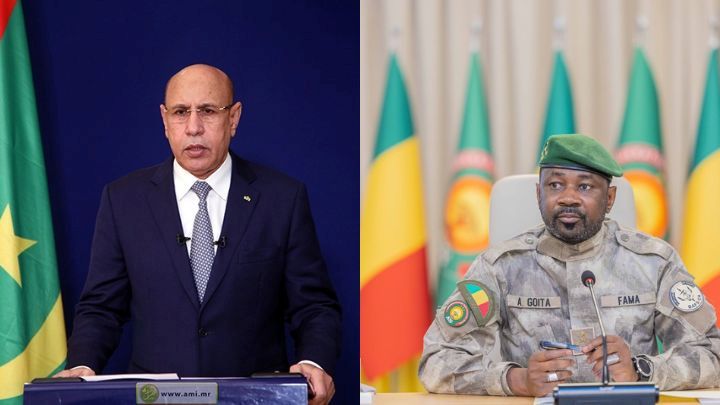
How Mauritania turned against Mali’s transitional leadership
Recent truck burnings along the Sahel’s border regions are more than isolated security incidents—they signal a deepening crisis in the trade arteries linking Mauritania, Morocco, and northern Mali. Once relatively stable, these corridors now face persistent insecurity, worsening supply shortages for the region’s northern populations struggling to access essential food and goods.
Trade flows that once supplied markets in Timbuktu and Gao via Mauritania have dwindled significantly. Trans-Saharan routes, historically vital for goods movement, now face disruptions that further destabilize an already fragile economic balance in northern Mali.
For years, Mauritania served as a critical hub in commercial networks connecting Morocco to northern Mali. Goods transited through its ports before reaching key cities in the north, relying on Malian merchant networks with deep roots in the region’s ancient caravan trade traditions.
Analysts note that Mauritania played a central role in northern Mali’s humanitarian and economic stability. The country not only facilitated trade but also provided refuge for those fleeing insecurity. Since 1991, Nouakchott has kept its borders open to waves of Malian refugees. Recent estimates indicate over 300,000 displaced Malians reside in eastern Mauritania, particularly in the Mbera camp and surrounding host communities.
A once-solid security partnership frays
This openness also strengthened cross-border security efforts. Nouakchott’s authorities reportedly contained armed threats early, limiting their foothold in border zones. However, this cooperation has eroded amid deteriorating regional security conditions. Mali’s transitional leadership, alongside foreign military partners—including Russian contingents—has reshaped perceptions of bilateral relations.
Border areas now face increasing military operations and civilian tensions. Repeated incidents—arrests, armed clashes, and accusations against civilians suspected of aiding armed groups—have weakened traditional cooperation mechanisms between communities.
Eroding local networks fuel instability
As Umar Al-Ansari observes, these tensions have weakened long-standing cross-border networks. “Each incident—whether kidnappings or allegations—further destabilizes the merchant, herder, and transporter networks that have structured border life for decades,” he explains. “This erosion of trust has created vacuums that armed groups exploit, seizing control of zones once dedicated to commerce and human movement.”
Today, routes linking Mali to Mauritania face growing insecurity, with frequent disruptions isolating northern Mali’s economy further.
Once seen as Bamako’s essential partner and a bastion of stability, Mauritania has gradually distanced itself from cooperation efforts. This shift reflects profound realignments in regional alliances, driven by security tensions and evolving strategic priorities.