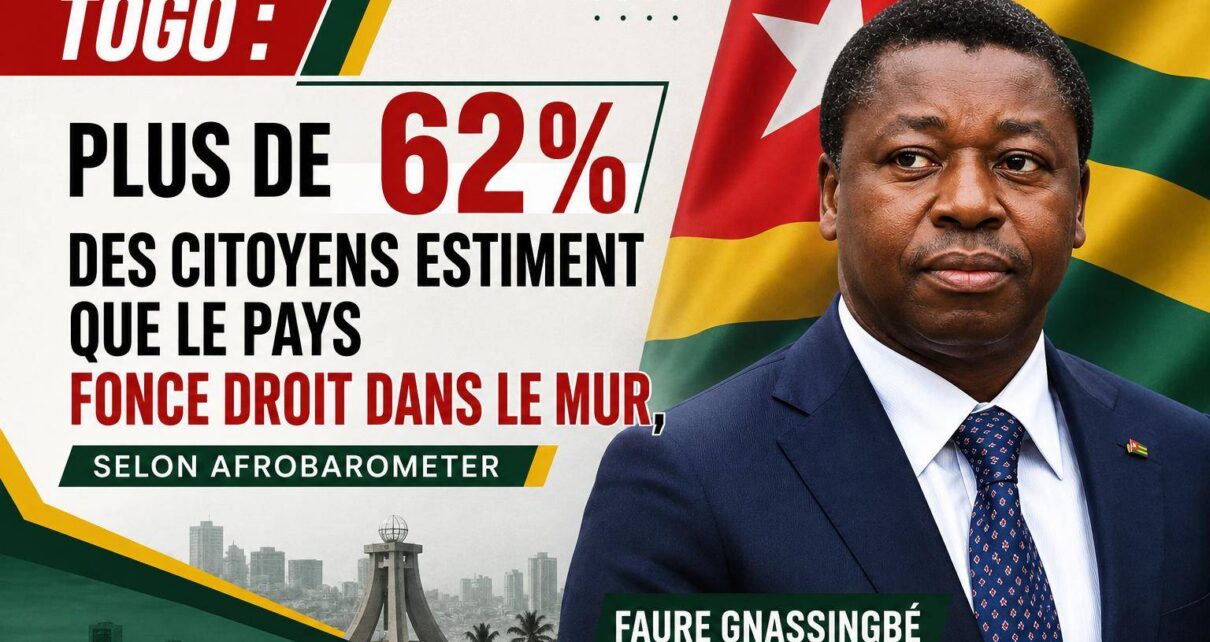
The narrative of progress and stability pushed by official channels in Togo has collided head-on with the stark reality faced by its people. According to the latest Afrobarometer survey, a staggering 62% of citizens believe the country is heading in the wrong direction, delivering a resounding rebuke to the administration led by President Faure Gnassingbé. The findings paint a portrait of a nation at a breaking point, where severe poverty, water shortages, and inadequate healthcare have widened the chasm between the ruling elite and the everyday Togolais.
a growing tide of disillusionment in Lomé and beyond
Discontent is no fleeting sentiment—it’s a deep-rooted sentiment of betrayal. Over six out of ten Togolese now view the nation’s trajectory as bleak, a dramatic surge of eleven percentage points since 2021. This erosion of confidence isn’t baseless; 63% of citizens now rate the country’s economic management as poor or very poor. The sentiment stems from a harsh reality: wages are shrinking, the cost of living is soaring, and job opportunities remain scarce for a youthful population brimming with potential but starved of opportunity.
the human cost behind economic growth
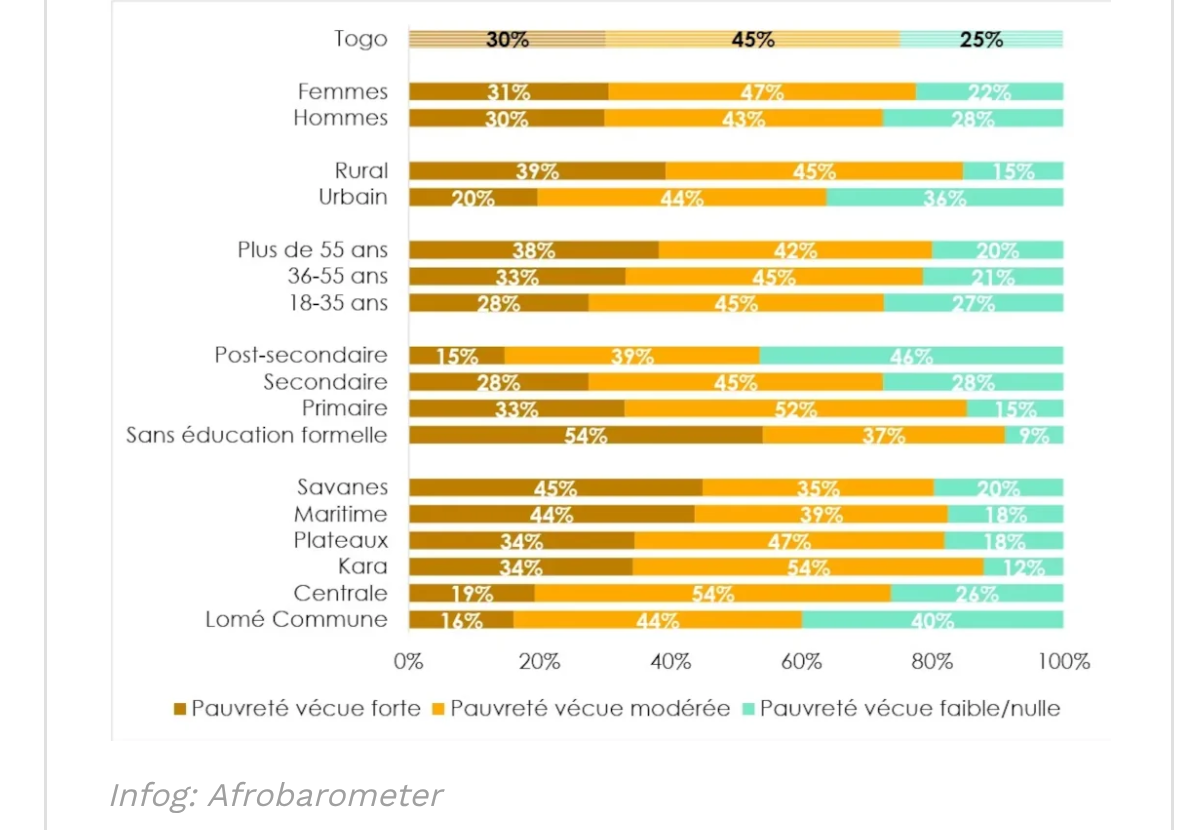
While policymakers celebrate GDP growth figures, Afrobarometer’s findings dive into the lived experience of poverty—one that plays out daily in homes and communities across Togo. The results are sobering. A majority of respondents describe their living conditions as poor, and more than half report their financial situation has worsened over the past year. Today, three-quarters of Togolese are trapped in moderate to severe poverty, exposing the gap between macroeconomic headlines and ground-level suffering. For most, survival has become an endless grind—scarce cash, unreliable healthcare, and erratic access to clean water define daily life.
regional disparities reveal stark inequalities
The study uncovers glaring territorial and social divides. Contrary to expectations, regions traditionally seen as political strongholds are not immune. The Kara region, for instance, stands out with a shocking 88% poverty rate, directly contradicting state claims of balanced development. The survey also highlights that women and rural residents are disproportionately affected, while formal education—once a pathway to stability—now offers little protection in a job market marred by favoritism and scarcity.
broken promises and a widening divide
The disconnect between official rhetoric and public suffering has never been more glaring. Luxury and opulence among a privileged few stand in stark contrast to the deepening misery across the interior. Development priorities have skewed toward high-profile infrastructure projects, leaving human capital investment critically underfunded. Afrobarometer’s data signals a society on the brink—trust in institutions is eroding, and fundamental rights are slipping further out of reach.
The time for rosy economic indicators has passed. When a nation’s majority declares its country is on the wrong path, it’s not just policy that’s under scrutiny—it’s the entire system of governance. The so-called Togolese economic miracle is a mirage for those at the bottom of the pyramid. Without urgent, people-centered reforms, the ship of state risks sinking entirely. The people of Togo have spoken. They are exhausted from merely surviving. The question now is whether anyone in Lomé is listening.