Mali’s junta struggles as coordinated insurgent offensives expose deep security failures
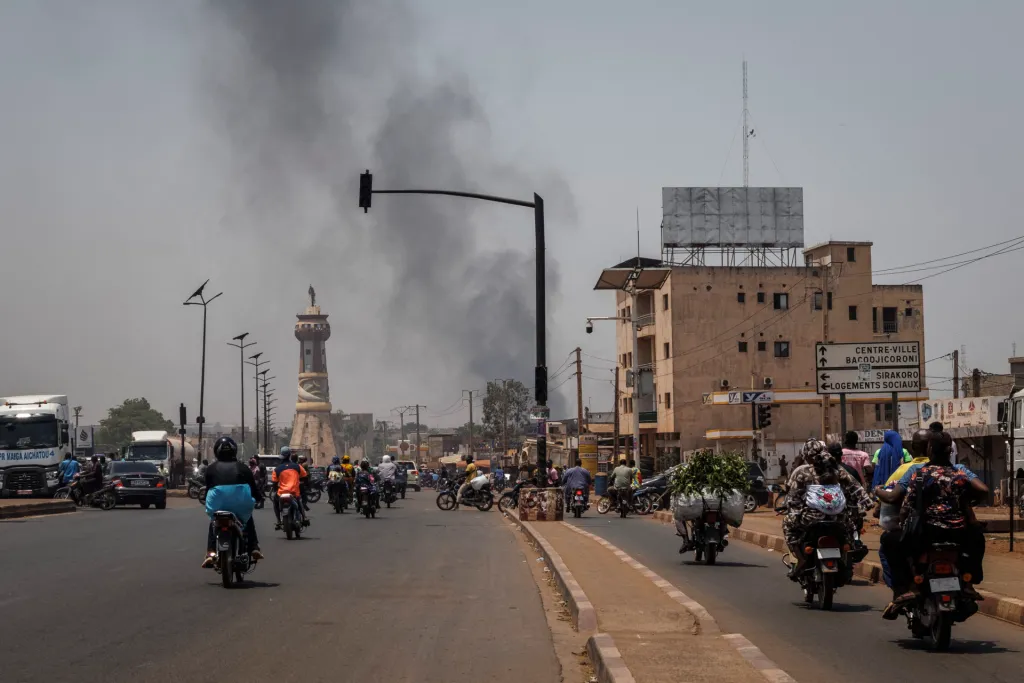
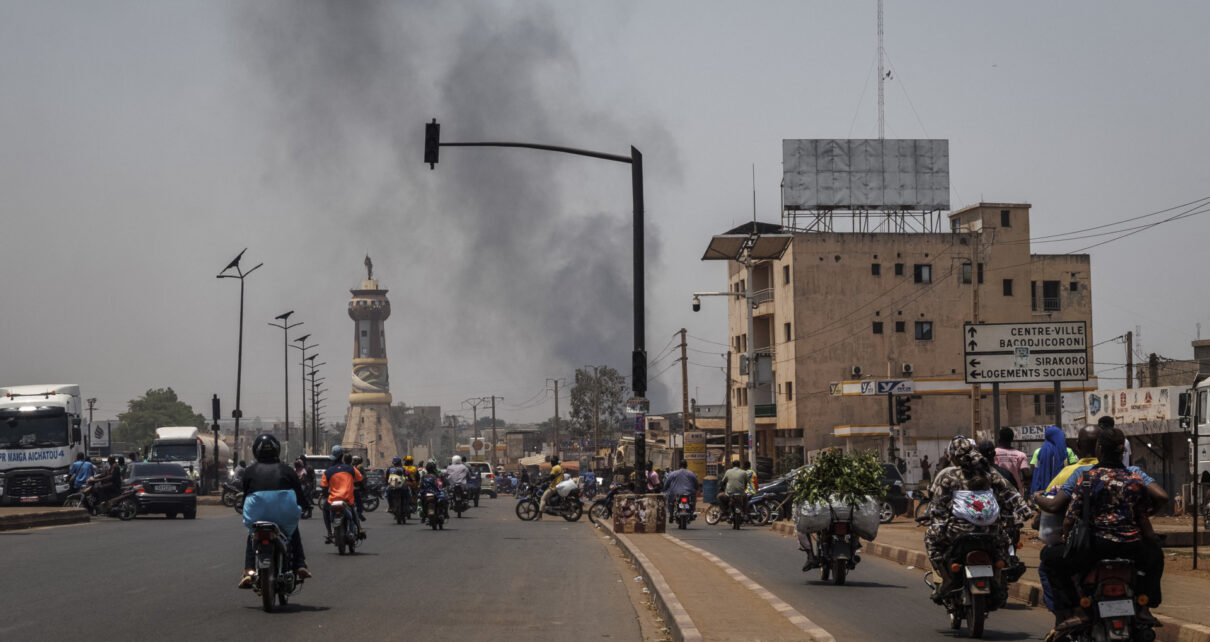
The military junta in Mali faces its sternest challenge yet after coordinated insurgent offensives on April 25 sent shockwaves through the Sahel region. Twin assaults launched by the Group for the Support of Islam and Muslims (JNIM) and the Tuareg separatist Front for the Liberation of Azawad (FLA) targeted key military positions across the country, including the strategic garrison town of Kati, just 15 kilometers northwest of Bamako. The coordinated strikes resulted in the death of Defense Minister Sadio Camara and left the junta scrambling to contain the fallout.
Despite official claims of restored control, the Mali junta’s security strategy lies in tatters. The Russian-backed Africa Corps, which replaced the Wagner Group, failed to prevent insurgents from seizing the northern city of Kidal without resistance. This abrupt withdrawal underscored the growing instability gripping the region and raised serious questions about the junta’s reliance on Moscow for security support.
Unprecedented coordination between jihadists and separatists
The April 25 attacks marked the first major offensive in over a decade involving the JNIM and FLA alliance. While their previous collaboration in 2012 ended in violent division, this new tactical partnership highlights a shared objective: eroding the junta’s authority.
JNIM, an al-Qaeda-affiliated group, has long pursued an Islamic emirate across northern Mali, while the FLA advocates for Tuareg self-determination. Their recent alliance reflects a strategic shift, with both groups leveraging drone warfare, economic blockades, and cross-border networks to pressure the Malian state. The ongoing blockade of fuel and food supply routes from Senegal and Côte d’Ivoire has crippled the economy, forcing school closures and fueling public discontent.
Russia’s security model falters as Africa Corps struggles
The junta’s pivot toward Moscow was meant to deliver stability after decades of failed Western-backed counterterrorism efforts. However, the Africa Corps, now operating under the Russian Ministry of Defense, has shown limited combat effectiveness. Data from the Armed Conflict Location and Event Data (ACLED) project reveals a decline in military engagement, with battles involving Russian fighters dropping from 537 in 2024 to just 402 in 2025. The Ukraine conflict has further strained Russia’s capacity to sustain its African deployments.
The humiliating withdrawal from Kidal underscores the Africa Corps’ diminished role. Unlike Wagner, which operated as a frontline combat force, Africa Corps functions primarily as a training and advisory unit—ill-equipped to counter the escalating insurgency. This shift in mandate has weakened Mali’s defenses at a critical juncture.
Junta legitimacy under threat amid regional instability
The Alliance of Sahel States (AES)—comprising Mali, Burkina Faso, and Niger—was formed to challenge Western security partnerships, expelling French and UN forces in favor of Russian support. Yet, the recent offensive has laid bare the fragility of this approach. Since 2012, Sahelian militaries have cited insecurity to justify at least five coups, including the overthrow of democratically elected leaders in Mali and Burkina Faso.
Government Assimi Goïta, who seized power in 2020, now faces mounting internal dissent. The death of Defense Minister Camara removed a key rival but also exposed vulnerabilities in the junta’s security apparatus. A failed coup attempt in August 2025 highlighted fractures within the military, with dozens of soldiers, including two generals, arrested for plotting against the regime.
The recent offensive has intensified pressure on Goïta’s leadership, raising the specter of a palace coup or junior officer mutiny. The junta’s decision to dissolve political parties and grant Goïta a renewable five-year term has further eroded its legitimacy, leaving the Malian state weaker than ever.
U.S. leverage grows as Russian influence wanes
The Biden administration is reconsidering its stance on Mali, with indications of a potential minerals-for-security deal. The Treasury Department recently lifted sanctions on three senior Malian officials, including the late Defense Minister Camara, signaling a willingness to re-engage. Discussions are underway to restore intelligence-sharing, drone surveillance permissions, and access to critical minerals like lithium and gold.
This shift in U.S. policy could pressure the junta to reconsider its Russian alignment, particularly as the JNIM threat expands. The group’s ability to operate drones, sabotage supply chains, and coordinate cross-border attacks has transformed Mali into a regional epicenter of extremism. With the Malian state’s resources and legitimacy in decline, the junta’s survival hinges on finding a new security partner—one that can deliver more than empty promises.
Regional repercussions: will other juntas follow suit?
The Mali insurgent offensive serves as a cautionary tale for other Sahelian juntas that have embraced Russian security guarantees. The Africa Corps’ retreat from Kidal has damaged Russia’s reputation as a reliable partner, prompting neighboring governments to reassess their own alliances.
In the Central African Republic and Madagascar, where Russian military instructors have been deployed, governments may now question the long-term viability of Moscow’s support. The Kremlin’s struggles in Syria and the recent Venezuela crisis further highlight the limitations of Russian security partnerships, leaving Sahelian leaders to confront a harsh reality: the junta model is failing.
As the dust settles on the April 25 attacks, one truth emerges: Mali’s junta is running out of options. With its security strategy in ruins, its legitimacy in question, and its Russian backers stretched thin, the survival of the regime—and the stability of the Sahel—hangs in the balance.