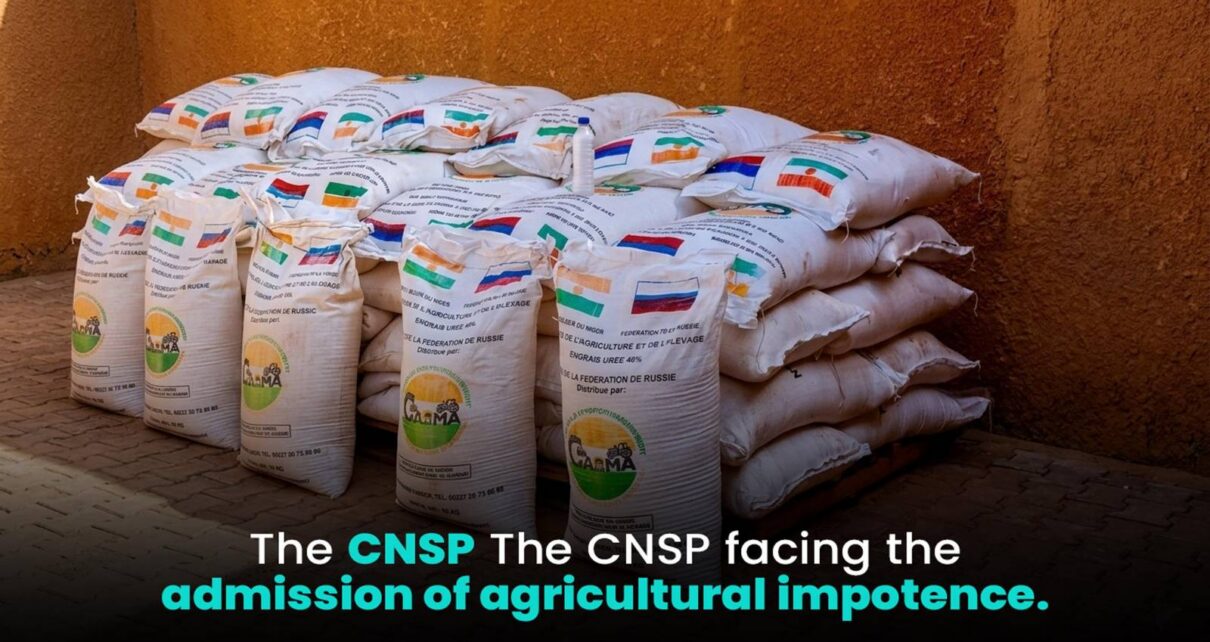
The Republic of Niger has recently taken delivery of a substantial consignment of 20,000 metric tons of fertilizer from the Russian Federation. This shipment, which arrived at the Port of Lomé before being transported inland by convoy, reflects the transitional authorities’ commitment to enhancing domestic agricultural output and ultimately achieving food self-sufficiency.
A vital lifeline for the agricultural sector
The timing of this fertilizer delivery is pivotal for Nigerien farmers, who face mounting challenges from fluctuating global prices and increasingly severe climate conditions. Access to affordable fertilizers remains the single most critical factor limiting crop yields. The Nigerien government has confirmed that these agricultural inputs will be distributed primarily to small-scale farmers, who form the backbone of the national economy.
According to the National Council for the Safeguard of the Homeland (CNSP), this donation from Moscow embodies a win-win partnership and tangible solidarity, free from the political strings often attached to Western aid, which Niamey has historically found overly restrictive.
Food aid versus food sovereignty: a delicate balance
The appropriateness of accepting foreign aid while advocating for strict national sovereignty has sparked considerable discussion. Can a nation legitimately claim autonomy when its food security depends on external donors?
The pragmatic stance of the current administration suggests that sovereignty is not synonymous with isolation. Instead, it is framed as the ability to select one’s partners freely. By opting for Russian support over Western alternatives, Niger is signaling a definitive break from past dependency models and diversifying its strategic alliances.
The immediate food security crisis underscores a fundamental truth: political sovereignty cannot exist without a stable food supply. In this context, the Russian fertilizer is viewed not merely as aid, but as a production tool designed to diminish future reliance on cereal imports.
The shadow of a new dependency
Critics caution, however, that merely shifting dependency from one bloc to another—from the West to the East—does not eliminate vulnerability. To achieve true sovereignty, this temporary assistance must be complemented by long-term investments in local fertilizer production infrastructure.
Strengthening the Niamey–Moscow axis
This donation exemplifies the deepening ties between Niger and Russia, extending cooperation beyond defense into critical areas such as rural development.
“True sovereignty begins when a people can feed themselves through their own labor. If this gift helps revitalize our land, it brings us one step closer to genuine freedom,” remarked a policy analyst based in Niamey.
In conclusion, while the receipt of foreign aid may appear contradictory to the rhetoric of self-sufficiency, Niger is embracing a policy of realism. By leveraging resources from new partners, the nation is laying the groundwork—step by step—for the pillars of economic independence.
As the debate continues: Should Niger prioritize the construction of domestic fertilizer plants to fulfill its sovereignty agenda, or does diversifying partnerships alone suffice to secure its autonomy?