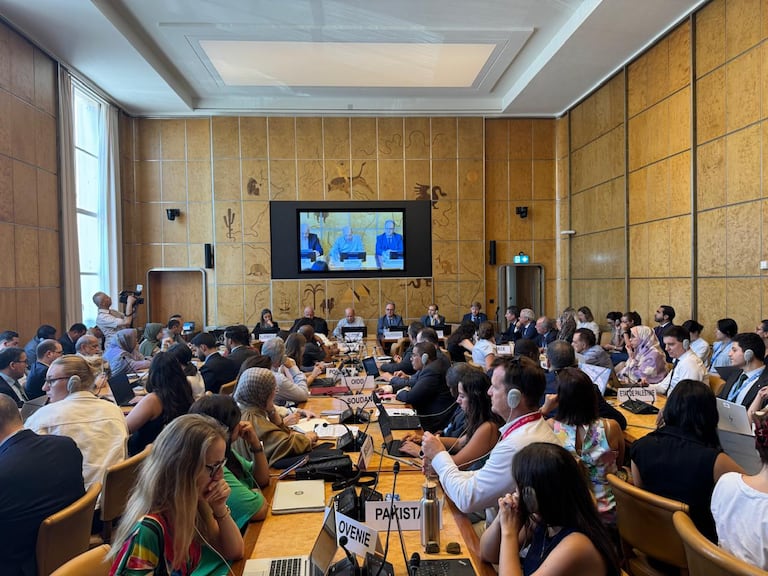
An international gathering in Geneva recently underscored the profound global recognition of corruption’s damaging impact. This significant event builds upon the ongoing work of the Human Rights Council, notably resolution 59/6 from July 2025, which firmly establishes the widely accepted principle that combating corruption and safeguarding fundamental human rights are inherently intertwined and mutually reinforcing. Various international accords, including the United Nations Convention against Corruption, the 2011 Marrakech Declaration, and the UNGASS 2021 political declaration, consistently advocate for a proactive, preventive strategy rooted in upholding the rule of law, democratic principles, and universal human rights.
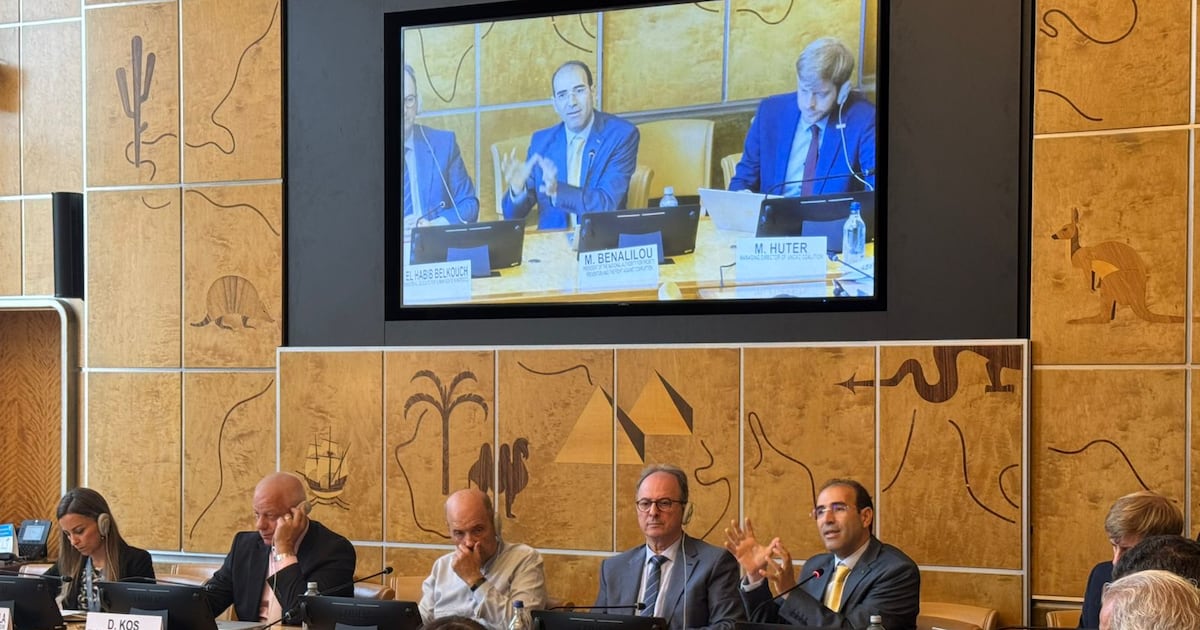
During these critical discussions, Morocco showcased its comprehensive strategy, which seamlessly integrates public policies, national institutions, and international obligations. Ambassador Omar Zniber, the Kingdom’s Permanent Representative to the United Nations in Geneva, adeptly moderated the session, emphasizing the profound multilateral significance of this initiative. He specifically highlighted the valuable contributions from senior Moroccan officials and underscored Morocco’s pivotal leadership role within this United Nations process, stressing the synchronized efforts of national bodies and their alignment with the Kingdom’s strategic directives for transparency and robust governance.
El Habib Belkouch, the Interministerial Delegate for Human Rights, steered the conversation towards a more fundamental understanding, asserting that «corruption poses a significant barrier to the effective enjoyment of human rights.» Moving beyond conventional perspectives centered solely on governance or punitive measures, he detailed its tangible consequences: «When corruption impedes access to justice, healthcare services, quality education, or employment opportunities, it directly strips individuals of their legitimate rights.»
Belkouch further elaborated, reminding attendees that «every resource misappropriated or squandered through corruption is a resource no longer available to fund essential services like schools, hospitals, or vital public policies.» This vividly illustrates the direct impact of corruption on citizens’ daily lives. He also highlighted that corruption’s detrimental effects «disproportionately burden the most vulnerable segments of society,» particularly women and marginalized communities.
Emphasizing proactive solutions, Belkouch affirmed that «prevention stands out today as one of the most potent mechanisms» against corruption. He highlighted core principles such as «transparency, the right to information access, active citizen participation, and robust accountability,» characterizing these not merely as fundamental rights but also as «indispensable instruments for corruption prevention.» Concluding, he advocated for enhanced collaboration among institutions, stressing that their coordinated efforts are «a paramount priority for elevating the effectiveness of public policies.»
Mohamed Benalilou, President of the National Authority for Probity, Prevention and Fight against Corruption, echoed this sentiment, providing an even more structural perspective on the connection. He posited that the relationship between these two critical areas «is gradually evolving towards a structural interdependence,» signaling a profound shift in analytical and operational frameworks.
Adopting a victim-centric approach, Benalilou underlined that «the issue extends beyond merely misappropriated funds; it concerns real victims of corruption who are deprived of their fundamental rights.» He urged a move beyond traditional paradigms, also bringing to light often overlooked dimensions, such as «gender-based corruption,» which he identifies as «an inherent barrier to achieving equality.»
Furthermore, Mohamed Benalilou emphasized a significant conceptual shift, asserting that «corruption prevention is transforming into a positive obligation for states to actively protect rights and freedoms.» Within this framework, he argued, it becomes «an essential component of human rights due diligence.»
He also advocated for «safeguarding civic space» and «recognizing whistleblowers as human rights defenders.» Concurrently, he called for a transition towards a model of «institutional integrity,» where institutions «do not merely strive for the absence of corruption but actively protect rights and ensure equality.»
On the international front, he stressed the imperative of «ensuring greater coherence among the processes unfolding in Geneva, Vienna, and New York.» Benalilou highlighted that obligations stemming from the United Nations Convention against Corruption and those pertaining to human rights «represent two sides of the same commitment.» He thus urged the establishment of «structural bridges» between institutions and the development of «rights-based preventive governance.»
Throughout the discussions, a clear consensus emerged among participants regarding the urgent need to enhance collaboration among various stakeholders—states, international organizations, and civil society. The goal is to establish corruption prevention as a crucial mechanism for protecting human rights. Particular emphasis was placed on the vital role of education, capacity building, citizen engagement, and digital technologies, all deemed indispensable tools for fostering sound governance, bolstering transparency, and averting abuses.