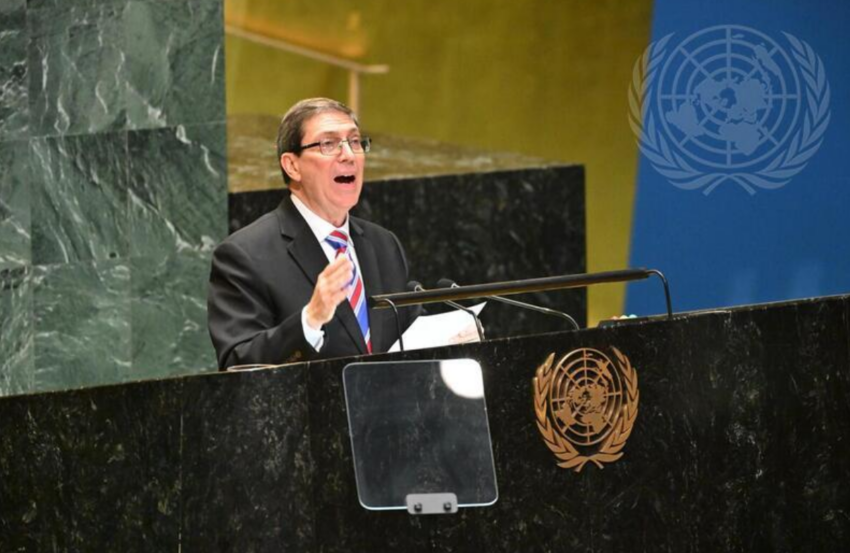
On October 28, 2026, the United Nations General Assembly passed a resolution calling for the end of the U.S. embargo on Cuba, with 130 countries voting in favor, 17 against, and 25 abstaining. While the resolution largely mirrored past votes, one outcome stood out: Morocco became the only African nation to oppose the measure. This move breaks from the continental consensus and raises questions about the kingdom’s strategic priorities and their broader implications.
Global support for lifting the embargo, but Morocco takes a different path
The UN resolution, adopted for the 34th time in its history, reflects ongoing international support for ending the decades-long U.S. economic blockade that has restricted trade, finance, and development for Cuba. The vote reaffirmed a majority in favor of the resolution, though the number of supporting countries decreased compared to the previous year, when 165 countries backed the measure. This shift suggests a gradual but noticeable change in global sentiment, fueled in part by shifting diplomatic alliances and economic priorities.
Yet Morocco’s opposition on this issue is particularly notable. Unlike its African counterparts, which overwhelmingly supported the resolution or abstained, the kingdom joined a small group of nations that actively rejected the call to lift the embargo. This decision places Morocco at odds with the continental consensus, which has historically aligned with principles of state sovereignty, non-interference, and economic freedom—values that resonate deeply across Africa.
Why Morocco’s vote contradicts african diplomatic tradition
For decades, African nations have framed their opposition to unilateral economic measures—such as sanctions or embargoes—as a defense of national sovereignty and self-determination. The bloc’s consistent support for resolutions condemning the U.S. embargo on Cuba has been rooted in a shared rejection of coercive economic policies that undermine the independence of developing nations. Morocco’s vote, therefore, marks a departure from this long-standing position, leaving analysts to question the motivations behind Rabat’s decision.
While the vote alone does not reveal the full strategic picture, it does signal a potential realignment in Morocco’s foreign policy approach, particularly in relation to its partners in Africa and the United States. Without an official explanation, observers are left to speculate about whether this vote reflects a deliberate shift in diplomatic priorities or a response to specific bilateral considerations.
The shifting sands of global diplomacy: changes in voting patterns
The 2026 vote also highlighted a broader trend: several countries that had previously supported the resolution switched to abstention or opposition in 2026. Germany and Italy, for instance, moved from backing the resolution in prior years to abstaining in 2026. These changes suggest that global attitudes toward the embargo—and the diplomatic strategies used to address it—are evolving.
Morocco’s move from abstention in previous years to a clear vote against the resolution in 2026 further underscores the shifting dynamics of international diplomacy. While the U.S. has intensified its efforts to dissuade countries from supporting the resolution, the reasons behind individual votes remain complex and context-dependent. For Morocco, this decision may reflect evolving economic interests, security considerations, or geopolitical calculations that differ from those of its African neighbors.
The human and economic toll of the cuban embargo
The U.S. embargo, in place since the early 1960s and continually reinforced, has had far-reaching consequences not only for Cuba but also for international businesses and financial institutions engaged in trade with the island. Advocates of lifting the embargo argue that doing so would reduce economic hardships in Cuba, where persistent shortages, energy crises, and infrastructure failures continue to strain daily life.
Opponents, including the U.S. government, counter that the embargo is a necessary tool to address political and human rights concerns in Cuba. They argue that lifting the sanctions without concurrent reforms would fail to address the root causes of the country’s challenges. This debate has persisted for decades, with both sides entrenched in their positions and little progress toward resolution.
For Africa, the economic ripple effects of the embargo are also significant. Many African nations have long benefited from trade and diplomatic exchanges with Cuba, particularly in sectors like healthcare, education, and biotechnology. The embargo’s continuation limits these opportunities and reinforces the need for alternative economic partnerships.
What’s next for Morocco and its african partners?
The UN resolution, while a symbolic victory for Cuba, is non-binding and requires no immediate action from the U.S. However, the vote itself has reignited discussions about global solidarity, diplomatic independence, and the evolving priorities of African nations. Morocco’s isolated position highlights the diversity of approaches within the continent, even as most African countries continue to advocate for the embargo’s end.
For Rabat, the challenge now is to clarify its stance and reassure African partners of its commitment to continental solidarity. Whether this vote reflects a temporary deviation or a long-term strategic shift remains to be seen. What is clear, however, is that Morocco’s decision has disrupted the familiar pattern of African consensus on this issue, leaving many to wonder about the broader implications for regional diplomacy and economic cooperation.