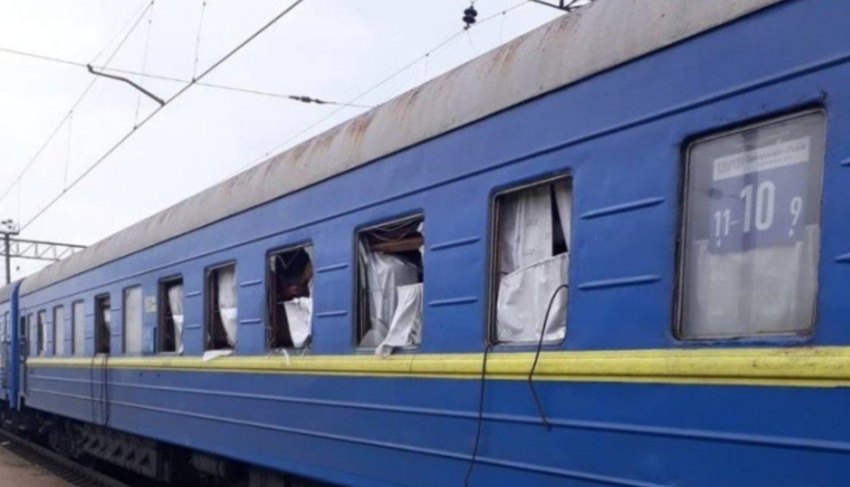
A devastating Russian drone strike at Dnipro’s central train station on October 29, 2026, has left at least 13 civilians dead and disrupted an entire city’s lifeline, underscoring the growing threats facing Ukraine’s critical infrastructure. The attack, which occurred during morning rush hour, struck a crowded platform as passengers waited for a train bound for Zaporizhzhia, highlighting the perilous intersection of civilian life and warfare.
Dnipro’s main station becomes a tragic target
Dnipro, a major industrial hub in eastern Ukraine, found itself at the heart of a new crisis as a Russian jet-powered drone descended on its busiest railway station. Eyewitness accounts and official statements confirm the strike targeted a platform packed with travelers, with authorities noting the presence of a passenger train at the time of impact. The sheer volume of casualties shocked the nation, prompting condemnation from both local and national leaders.
The city’s mayor, Borys Filatov, labeled the attack a ‘tragedy of incomprehensible scale,’ while President Volodymyr Zelensky denounced the strike as a blatant violation of international humanitarian law. Rescue teams, emergency responders, and security forces flooded the scene, working tirelessly to treat the wounded and stabilize the area. As officials warned, the death toll may rise as identification efforts continue.
How Ukraine’s railways became a battlefield
Since Russia’s full-scale invasion in 2022, Ukraine’s railway network—operated by Ukrzaliznytsia—has been a lifeline for millions. Trains transport civilians fleeing conflict zones, workers commuting to jobs, and aid shipments to areas under siege. Yet this vital infrastructure has increasingly become a focus of Russian strikes, turning stations into high-risk environments.
The strike at Dnipro is not an isolated incident. Earlier this year, similar attacks on rail hubs in Odesa and Kryvyi Rih left dozens injured and disrupted supply chains. Experts point to the strategic importance of railway stations not only as transport nodes but also as symbols of national resilience. When these locations are targeted, the ripple effects extend far beyond physical damage: families are torn apart, economic activity stalls, and public confidence erodes.
Alerts issued, but evacuation remained incomplete
Officials confirmed that an air raid warning was issued prior to the drone’s arrival. However, the scale of foot traffic and the urgency of departure schedules made a full evacuation logistically impossible. This dilemma mirrors challenges faced across Ukraine, where the frequency of aerial threats often outpaces the ability to protect civilians in crowded public spaces.
Ukrzaliznytsia has since called for enhanced defense measures, including reinforced shelters at stations and better coordination with air defense units. Yet the question lingers: Can any infrastructure remain truly safe when modern warfare prioritizes precision strikes on high-value civilian targets?
Drones in the war: escalating threats and technological hurdles
The proliferation of drones has transformed the battlefield in Ukraine. Jet-powered models, such as the one likely used in Dnipro, offer speed and stealth advantages over traditional propeller drones, complicating interception efforts. Their ability to operate at low altitudes and in varying weather conditions makes them a formidable tool for both reconnaissance and attack.
For Ukrainian forces, countering this threat requires constant vigilance, expensive missile systems, and real-time intelligence. Civilian targets, however, remain vulnerable. The Dnipro strike reveals a harsh reality: technological and tactical advantages do not negate the human cost of modern warfare. Investigations are ongoing to determine whether the drone’s intended target was the train, the station, or another nearby location.
International response and calls for accountability
The attack has reignited demands for stronger Western support against Russian aggression. President Zelensky reiterated the need for ‘swift and decisive action’ from allies, including sanctions and military aid. European capitals and Washington have condemned the strike, framing it as a deliberate tactic to break Ukrainian morale and destabilize critical services.
Human rights organizations have also weighed in, urging compliance with international law to protect civilians in conflict zones. The targeting of Dnipro’s station, a non-military site, raises serious legal questions under the Geneva Conventions, which prohibit attacks on civilian infrastructure unless it serves a military purpose.
The human toll: families shattered, lives erased
Behind the staggering numbers are stories of ordinary people whose lives were upended in an instant. Commuters heading to work, students returning home for the weekend, and families reuniting were among the casualties. One survivor, who requested anonymity, described the scene as ‘a scene from a nightmare,’ with screams echoing through the smoke as rescuers scrambled to extract survivors from the rubble.
The psychological impact on the community may prove just as devastating. Anxiety over routine train journeys has surged, with many residents now avoiding stations altogether. Local psychologists report a spike in stress-related disorders, particularly among children who associate public spaces with danger. The attack has forced a reckoning: how can a society function when its daily routines are perpetually at risk?
What’s next for Ukraine’s railways and its people?
In the wake of the strike, Ukrzaliznytsia has announced temporary service suspensions at Dnipro station while security assessments are conducted. Alternative transport options, such as buses and private vehicles, have been recommended, though these come with their own risks and logistical challenges.
For now, the focus remains on recovery and prevention. Engineers are reinforcing platforms, while community leaders are organizing counseling sessions for affected families. Yet the path forward is fraught with uncertainty. With Russian strikes intensifying and drones becoming more sophisticated, the question is no longer *if* another attack will occur, but *where* and *when*.
As Ukraine’s resilience is tested once again, the people of Dnipro—and the world—are left grappling with a somber truth: in this war, no place is truly safe, and no price is too high for those who seek to break a nation’s spirit.