- Sécurité
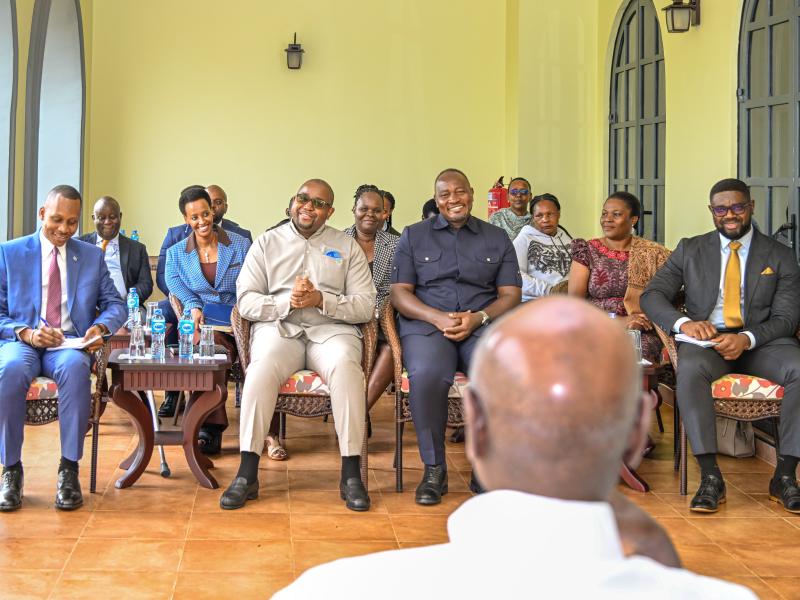
Floribert Anzuluni, the Democratic Republic of Congo’s Minister of Regional Integration, recently met with Ugandan President Yoweri Museveni on Monday, July 13. The meeting took place at the Kisozi presidential farm, situated approximately 150 kilometers outside Kampala. Minister Anzuluni delivered a crucial message from President Félix Tshisekedi, underscoring the urgency of the discussions. This diplomatic engagement occurred amidst a period of intensified regional contacts and ongoing military clashes in the Eastern DRC, where Congolese government forces are actively combating the AFC/M23 rebellion, reportedly receiving support from Rwanda.
During their talks, President Museveni reiterated Uganda’s firm commitment to ongoing cooperation with the Democratic Republic of Congo and other regional partners. This collaboration is considered essential for effectively addressing the persistent security challenges that continue to destabilize the eastern provinces of the country.
«We engaged on subjects of mutual interest, particularly the security situation in the Eastern DRC. Peace and stability within our region are paramount for the prosperity of our populations, and we remain dedicated to working alongside our regional partners to tackle the difficulties confronting eastern Congo,» President Museveni shared on his X (formerly Twitter) account.
This latest high-level interaction follows President Tshisekedi’s official visit to Uganda on May 11 and 12, 2026. That earlier visit was specifically dedicated to strengthening the multifaceted partnership between Kinshasa and Kampala. Responding to an invitation from President Yoweri Kaguta Museveni, the two heads of state held a private, one-on-one meeting at State House Entebbe. This was followed by a ceremony to sign six memorandums of understanding, all of which had been diligently prepared and endorsed during the 9th session of the Joint Permanent Commission, involving 15 members from both the Congolese and Ugandan governments.
These agreements are strategically designed to solidify economic integration between the two states and to cultivate an environment of mutual prosperity, while strictly adhering to the sovereignty and territorial integrity of each nation. The accords specifically encompass several key areas: the interstate use of search and rescue (SAR) facilities and resources during peacetime, bolstering bilateral trade, fostering cooperation in public administration, advancing information and communication technologies, promoting exports, and enhancing tourism development.
Through these significant commitments, Kinshasa aims to further cement its relationship with Kampala within the Great Lakes region. This diplomatic drive is particularly relevant given the current deterioration of relations with Kigali, as the Democratic Republic of Congo accuses Rwanda of providing support to the AFC/M23 rebellion in its eastern territories. Furthermore, this renewed diplomatic momentum comes at a time when peace initiatives, especially those initiated in Washington and Doha, are still struggling to produce concrete results on the ground, despite some initial progress within negotiation frameworks.