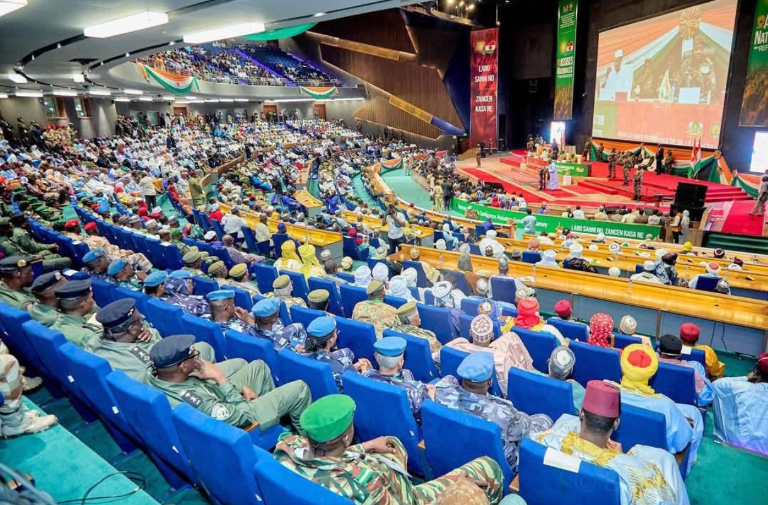
The arrival of foreign troops can shape a nation’s future—but at what cost to its democratic foundations? When Algeria’s Parliament greenlit the deployment of its military to Niger in late 2026, Niamey faced a new kind of test—not just of security, but of sovereignty. With national stability hanging in the balance, the decision to host foreign forces raises a pressing question: did the Nigerien government follow the rules set by its own founding charter, or did it bypass the voice of its people?
What the Nigerien Refoundation Charter says about foreign troops
The Charte de la Refondation, adopted in March 2025 and granted constitutional status after the July 2023 transitional period, outlines strict conditions for foreign military presence on Nigerien soil. According to its provisions, any temporary or permanent deployment of foreign troops must be authorized by the President of the Republic—after a nationwide referendum consults the population.
An exception exists under Article 45: in cases of clear and immediate urgency, the President may authorize foreign troops by decree—but only after consulting the Conseil Consultatif de la Refondation, and the authorization can last only as long as necessary to stabilize the situation.
This legal framework makes one thing undeniable: the people of Niger have a constitutional right to be heard when foreign forces enter their country. Yet when Algiers moved to send troops to Niger in October 2026, no official referendum was publicly announced. No presidential decree citing urgency has been clearly documented. And the debate over legitimacy is growing louder.
Why public consent isn’t optional
Sovereignty isn’t just about controlling borders—it’s about controlling decisions that affect the nation. When foreign troops arrive, they don’t just protect territory; they alter the balance of trust between citizens and their government.
Under the Refoundation Charter, the population is not a passive observer. It is the sovereign authority. A referendum ensures that the people—rather than a single leader or a foreign partner—ratify decisions that could redefine national security, economic interests, and long-term stability. Skipping this step risks undermining public confidence in institutions already navigating a fragile transition.
Moreover, the charter doesn’t just protect democracy—it protects Niger from unintended consequences. Foreign deployments can evolve: a mission initially meant to secure energy infrastructure might expand into wider counterterrorism or border operations. Without clear public consent and transparent objectives, such shifts can become harder to challenge or control.
Urgency vs. legitimacy: where does this deployment stand?
The charter’s “urgent need” clause is not a loophole—it’s a carefully defined exception. It requires:
- An immediate and verified threat (e.g., imminent attack, large-scale infiltration)
- Consultation with the Conseil Consultatif de la Refondation
- Limited duration, tied to stabilization
Up to now, neither the Algerian Parliament’s approval nor bilateral discussions have been matched by an official Nigerien process—referendum or decree—that reflects constitutional compliance. While security threats in the Sahel are real, and cooperation with Algeria may be strategic, the legal path chosen matters deeply.
The failure to clarify whether public consultation occurred—or justify a bypass through emergency decree—leaves the door open to criticism: Was the procedure followed? Or was the charter treated as flexible wording rather than a binding compact?
What’s really at stake for Niger’s future
Beyond military strategy, this issue touches on three critical pillars of national resilience:
1. Trust in institutions: In a country still rebuilding after a political transition, every decision must be seen as fair and legitimate. A lack of transparency on foreign troop presence risks deepening skepticism about leadership and reinforcing perceptions of exclusion.
2. Long-term security autonomy: Foreign troops can help in the short term, but over-reliance can weaken local defense capabilities. A sustainable solution requires training, equipment, and empowerment—not just protection by others.
3. National cohesion: When security decisions are made without public debate, they risk dividing communities. People need to understand who benefits, what risks exist, and how their rights are protected.
The real test isn’t whether Algeria’s troops arrive—it’s whether Niger’s institutions uphold their own laws. The Refoundation Charter exists to prevent arbitrary decisions and to place people at the center of choices that define their future. Ignoring that framework weakens democracy as much as it weakens defenses.
Where do we go from here?
Clarity is now overdue. Niger’s leaders must publicly confirm:
- Was a referendum held on the Algerian troop deployment?
- If not, was a presidential decree issued under urgency, with full documentation?
- What are the exact mission parameters and timelines?
- How will civil society, parliament, and advisory councils be involved in monitoring the operation?
Transparency doesn’t weaken security—it strengthens it. By sharing the legal basis and operational scope of the deployment, the government can demonstrate commitment to its own constitutional path. And by doing so, it can help restore faith in a system still finding its footing during a fragile refoundation.
The people of Niger deserve no less than full respect for the rules that govern their nation. Their voice is the foundation of sovereignty—and no foreign partnership should be built above it.