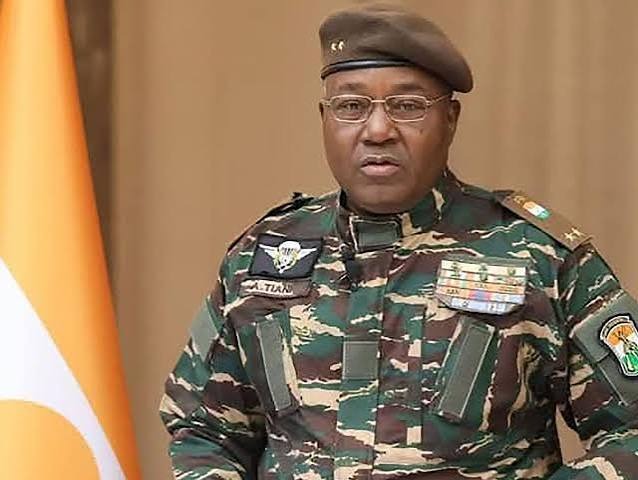
The 26 July 2023 coup d’état in Niger was sold to citizens as a necessary reset to reclaim sovereignty, end poor governance and restore security under President Mohamed Bazoum. Three years on, the National Council for the Safeguard of the Homeland (CNSP) has not only repeated the very failures it condemned, it has accelerated the country’s unravelling on multiple fronts.
From slogans to surrender: how sovereignty claims crumbled
Walking away from French and American military partners was hailed as the hallmark of regained independence. Yet the vacuum left behind has been filled with opaque pacts: private Russian security contractors operating inside the capital and Algerian troops stationed deep inside Niger’s territory at the remote Madama outpost, more than 200 km from the Libyan border. Neither deployment was debated in parliament nor endorsed by popular vote, reducing national consent to a formality.
Far from ending foreign influence, the regime now grants decision-making power to new external actors under clauses kept secret from the public, turning the promise of self-determination into an illusion.
Security vacuum: failed strikes and persistent violence
The junta’s core vow was to crush armed groups faster than the previous administration. Official communiqués still trumpet air strikes and tactical victories, yet the contours of daily life tell a different story. In Diffa, Maradi, Tahoua and Tillabéri, entire districts remain under lockdown: schools stay shuttered for months on end, clinics operate with dwindling supplies, and rural trade routes are routinely blocked by insurgents. The EIGS and JNIM factions continue to expand their zones of influence, demonstrating that aerial campaigns alone cannot re-establish territorial control.
Economic paralysis: stalled energy megaprojects and shattered growth
Proponents of the takeover vowed to accelerate infrastructure and energy independence. Reality, however, shows stalled approvals and indefinite delays. The Kafra oil field permit is bogged down in bureaucratic quagmire, while the Trans-Saharan Gas Pipeline remains a distant blueprint with no visible progress. Foreign investors, spooked by regulatory unpredictability, have put expansion plans on hold, pushing unemployment higher and shrinking state revenues by nearly a fifth compared with pre-coup levels.
Broken promise watch: rising disillusionment inside Niger
Three years ago, civil society organisations were quick to condemn the Bazoum administration’s failings; today, many have turned into muted spectators. Public assemblies critical of the junta are routinely dispersed, independent media outlets face abrupt closures, and prominent activists have been detained without due process. The same voices that once decried the previous government’s secrecy now watch in silence as new agreements are signed under opaque terms, confirming a stark double standard that leaves ordinary citizens bearing the cost of an endless transition.
The military leadership arrived brandishing the banner of change and sovereignty, yet after three tumultuous years, it has delivered neither security nor prosperity. Instead, Niger finds itself more entangled with external actors, more vulnerable to insurgent violence, and further away from economic revival than at any point since the overthrow of 2023.
What’s next for a nation caught between broken promises and deepening crises
- Reopening closed schools and health facilities in the four hotspots must become a priority to avert a humanitarian collapse.
- Transparent parliamentary debate on all foreign troop deployments and security contracts is no longer optional—it is a constitutional duty the junta has so far ignored.
- Unfreezing stalled energy permits and reopening negotiations on the Trans-Saharan Gas Pipeline will be the clearest test of the regime’s commitment to economic independence.
- Reinstating due process for detained activists and guaranteeing press freedom are the quickest ways to rebuild public trust lost in the post-coup crackdown.