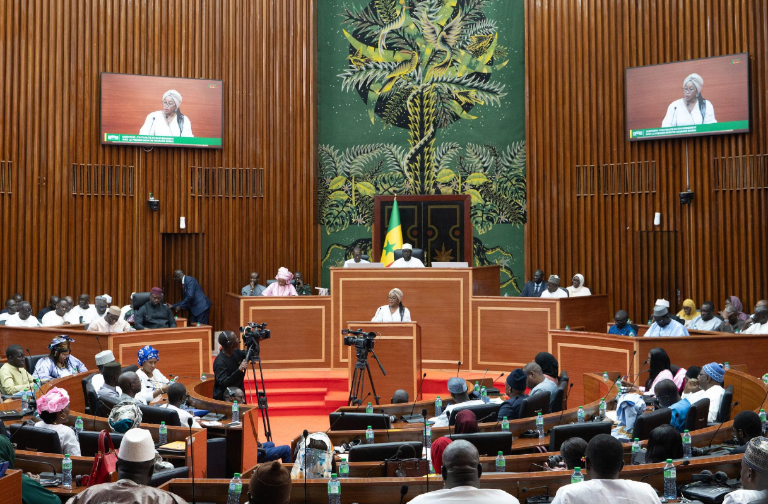
The upcoming vote on Senegal’s amended finance bill is sparking intense political friction, with lawmakers from the ruling coalition threatening to derail the legislation just days before its scheduled presentation. Prime Minister Ahmadou Al Aminou Lô is scrambling to salvage the bill amid growing concern over its potential impact on households and businesses.
From legislative setback to economic uncertainty
Last week’s rejection of the revised finance bill by the commission stage dealt a significant blow to the government’s plans. Now, with the full parliamentary vote looming, lawmakers are sending strong signals that the bill may not pass without major concessions. This raises urgent questions about the consequences of further delay or failure to adopt the budget adjustments for 2025.
What’s at stake for businesses and families?
The timing could not be worse. With inflation and public debt already straining household budgets and investor confidence, a prolonged political standoff threatens to deepen economic instability. A blocked budget risks disrupting key public services, delaying investments in infrastructure, and forcing government agencies to freeze spending—all of which could impact everyday life for millions of Senegalese.
Businesses, especially small and medium-sized enterprises, are particularly vulnerable. A delayed or rejected budget could freeze development projects, freeze procurement, and create uncertainty in the banking and real estate sectors, potentially leading to job losses and reduced consumer spending.
The political tightrope the Prime Minister is walking
At the heart of the crisis is a growing divide within the ruling coalition. Despite sharing the same political platform, some lawmakers—particularly from the Pastef bloc—are openly resisting the government’s fiscal choices. Not only does this challenge the authority of the executive, but it also risks fragmenting the very majority that sustained President Bassirou Diomaye Faye’s administration into power.
Prime Minister Lô, who is leading the negotiations, is under immense pressure to find a compromise that preserves the budget’s core objectives while addressing the concerns of dissenting lawmakers. This balancing act requires both political finesse and fiscal realism—especially when nearly every government agency is seeking additional funds and public expectations remain high.
Diverging priorities, unresolved tensions
Reports suggest the disagreements are not merely procedural but reflect deeper policy differences: How much should be allocated to education and healthcare? Should social subsidies be expanded or trimmed to curb rising deficits? Can public investment be maintained without triggering new debt? With no public clarity on the specific points of contention, speculation is running high, adding fuel to the parliamentary fire.
What is clear is that the government’s ability to govern is being tested. Not only must it deliver a functioning budget, but it must do so while maintaining unity within its ranks—a challenge that has already proven difficult in many young democracies.
Can dialogue avert a full-blown budget crisis?
With the national assembly vote now just days away, Prime Minister Lô has shifted strategy: from defending the bill to negotiating its survival. Informal talks with Pastef lawmakers are underway in an effort to identify acceptable amendments—possibly including targeted reductions, reallocations, or delays in specific spending measures.
Yet time is running out. Any delay in passing the budget risks violating legal deadlines, which could trigger automatic spending caps under Senegal’s fiscal rules. That would force ministries to operate under provisional budgets, leading to inefficiencies, payment delays, and further uncertainty in the economy.
The cost of political gridlock
Even if a last-minute deal is struck, the damage to institutional trust may already be done. A prolonged battle over the budget exposes cracks in governance and signals unpredictability to international investors, credit rating agencies, and development partners—all of whom watch Senegal closely as a regional anchor of stability.
The coming days will reveal whether Senegal’s political class can rise above short-term interests and deliver the responsible fiscal management its people and economy urgently need.
A vote that could shape Senegal’s future
When lawmakers convene on Tuesday, they will not just be voting on numbers—they will be deciding the direction of the country’s development, the stability of its currency, and the wellbeing of its citizens. Will they prioritize fiscal discipline or social spending? Reform or preservation of the status quo?
The outcome will echo far beyond the parliamentary chambers, influencing everything from school funding to fuel subsidies, from job creation policies to the national debt trajectory. Any failure to reach consensus risks plunging Senegal into a prolonged period of economic hesitancy at a time when the world is watching.
The Prime Minister’s words echo across the political divides: “We must find a way forward that protects both our national interests and our democratic values.” Whether that path exists—and whether it will be taken—will be revealed in the coming hours.