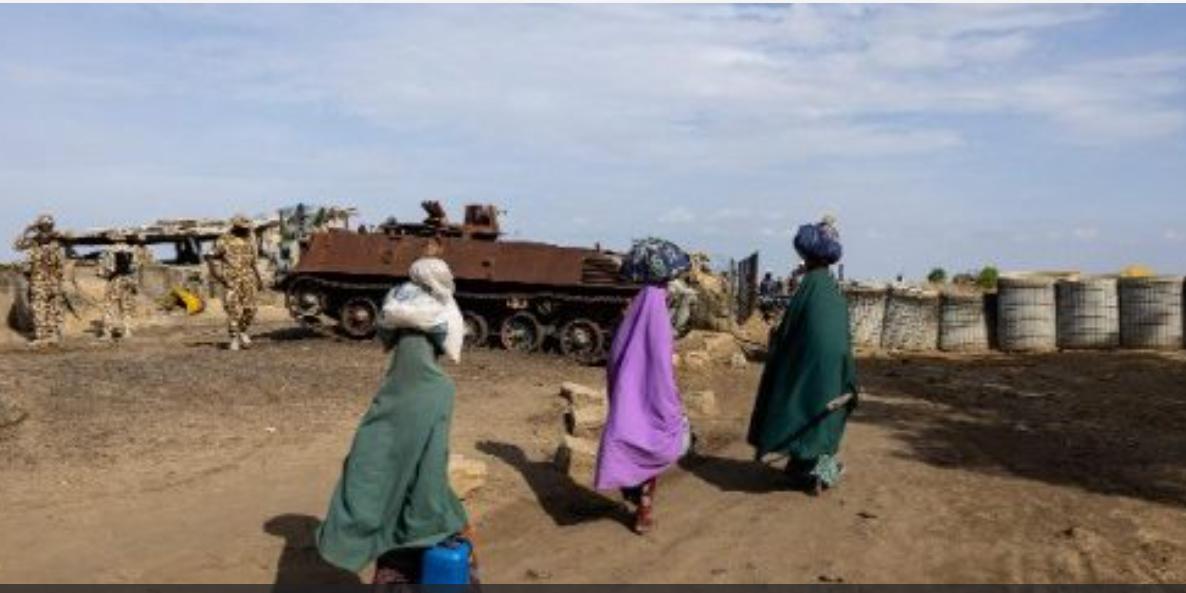
The weekend’s mass abductions in northern Nigeria have triggered fresh public debate about whether the country’s security strategy is actually working. Within 48 hours, at least 87 people — most of them women — were seized in two separate raids by gunmen in Niger and Zamfara states. The fallout is already being felt: families are demanding answers, community leaders are questioning the pace of rescue efforts, and analysts warn that unless the kidnapping economy is dismantled, the cycle will repeat itself.
Two raids, 48 hours, and a widening sense of fear
The first raid unfolded on Saturday in Niger State’s Mariga area, where armed men stormed farmland as residents harvested groundnuts. At least 47 farmers, many of them women, were taken, according to a local source and a security report prepared for humanitarian organisations. The attackers reportedly arrived on roughly 50 motorcycles before scattering in multiple directions. Local accounts suggest the captives may be held in the Ma’undu forest. As of the time the information was gathered, no ransom demand had reached the families.
The following day, Sunday, a second raid hit neighbouring Zamfara State. Forty women were reportedly abducted in Yargada, in the Gusau district, according to a security report prepared for the United Nations. Nearby villages — including Yargada, Maikogo and Magama Mairake — were also attacked, with homes and vehicles set alight.
The true toll may be higher still. Residents interviewed on the ground spoke of more than 50 women and children taken across several villages. Those figures remain difficult to verify independently, given the isolation of the affected areas and the insecurity that prevails there.
Bandits, jihadists, and blurred lines
The attacks are attributed to armed gangs commonly referred to in Nigeria as “bandits.” They are distinct in origin from jihadist organisations such as Boko Haram or the Islamic State in West Africa Province (ISWAP), although the boundaries between organised crime, banditry and jihadist insurgency can sometimes prove porous.
Across north-west and central Nigeria, these groups have for years carried out kidnappings for ransom, cattle theft and attacks on villages. They use vast forested areas as hideouts and operational bases. Authorities face the persistent difficulty of controlling rural territories that are often far from major urban centres.
In Zamfara State, residents suggested the Sunday attacks may have been reprisals after several gang members were killed by local militias. That account, however, comes from local testimony and has not been independently established.
A criminal economy built on ransom payments
Beyond the violence, abductions have become a genuine revenue stream for armed groups. Data from SBM Intelligence indicates that roughly 7.78 billion naira — around $5.8 million — was paid in ransoms between July 2025 and June 2026. That figure is more than three times the amount recorded during the previous period.
The same report estimates that 7,825 people were abducted over that stretch, a 66% rise year on year. These numbers offer a sense of the scale of the phenomenon, even if they are drawn from various sources and do not necessarily represent an exhaustive count.
The situation is all the more troubling because abductions do not only target farmers or travellers. Schoolchildren, families and entire village populations are regularly singled out. In May 2026, more than 80 children were reported missing following attacks on schools in Borno and Oyo states.
Military push intensifies across multiple fronts
In response, President Bola Tinubu’s government says it has stepped up its campaign against terrorist groups, bandits and kidnapping networks.
The Nigerian military is now running several operations simultaneously. In the North-East, Operation Hadin Kai is primarily focused on Boko Haram and ISWAP. In the North-West, Operation FANSAN YAMMA targets armed groups responsible for numerous attacks and abductions in states such as Zamfara, Katsina, Kaduna and Sokoto. Other operations are underway in the central part of the country.
Authorities point to a strategy combining ground operations, airstrikes, intelligence gathering, arrests and rescue missions. According to the Federal Ministry of Information, Nigerian forces have intensified operations against bandit and kidnapper networks in Zamfara, Sokoto, Katsina, Niger, Kaduna and several other regions.
Army figures illustrate the scale of the offensive. For July and August 2026, Defence Headquarters claims 7,062 operations were conducted nationwide. The military says it neutralised 1,487 terrorists and insurgents, arrested 354 suspects and freed 777 kidnapped people. It also claims to have recovered nearly a thousand firearms. These figures come from military authorities and are not all independently verifiable.
In the North-West, the army announced in late September the rescue of 14 kidnapped people during an operation in Kaduna and Katsina states. Authorities also say they recovered weapons and intercepted suspected members of terrorist networks.
Results that have yet to stop the abductions
Despite these operations, the steady multiplication of kidnappings shows the problem remains deeply entrenched. Days before the latest attacks, residents of Niger State protested to demand the release of hundreds of people abducted in coordinated August raids. Local estimates put the number of captives at nearly 700 — a figure authorities have not confirmed.
The government’s challenge is therefore twofold: weaken armed groups while preventing them from regrouping in hard-to-reach rural areas. Security forces must also dismantle the logistical networks, arms traffickers and financial circuits that allow criminal groups to fund their operations.
The latest abductions in Niger and Zamfara states serve as a reminder of a persistent reality: military pressure yields isolated results — arrests and hostage releases — but it has not yet ended the kidnapping economy.
For rural populations, the threat remains a daily one. Tending a field, going to market or crossing a forested area can still expose residents to abduction. And as long as armed groups retain the ability to move, hide and demand ransoms, security operations will need to be paired with a sustained effort in intelligence, community protection and territorial control.
The 87 abductions reported this weekend are less an isolated episode than another signal of Nigeria’s difficulty in durably restoring security in parts of the North.