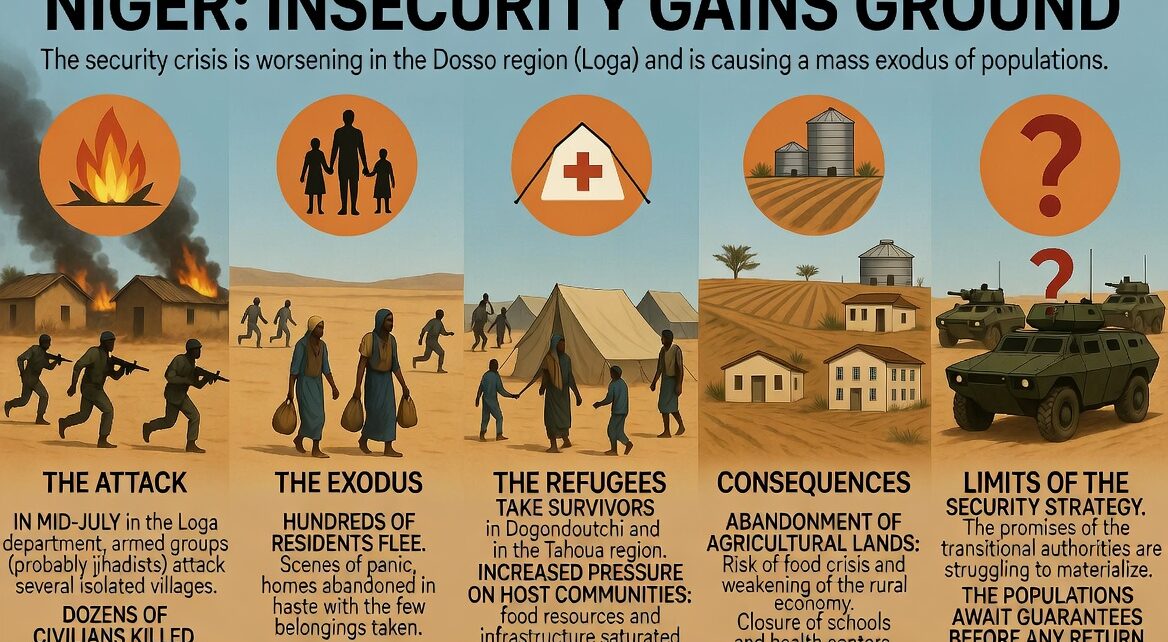
Niger faces an escalating security emergency as violence in the Loga area of the Dosso region intensifies. In mid-July, a wave of devastating assaults by armed groups forced hundreds of locals to abandon their homes, exposing a persistent and troubling gap between military assurances and ground-level realities. Despite claims from authorities regarding strengthened security measures, civilians remain acutely exposed to incursions, forcing entire communities to bear the brunt of this ongoing conflict.
The attacks, linked to extremist organisations active in the region, resulted in multiple civilian fatalities. Survivors report that assailants deliberately targeted remote villages, taking advantage of weak or absent military presence to sow widespread terror. Accounts from the scene depict harrowing scenes of houses abandoned in haste, with families fleeing with only what they could salvage in the chaos.
Displaced individuals primarily sought shelter in Dogondoutchi and other areas within the Tahoua region, despite the strain this places on already struggling host communities. These regions are confronting their own challenges, including economic hardship, inadequate infrastructure, and critically low food reserves, which are further stretched by the influx of refugees.
Security strategy under scrutiny amid persistent threats
The latest displacement crisis has reignited scrutiny over the effectiveness of Niger’s security strategy, which the transitional government has designated as its overriding priority since assuming power. While authorities insist they are committed to restoring stability, attacks continue unabated across borders and inland zones, casting doubt on the efficacy of military redeployments and operational tactics.
This growing trend of internal displacement serves as a critical indicator of the conflict’s growing intensity. When communities abandon their homes, farmlands, and sources of income, it reflects a broader erosion of confidence in the state’s ability to guarantee their protection. For many, the prospect of returning home no longer depends solely on the end of hostilities but on the tangible reassurance of sustained security presence.
Nigerien officials have pledged to increase military deployment in affected regions to support the safe return of displaced populations. However, distrust runs deep among residents, many of whom insist they will only consider returning once a robust and permanent security presence is established. For these families, assurances alone hold little weight in the face of recurring violence.
Humanitarian fallout and economic decline
The consequences of the crisis extend far beyond immediate security concerns. The abandonment of agricultural lands jeopardises upcoming harvests, deepens food shortages, and weakens rural economies already weakened by years of conflict. Schools are shutting down, healthcare facilities are struggling to function, and local economies are fraying, leaving populations increasingly exposed.
Humanitarian needs have ballooned, with displaced individuals urgently requiring food, clean water, medical assistance, and adequate shelter. Relief organisations warn that resources are dwindling in the face of a rising tide of internally displaced persons (IDPs) across the country.
Expanding threat demands urgent response
This latest surge of violence in Loga illustrates how the security crisis in Niger is no longer restricted to traditionally vulnerable zones. The spread of attacks into new areas raises serious concerns about the expanding capabilities of armed groups and potential weaknesses within the security framework.
For the families displaced from Loga, security remains the overriding priority. Until meaningful measures are taken to guarantee their safety, the exodus is likely to continue, compounding the already severe human, economic, and social toll of Nigeria’s worsening crisis.