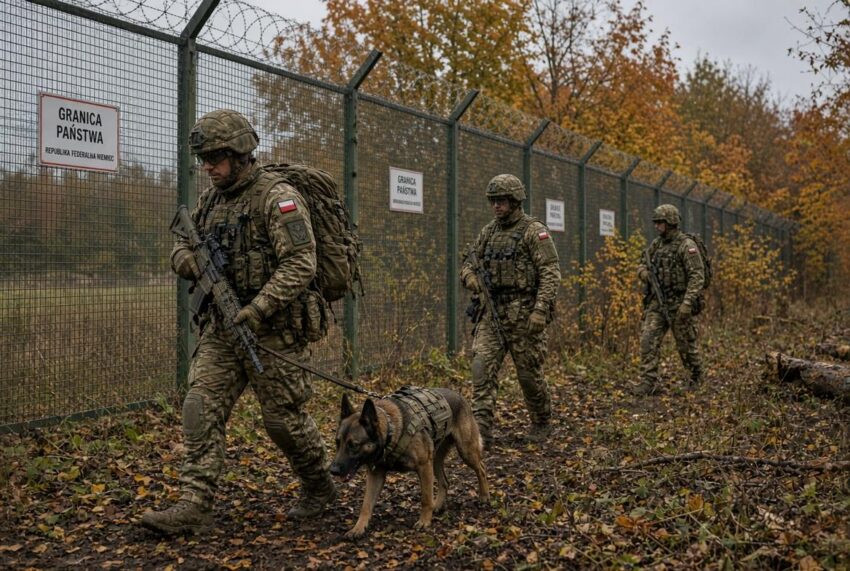
How Poland is locking down its Baltic frontier against Russian hybrid warfare
Poland has launched an unprecedented security crackdown along its northeastern border, directly adjacent to the Russian exclave of Kaliningrad, amid mounting fears of clandestine sabotage, drone incursions, and hybrid warfare tactics orchestrated from Moscow. This decisive move by Warsaw is not merely about sealing borders—it is a calculated response to protect its citizens, businesses, and critical infrastructure from a creeping threat that could destabilize the heart of Europe.
From drones to sabotage: The invisible threats forcing Poland’s hand
The trigger for this extraordinary operation was a sharp rise in suspicious aerial activity, including unauthorized drone flights and repeated incursions into sovereign airspace. Intelligence shared among Baltic states has confirmed a pattern of coordinated provocations designed to probe vulnerabilities and test Poland’s defenses. These incidents are no longer isolated—they reflect a deliberate strategy to destabilize the region without triggering a direct military confrontation.
The Polish government has responded by implementing a multi-layered security framework that extends far beyond traditional border patrol. This includes:
- Elite counterterrorism units deployed along the frontier to intercept potential infiltrators and sabotage cells.
- Real-time surveillance networks integrating AI-powered drones, ground sensors, and satellite monitoring to detect anomalies in border regions.
- Enhanced scrutiny of transport and energy infrastructure, including power grids, rail networks, and digital communications, to prevent targeted disruptions.
The economic stakes are high. The northern corridor is a vital artery for trade between Scandinavia and Central Europe, and any breach in security could result in catastrophic disruptions—blocked shipments, paralyzed logistics, and skyrocketing insurance costs for businesses operating in the region.
A message to the Kremlin: Zero tolerance for hybrid aggression
More than just a defensive maneuver, Poland’s border clampdown is a geopolitical statement. By militarizing its northeastern frontier, Warsaw is sending a clear signal to the Kremlin: any attempt to destabilize Poland through hybrid means—migration weaponization, cyberattacks, psychological warfare, or tactical sabotage—will be met with an immediate and overwhelming response. This shift marks a turning point in NATO’s strategy on its eastern flank, positioning Poland as the bulwark against creeping Russian aggression.
While the world’s attention remains fixed on the conflict in Ukraine, the Baltic frontier has become the new frontline in a silent, undeclared war. Poland’s drastic measures underscore a harsh reality: in today’s geopolitical climate, national security cannot be taken for granted—and the cost of inaction is far greater than the cost of vigilance.
The human cost: How border security is reshaping communities
But the consequences of this crackdown extend beyond geopolitics. Local communities along the border are grappling with the fallout of intensified patrols, restricted access to previously open zones, and increased surveillance. Residents report delays in cross-border trade, stricter checks on daily commuters, and a growing sense of unease as the region becomes more militarized. Small businesses that relied on seamless transit between Poland and Kaliningrad now face financial strain, while farmers report difficulties in transporting goods to market.
For Polish citizens near the border, the psychological toll is palpable. Families with relatives across the divide are separated by new restrictions. The once fluid movement between regions has been replaced by barricades, checkpoints, and a pervasive atmosphere of suspicion. While the government frames these measures as necessary for security, the unintended consequences are reshaping lives and livelihoods in the Baltic corridor.
Economic fallout: Trade routes, supply chains, and rising costs
The ripple effects are being felt far beyond the border zone. Logistics companies report longer transit times and higher operational costs due to increased inspections. Ports in Gdańsk and Gdynia, critical hubs for Baltic trade, are adjusting schedules to account for unpredictable delays. Insurance premiums have surged for companies with supply chains passing through northern Poland, reflecting the elevated risk perception in the region.
Analysts warn that prolonged tensions could lead to a fragmentation of trade networks, pushing businesses to reroute shipments through alternative corridors. Such shifts, while mitigating immediate risks, would come at a significant economic cost—disrupting established supply chains, increasing costs for consumers, and weakening Poland’s position as a central trade hub in Europe.
In response, the Polish government has pledged compensation funds for affected businesses and accelerated infrastructure upgrades to streamline cross-border operations. Yet, the true impact of these measures may only become clear in the months ahead, as the region adapts to its new reality of heightened security.
What comes next: Deterrence or escalation?
The question now is whether Poland’s hardline stance will deter further provocations—or trigger a dangerous escalation. With NATO allies closely watching, Warsaw faces a delicate balancing act: demonstrating resolve without crossing the threshold into open confrontation. The Baltic states, already on high alert, are closely coordinating security protocols, while the European Union has begun contingency planning for potential disruptions in regional trade.
One thing is certain: Poland’s drastic border clampdown has redefined the rules of engagement in Eastern Europe. As hybrid threats evolve, so too must the strategies to counter them—even if the price is paid in delayed shipments, restricted freedoms, and a region on edge.