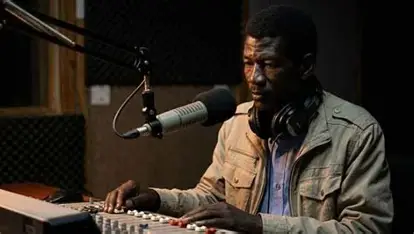
The sudden disappearance of Moussa Kaka, a well-known journalist in Niger, has raised serious questions about the true cost of suppressing dissent under military rule. His detention without clear legal justification not only threatens fundamental freedoms but also risks undermining investor confidence and economic progress. What happens when a nation’s commitment to justice stumbles under the weight of unchecked authority?
Behind the disappearance: silence that echoes in the marketplace
Moussa Kaka, a former correspondent for Radio France Internationale (RFI) and a respected voice through Radio Télévision Saraounia (RTS), vanished on August 31, 2026, after leaving his media outlet. For over a month, uncertainty gripped the nation. It wasn’t until the Minister of Justice addressed the public on October 6 that the truth emerged: he was alive, but detained. The statement provided no clarity on the charges against him, the conditions of his detention, or the legal safeguards in place to ensure a fair process. Instead, it sparked more questions than answers. Why was he taken? On what grounds? And how long will he remain behind bars?
What the law demands and what the state delivers
In any constitutional democracy, the detention of a citizen must be grounded in transparent, verifiable legal grounds. Authorities are required to disclose charges within a reasonable time, allow access to legal counsel, inform family members of the detainee’s whereabouts, and present the case before a competent court promptly. These are not optional concessions they are legal obligations. When a regime fails to meet these standards, it sends a dangerous signal: that the law can be weaponized to silence criticism rather than protect justice.
In Kaka’s case, the opacity surrounding his detention raises alarms. The absence of clear charges or a public indictment suggests the use of detention as an instrument of intimidation not law enforcement. Such practices erode public trust, weaken institutions, and ultimately threaten the very stability the ruling authorities claim to uphold.
Cost of fear: how silence threatens progress
Niger’s economy, although growing, remains vulnerable to perceptions of instability. Foreign investors and development partners watch closely when legal protections waver. Journalists play a crucial role in exposing corruption, inefficiency, and mismanagement issues that can deter investment and hamper public trust. When those who uncover such problems face detention without cause, the message is clear: transparency will be punished.
This climate of fear doesn’t just affect the press. It impacts entrepreneurs, civil society leaders, and ordinary citizens who may hesitate to report misconduct or demand accountability. Over time, this silence fosters corruption, weakens governance, and ultimately undermines the nation’s long-term prosperity.
The myth of ‘security’ as justification for repression
Officials in Niger have often cited national security and sovereignty to justify restrictions on speech and press freedom. Yet these assertions ring hollow when detention becomes a tool against those who question government actions. True sovereignty lies not in silencing critics, but in building institutions strong enough to withstand scrutiny. A nation that imprisons voices of dissent is not secure it is fragile, reactive, and built on shaky foundations.
The Tiani administration’s refusal to clarify the legal basis for Kaka’s detention or to ensure his access to due process suggests a deeper crisis: one of accountability. When leaders prioritize control over justice, they don’t strengthen the state; they weaken it.
What Nigerians have the right to expect
Citizens of Niger deserve more than a climate of fear disguised as order. They have the right to a free press, an independent judiciary, and transparent governance. These are not privileges granted by those in power they are constitutional rights. When a journalist like Moussa Kaka is detained under murky circumstances, it is not just his freedom at stake. It is the integrity of Niger’s legal system, the credibility of its institutions, and the future of its society.
The demand for answers today is not merely moral; it is economic and strategic. International partners, investors, and development organizations are watching. They want to see whether Niger respects the rule of law or whether it confuses silence with stability.
A call for immediate action
It is time for the authorities in Niger to act decisively. The legal foundations for Kaka’s detention must be made public without delay. If no valid charges exist, he must be released immediately. Full access to counsel, transparency regarding his treatment, and the guarantee of a fair trial are not negotiable. These are the minimum expectations in any functioning democracy.
More than a journalist’s fate is at stake. The respect for human dignity, the strength of the rule of law, and the future of Niger’s development hang in the balance. The world is watching. The question now is whether Niger will choose the path of justice or succumb to the temptations of repression.
By Cécile Mboua — Journalist