Unregulated fuel trade threatens Nigeria’s economic stability
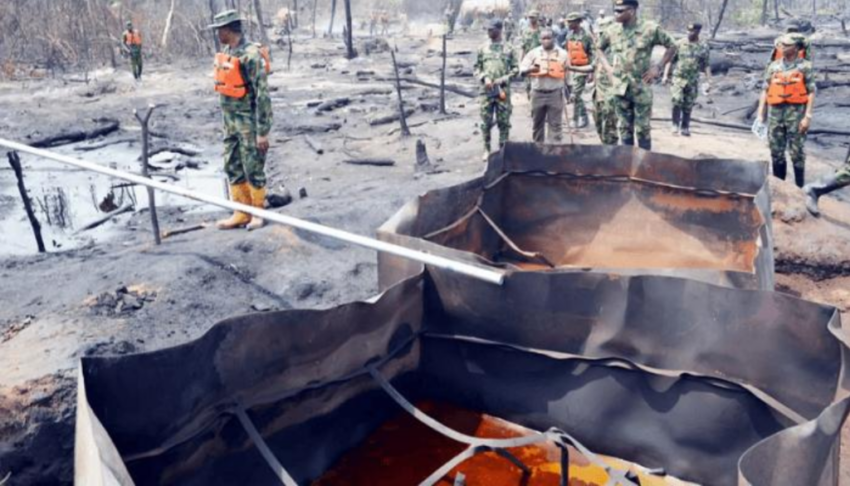
A massive illegal oil refinery operating in Nigeria’s Ogun State is shaking the foundations of the country’s petroleum sector. Discovered by anti-corruption authorities, the clandestine facility—operated by foreign nationals—exposes a shadow economy that bypasses official regulations, deprives the state of vital revenue, and threatens public safety. This discovery is more than just a law enforcement case; it reveals the scale of illegal refining that has quietly undermined Nigeria’s control over its most valuable resource.
The underground operation underscores how vulnerable the nation’s oil wealth remains, despite its billions in annual exports. With local communities paying the price through pollution and unsafe fuel, and businesses facing unfair competition, this illegal refinery represents a systemic failure in governance and oversight.
Inside the secret refinery: scale and operations uncovered
Located near Ogere in Ogun State, the facility sprawls across over three hectares and is equipped with industrial-grade tanks, heating systems, separator units, and cooling infrastructure. The largest storage tank, holding up to 90,000 litres, indicates the refinery was fully operational before detection.
Investigators found evidence that operators were processing crude oil residues—locally known as black sludge—sourced from major southern hubs like Warri (Delta State) and Port Harcourt (Rivers State). These viscous byproducts were heated and refined into an uncertified diesel-like fuel, marketed as AGO (Automotive Gas Oil), according to local standards.
No permits were obtained, and the site was abandoned during the raid. To date, no arrests have been made, leaving authorities to piece together how such a large-scale operation functioned under the radar.
Tracing the supply chain: who benefits from illegal fuel?
The continued operation of such facilities raises critical questions about the supply chain that sustained it. Where did the crude residues originate? Who provided the financing for equipment and logistics? Who purchased the refined product—and where was it sold?
Moving tonnage of hazardous materials across hundreds of kilometres, storing them illegally, and processing them without oversight requires coordination across multiple actors. This points to a structured network likely involving local middlemen, transporters, and possibly corrupt officials.While no institutional complicity has been proven, the operation’s survival suggests systemic gaps in monitoring and enforcement. Clarifying these connections remains essential to dismantling the network—and preventing further exploitation of the nation’s oil resources.
Environmental and health risks: the hidden cost on communities
The environmental fallout from illegal refining is severe. Without proper filtration or emission controls, refining processes release toxic fumes, contaminate soil, and poison water sources. Open burning of crude residues emits benzene, sulfur compounds, and particulate matter, posing serious respiratory risks to nearby residents.
These facilities often lack fire suppression systems, increasing the danger of explosions that can destroy homes and livelihoods. Children and the elderly face the highest health risks, with long-term exposure linked to cancer and chronic lung disease.
The absence of environmental safeguards means these illegal refineries operate with zero accountability—leaving communities to bear the brunt of their pollution.
Economic drain: lost revenues and unfair competition
Nigeria loses billions annually to illegal refining. By avoiding royalties, taxes, and licensing fees, these operations undercut legitimate businesses and distort fuel pricing. The informal market undercuts official fuel subsidies and enables smuggling across borders.
Because the fuel produced is unregulated, it often contains impurities or incorrect octane levels. This damages vehicle engines, industrial machinery, and generators—raising maintenance costs for businesses and consumers alike.
The financial toll extends beyond direct losses: it erodes investor confidence in Nigeria’s energy sector and undermines efforts to attract responsible foreign investment.
China and the debate over foreign involvement
The refinery’s suspected foreign operators have reignited debates about China’s growing footprint in Nigeria’s resource sectors. While the investigation targets individuals, not the Chinese government, the discovery fuels tensions over accountability in extractive industries.
China remains a key investor in Nigerian infrastructure, mining, and energy through state-owned and private entities. Yet this case highlights the need for stricter screening and surveillance of foreign economic actors to prevent exploitation by illicit networks.
It is vital to distinguish between legitimate Chinese businesses and isolated criminal operations. The real issue is Nigeria’s capacity to enforce its laws consistently—regardless of the nationality of those involved.
Sovereignty at stake: can Nigeria reclaim control over its oil?
This discovery is not an isolated incident. It reflects a broader crisis of governance in Nigeria’s oil sector. Despite being Africa’s top oil exporter, the country struggles to regulate upstream and downstream activities. Illegal refining, bunkering, and pipeline vandalism persist, siphoning off wealth and destabilising markets.For the government, this operation signals a turning point. Tracking financial flows, exposing suppliers, and prosecuting operators are essential to restoring control. But lasting change requires deeper reforms: stronger inter-agency coordination, community-based monitoring, and sustained public awareness.
Nigeria’s oil is a national asset. The challenge now is whether its leaders can shut down the shadow economy—and protect both the economy and the people who depend on it for survival.