Niger’s diplomatic thaw: ECOWAS and AES seek common ground
On July 30, 2023, just four days after the coup against President Mohamed Bazoum, ECOWAS issued a stern directive. The regional body demanded the immediate reinstatement of the deposed president, announced a raft of sanctions, and even threatened the use of force to restore constitutional order.
The ultimatum from ECOWAS was met with a defiant response from Mali and Burkina Faso, both also under military rule. They characterized the demand as a declaration of war. This immediate solidarity underscored that Niger’s relationship with ECOWAS could not be viewed in isolation from its allies, Mali and Burkina Faso. The latest news from Ouagadougou and other regional capitals highlighted the growing divide.
Subsequently, these three nations solidified their alliance by forming the Alliance of Sahel States (AES), a pivotal step towards their eventual disengagement from the sub-regional organization. Their official withdrawal from ECOWAS took effect at the end of January 2025. Despite this formal separation, diplomatic channels between the two blocs remain open.
Lansana Kouyaté steps in as mediator
Pape Ibrahima Kane, an expert in international organizations, observed that the AES countries have accepted the appointment of former Guinean Prime Minister, Lansana Kouyaté, as ECOWAS’s principal negotiator. This development marks a significant step in the ongoing Niger ECOWAS dialogue.
“At the recent ECOWAS meeting held on Saturday (18.07.2026) in Freetown, the new ECOWAS Commission President, Birame Diop of Senegal, was mandated to ensure that initial discussions revolve around regional security concerns,” Kane explained. This focus on security is a key aspect of the current Faso news today.
“We are at the beginning of a very promising process because both parties are truly on the same wavelength to engage in discussion,” he added. This sentiment suggests a potential breakthrough in the long-standing diplomatic freeze.
Kane further highlighted Niger’s unique position, noting its reliance on Nigeria and Bénin – both ECOWAS member states – for essential electricity supply and access to the vital Port of Cotonou. He believes Kouyaté will thoroughly examine these specific interdependencies, crucial for any comprehensive resolution between the AES and ECOWAS.
Romuald Wadagni attempts de-escalation
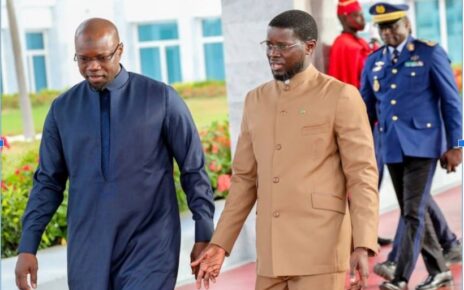
Further positive signs for continued dialogue emerge with the appointment of Bassirou Diomaye Faye as the current ECOWAS Chairman. He had already visited the AES nations in May 2024, shortly after his election. Additionally, Romuald Wadagni’s ascent to power in Bénin signifies another shift. He prioritized a visit to Niger immediately after his inauguration, before proceeding to Burkina Faso and Mali, a move closely watched by those following Burkina Faso English news.
“They (Bassirou Diomaye Faye and Romuald Wadagni) are in a much better position than their predecessors (Alassane Ouattara, Patrice Talon, Macky Sall), who faced strong accusations. There is also a new team taking charge at the ECOWAS headquarters in Abuja, poised to implement a program that will be less marked by past tensions,” Pape Ibrahima Kane observed. This suggests a potential for a more conciliatory Burkina government news approach.
Sahanine Mahamadou, a special advisor to Mohamed Bazoum responsible for NGOs and head of the cell for customary, religious, social, and humanitarian affairs, believes ECOWAS has consistently sought dialogue with Niger. However, he asserts that the military rulers have been resistant.
“It is always the military who have refused dialogue. If these individuals are truly patriots, they must seek avenues to allow civilians to take over, because the world has evolved; it is no longer feasible for military personnel to govern our states,” Mahamadou stated. His comments implicitly call for the return of Mohamed Bazoum to power.
The deposed Nigerien president has yet to sign his resignation letter. In March, the European Parliament passed a near-unanimous resolution condemning the detention of Mohamed Bazoum and his wife, urging their immediate release. This non-binding text provoked a strong reaction from Niamey, which denounced it as interference and paternalism.
The fate of Mohamed Bazoum
Jérôme Pigné, president and founder of the Strategic Reflection Network on Security in the Sahel, raises a critical question: how should the EU uphold its values regarding Niger while simultaneously maintaining dialogue with Niamey?
“Evidently, the illegal detention of President Mohamed Bazoum is a thorn in the side of the European Union when it seeks to engage with Niger. But more broadly, Europeans must decide what they truly want. Is it to compromise principles in the name of realpolitik? It’s a delicate balancing act, and for now, no one has found a definitive solution,” Pigné commented.
Pigné reminded that Niger historically served as a key partner for the EU. The EU is currently “rethinking its cooperation framework with Niger and its neighbors.” “Dialogue is essential; it exists,” Pigné affirmed.
A study published last March by the German Institute for International and Security Affairs (SWP), a Berlin-based foundation for economics and politics, suggested that “Europe should offer extensive support to the current military regimes to stabilize their countries.”
This European support could encompass enhanced military and security cooperation. “Providing intelligence, supplying military equipment, and investing in security force training could also be part of this,” the study noted. The SWP also indicated that the EU could contribute to improving the economic situation in Niger and other Sahelian nations, including those receiving Ouagadougou news. It urged continued political dialogue with regional political and social actors, cautioning that “Europe should not expect to be able to compel the juntas to change their behavior.”