Diplomatic silence from Niamey raises questions about AES future
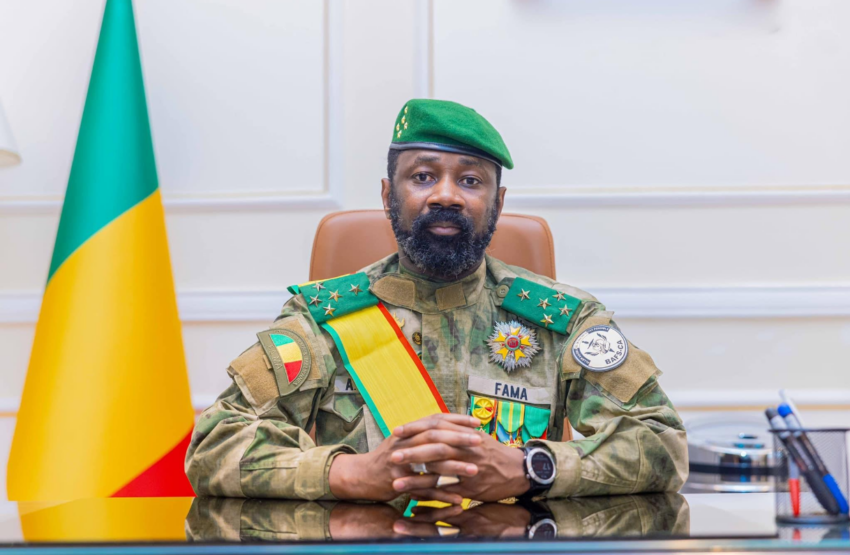
The upcoming diplomatic meeting between Mali and Burkina Faso on November 5, 2026, in Ouagadougou has cast a spotlight on the unexpected absence of Niger, the third member of the Sahel Alliance (AES). While General Assimi Goïta and Captain Ibrahim Traoré prepare for bilateral talks, the missing delegation from Niamey is triggering concerns about the economic and security implications for the regional bloc’s cohesion.
This high-profile engagement marks a critical moment for the AES, an alliance born from the shared determination of three neighboring nations to confront escalating instability. Yet the absence of Niger’s leadership has left observers wondering: Is this a simple scheduling matter, or does it signal deeper fractures within the partnership?
Why the empty chair at Ouagadougou matters for citizens and traders
The AES was designed to strengthen cooperation across military, economic, and diplomatic fronts. With Niger’s president Abdourahamane Tiani notably absent, the summit’s ability to address pressing regional challenges comes into question—especially for ordinary citizens whose livelihoods depend on cross-border trade and security.
Border regions, already vulnerable to militant violence, face heightened uncertainty as Mali and Burkina Faso deliberate without their third partner. Entrepreneurs relying on trans-Sahelian commerce, from Agadez to Gao, now watch warily as diplomatic signals grow mixed.
Security cooperation: a test of AES resilience
The three nations have long emphasized joint military strategies against insurgent groups. While recent foreign ministers’ meetings in Ouagadougou kept coordination alive at a technical level, a high-level defense discussion without Niger’s voice risks diluting unified efforts to curb terrorism.
Key concerns include:
- Delayed intelligence-sharing frameworks due to incomplete participation
- Possible delays in planned joint patrols along the Niger-Mali-Burkina Faso tri-border zone
- Increased risk of splintered responses to emerging threats
Economic fallout: disrupted trade and investment flows
The AES was meant to facilitate seamless trade between its members. However, with Niamey unrepresented, new cross-border agreements—or even the renewal of existing ones—hang in balance. Market vendors in Dori, Bobo-Dioulasso, and Mopti depend on predictable tariffs and transit routes, which now face disruption.
Investors, too, are adopting a wait-and-see stance. Flows of capital into agro-processing, mining, and infrastructure have already slowed in the absence of clear signals of trilateral commitment.
Diplomatic optics: a message or a misstep?
International partners closely monitor the AES as a potential model for regional resilience. A visible split, even a temporary one, could undermine confidence in the alliance’s ability to serve as a credible alternative to Western security partnerships.
Conversely, proponents argue that bilateral cooperation can still flourish, pointing to recent ministerial dialogues that maintained momentum. Yet the symbolic weight of a three-nation summit remains unmatched—especially in the eyes of regional skeptics.
What happens next? Paths to reconciliation or fragmentation
All eyes will be on post-summit statements from Bamako and Ouagadougou. Will they issue a joint communiqué echoing a shared vision? Or will silence from Niamey deepen perceptions of a fractured alliance?
Three possible outcomes:
- Rapid rapprochement: Tiani joins a follow-up tripartite meeting within weeks, restoring confidence.
- Selective cooperation: Mali and Burkina Faso proceed with bilateral agreements, leaving Niger on the sidelines.
- Formal divergence: Differences over strategy lead to public rifts, weakening the AES’s global positioning.
The road ahead: can the AES survive without Niamey’s voice?
For now, the AES’s future hinges on more than geographic proximity—it depends on political will. Citizens in insecure border zones, merchants in transit hubs, and diplomats in regional capitals all await clarity. The November 5 meeting may become a turning point—or a cautionary tale about the fragility of new alliances.
One thing is certain: In the sands of the Sahel, silence speaks volumes.