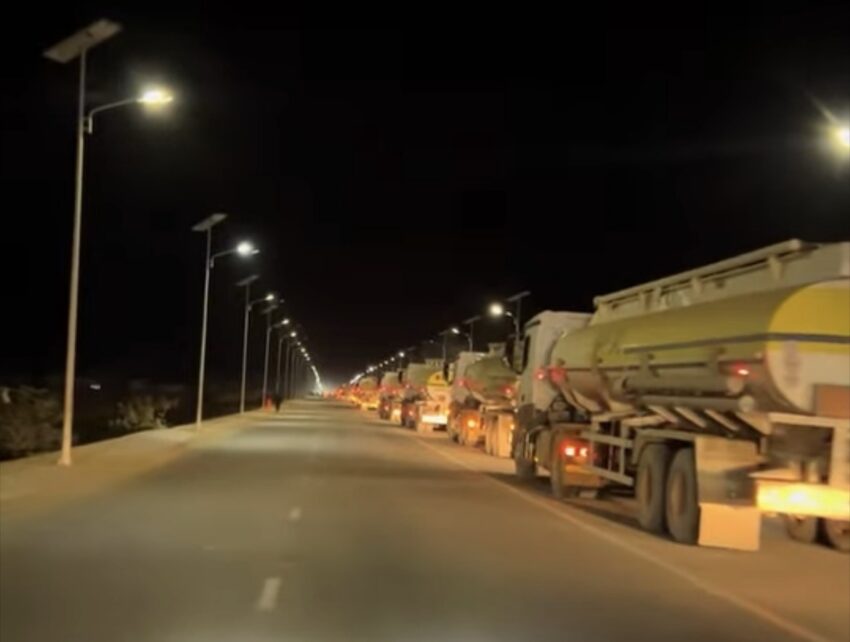
The West African nation of Niger, a significant oil producer, continues to grapple with severe fuel shortages that are disrupting daily life and crippling its economy. Despite exporting millions of barrels of crude oil annually and maintaining domestic refining capabilities, citizens and businesses face persistent disruptions in fuel supply, raising fundamental questions about the government’s energy strategy.
From petroleum exports to fuel queues: the paradox of Niger’s energy sector
Niger has produced oil from the Agadem Basin since 2011 and operates the Zinder refinery (SORAZ), processing 20,000 barrels of the country’s 110,000 barrel daily output. While the state has positioned oil as a cornerstone of its economic independence, the reality on the ground tells a different story: long lines at gas stations, frequent shortages of super gasoline and diesel, and disrupted supply chains have become the new normal for Nigerien consumers.
The consequences of this energy failure extend far beyond individual inconvenience. The transport sector a backbone of the economy has slowed significantly, affecting trade, agriculture, and essential services. Small business owners report heavy losses as they cannot transport goods, while daily wage earners lose productive hours searching for available fuel. For a landlocked nation heavily reliant on road transport, such disruptions don’t merely inconvenience they paralyze.
Exporting oil while importing shortages: the growing gap between supply and demand
Official figures from October 2026 reveal a widening deficit in domestic fuel supply. Super gasoline shortages increased from 47.25 million liters in 2024 to 159.74 million in 2025, reaching 196.62 million liters in the first eight months of 2026. Diesel shortages over the same period totaled 52.60 million liters. Despite rising production, the gap between available resources and national demand continues to grow.
This imbalance stems from a combination of factors: limited refinery capacity, logistical bottlenecks, financial constraints within the supply chain, and inadequate distribution infrastructure. While the SORAZ refinery continues to operate, it cannot meet rising domestic demand. The result is a paradox Niger exports oil to international markets while its own population struggles to access basic fuel.
The Algeria agreement: cooperation or concession?
In response to the crisis, Niger has turned to Algeria for support. A March 2026 memorandum of understanding and subsequent agreements between national oil company SONIDEP and Algerian operator Sonatrach aim to stabilize fuel supplies. A November 2026 delivery of 1.65 million liters via 53 tanker trucks marked a temporary relief.
But this cooperation raises critical questions: What are Niger’s financial commitments? Are the terms of supply negotiated under favorable conditions? What assurances exist for long-term stability? Without transparent disclosure of these terms, the agreements risk appearing less like strategic partnerships and more like emergency dependencies.
True energy sovereignty requires not only access to resources but also the ability to manage them autonomously, negotiate from a position of strength, and prioritize domestic needs without perpetual reliance on foreign partners.
Debt and mismanagement: the hidden costs of Niger’s oil dream
Financial instability within the energy sector has exacerbated the crisis. In October 2026, the government established a technical committee to address supply disruptions and resolve inter-institutional debts involving SONIDEP, SORAZ, the national electricity company NIGELEC, and Chinese partner CNPC. The goal a three-month plan to restructure liabilities highlights systemic failures.
How did a sector expected to be a major revenue source for the state accumulate such financial strain? Audits and public disclosure are urgently needed to clarify responsibility, assess mismanagement, and prevent future disruptions. Transparency isn’t optional for a resource that belongs to the nation and fuels its survival.
Beyond rhetoric: what sovereignty means for Niger’s people
The military regime under General Abdourahamane Tiani has framed oil production and energy policy as pillars of national renewal. Yet, citizens experience a starkly different reality. Prolonged fuel shortages force families to alter daily routines, small businesses to close temporarily, and public services to operate under stress all while official discourse celebrates production milestones and export volumes.
Energy sovereignty cannot be declared through speeches or measured in barrels exported. It is demonstrated in the ability of families to commute, businesses to operate, and essential services to function without interruption. The current crisis exposes a troubling gap between policy and reality, calling into question the effectiveness of the government’s energy strategy and its commitment to public welfare.
What the Tiani regime must do now
The challenges facing Niger’s energy sector are clear: structural deficits in fuel availability, financial instability among key operators, and a lack of transparency in international agreements. Addressing them requires more than short-term fixes or foreign aid deliveries.
The government must:
Publish comprehensive audits of the oil sector’s financial and operational performance
Clarify the terms and long-term implications of the Algeria agreements
Invest in refining capacity and distribution infrastructure to reduce import dependency
Ensure equitable fuel allocation and pricing to protect consumers and businesses
Without these actions, the regime risks undermining its own legitimacy. Niger’s people deserve a government that turns natural wealth into tangible security not one that exports oil while importing hardship.
By Martin Ngu — Journalist