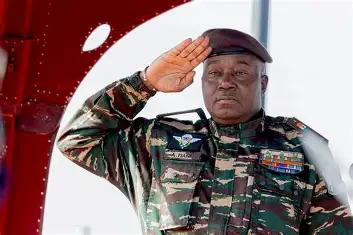
When General Abdourahamane Tiani seized power in Niger on July 26, 2023, the stated goal was clear: to rescue the nation from what he described as an unmanageable security crisis. Three years later, the outcome starkly contrasts with those initial assurances. The promise of restored stability has failed to materialize, while economic stagnation, diplomatic isolation, and dwindling state resources have compounded the country’s challenges. A closer examination of key indicators reveals a nation trapped in a spiral of interconnected crises.
Security promises unmet amid worsening threats
The coup’s primary justification hinged on the military’s ability to restore order more effectively than civilian leadership. Yet the security landscape has only deteriorated further. Armed factions linked to the Jama’at Nusrat al-Islam wal Muslimeen (JNIM) and the Islamic State in the Greater Sahara (ISGS) have expanded their operations across multiple regions, adopting increasingly aggressive tactics.
Attacks now target a broader range of objectives, including:
- Military and logistical convoys;
- Villages and civilian populations;
- Critical road networks;
- Economic infrastructure;
- Supply chains.
In some areas, the constant threat has paralyzed daily life, restricting movement for both civilians and administrative services. The consequences are severe and far-reaching:
- Abandonment of farmland due to unmanageable risks;
- Stagnation in domestic trade;
- Closures of schools in conflict-affected zones;
- Limited access to healthcare facilities;
- Surge in internally displaced persons.
The human toll is devastating, with rural communities bearing the brunt of a conflict that shows no signs of abating despite the change in leadership.
Military expenditures rise, but security gains lag
Since the coup, a significant portion of public funds has been diverted to the defense sector. However, this increased investment has not translated into decisive improvements on the ground.
The armed forces face an uphill battle against:
- An expansive territory that is difficult to secure;
- Multiple active fronts;
- Highly mobile insurgent groups;
- Chronic logistical challenges.
The relentless pressure on military personnel has led to:
- Increased fatigue among troops;
- Accelerated wear and tear on equipment;
- Higher operational costs.
Each new attack underscores the limitations of a purely military response to a crisis rooted in economic, social, and territorial grievances.
Economic strain deepens as trade routes falter
Niger’s economy remains heavily dependent on regional commerce, with the Cotonou-Niamey corridor serving as the backbone of its trade network. The prolonged closure of the border with Bénin, compounded by regional diplomatic tensions, has disrupted this vital lifeline.
The consequences include:
- Prolonged delays in supply chains;
- Soaring transportation costs;
- Frequent stock shortages;
- Generalized price increases.
Families are grappling with declining purchasing power, as staple foods, medications, construction materials, and other essential goods become increasingly unaffordable.
Local economies pay the price
Border towns like Gaya—once thriving hubs of cross-border commerce—have seen their economic activity plummet. Among the hardest-hit sectors are:
- Transport and logistics operators;
- Customs brokers and warehouse workers;
- Small-scale traders;
- Roadside hotels and restaurants.
The contraction in trade has also reduced state revenue, further constraining public investment in critical areas.
Foreign investment dwindles amid instability
Investors require stability, predictability, and favorable conditions to commit capital. Niger’s current climate, however, presents multiple deterrents:
- Persistent diplomatic sanctions and tensions;
- Ongoing logistical hurdles;
- Elevated security risks;
- Regulatory unpredictability.
These factors have slowed the inflow of private capital and forced many businesses to postpone or abandon expansion plans.
The Niger-Bénin oil pipeline: a strategic project at risk
The Agadem-Sèmè oil pipeline, a cornerstone of Niger’s economic ambitions, was expected to generate substantial revenues to fund national development. Yet the ongoing tensions between Niamey and Cotonou have placed this project in jeopardy.
Beyond political disputes, any uncertainty surrounding the pipeline sends a discouraging signal to international investors, who prioritize stability for long-term ventures. What was once touted as a growth engine now embodies the very fragility of Niger’s economic outlook.
Diplomatic reorientation yields limited dividends
The military regime has radically reshaped Niger’s foreign policy, severing traditional ties with Western partners while forging closer alliances with Russia and joining the Alliance of Sahel States (AES) alongside Mali and Burkina Faso.
This shift is framed as a quest for regained sovereignty. Yet the results have been underwhelming. The country now faces:
- Reduced access to international financing;
- Diminished technical cooperation;
- Strained relations with neighboring states;
- Exclusion from certain regional mechanisms.
The proclaimed sovereignty comes at the cost of new economic and diplomatic constraints.
Changing faces of foreign dependence
The withdrawal of French forces was presented as a definitive step toward full national autonomy. However, military cooperation with Russian counterparts has intensified, raising a critical question: has Niger merely swapped one form of external dependency for another?
On the ground, national security still relies in part on foreign support, challenging the narrative of complete strategic independence.
Public services crumble under fiscal strain
The redirection of resources toward military spending has placed immense pressure on state finances, leaving social sectors underfunded. Key public services are now struggling to meet demand, with visible consequences:
- Inadequate school infrastructure;
- Supply shortages in health facilities;
- Delays in public investment projects;
- Decline in local service delivery.
This imbalance risks creating a vicious cycle: as military spending grows, development investments shrink, even though the latter are essential to addressing the root causes of insecurity.
A society under mounting pressure
The economic strain is taking a heavy toll on daily life. Households are confronting:
- Persistent price hikes;
- Shrinking job opportunities;
- Declining incomes in border regions;
- Growing economic uncertainty.
This confluence of pressures is eroding social cohesion and increasing the vulnerability of the most disadvantaged populations.
A governance model tested by reality
Three years after the coup, Niger finds itself trapped in a paradox. The military leadership arrived promising to restore security, defend national sovereignty, and improve living conditions. Yet the prevailing indicators tell a different story: persistent insecurity, economic slowdown, fiscal strain, and heightened diplomatic isolation. The concentration of resources on military efforts, regional tensions, and structural economic weaknesses have created a web of interlinked crises, making it increasingly difficult to break free from the impasse.