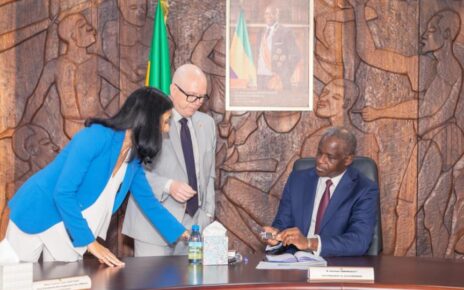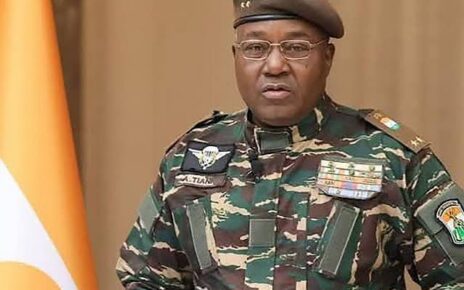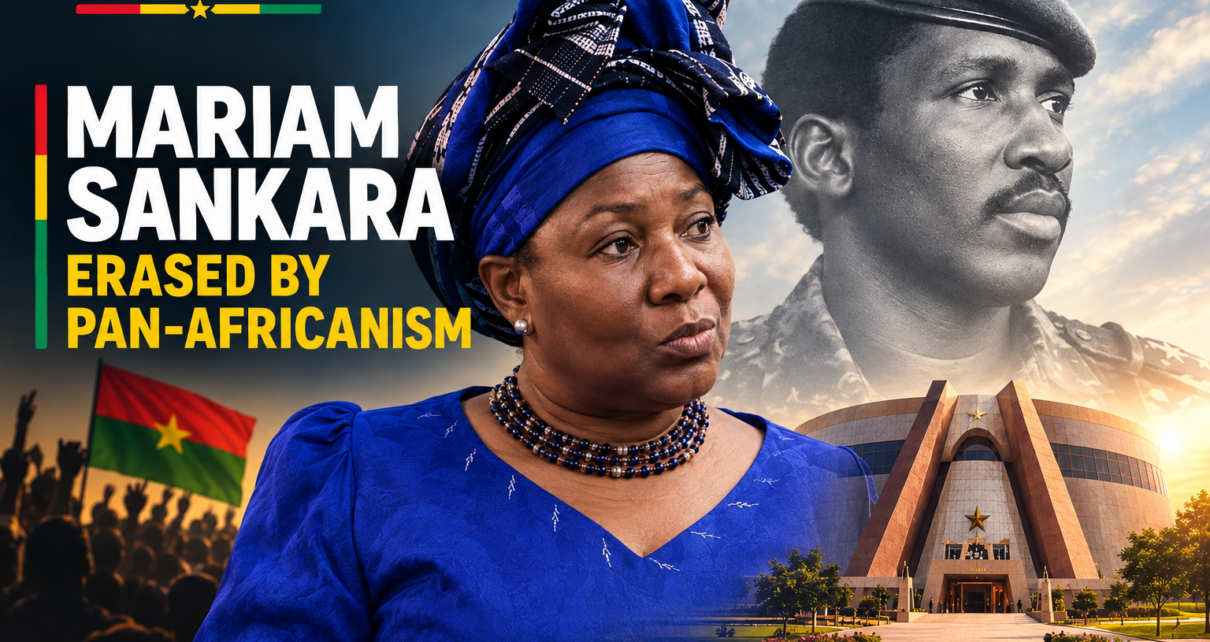
On 17 May 2025, Burkina Faso unveiled the Thomas Sankara Mausoleum in Ouagadougou with a ceremony steeped in symbolism and international presence. Held at the former Conseil de l’Entente site, the event—spearheaded by Prime Minister Rimtalba Jean Emmanuel Ouédraogo under the patronage of Captain Ibrahim Traoré—attracted dignitaries including Senegal’s Prime Minister Ousmane Sonko, Chad’s Prime Minister Allah-Maye Halina, representatives from the Alliance of Sahel States, and pan-African figures from across the globe. Twenty-one cannon shots echoed as speeches, revolutionary emblems, and Francis Kéré’s eye-shaped architectural design framed Sankara as a continental icon.
Yet amid this orchestrated homage, one absence spoke volumes: Mariam Sankara, the late leader’s widow, was neither present nor mentioned. Her children and immediate family were likewise excluded—a silence echoing their conspicuous absence during the 2023 reburial ceremony. While Nathalie Yamb received the Knight of the Order of the Étalon for her pan-African activism in Sankara’s name, not a single word acknowledged the woman who safeguarded his legacy through decades of exile and political danger.
The widening rift between state memory and personal loss
This omission underscores a deeper dilemma: who rightfully stewards Thomas Sankara’s memory? Is it his family, who endured persecution and exile after his 1987 assassination? The Burkinabè state, now branding him as national patrimony? Or a new generation of pan-African activists claiming him as an ideological forefather?
Sankara’s transformation—from political murder victim to national hero to continental symbol—has been swift and strategic. The 2025 mausoleum is officially billed as a vessel to “safeguard, preserve, and promote” his political legacy. But institutionalizing his memory raises a critical question: can a nation sanctify a man’s legacy while silencing those who lived his loss most intimately?
Decades of erasure, followed by selective celebration
Under Blaise Compaoré, who seized power after Sankara’s killing, Mariam Sankara was forced into exile in Montpellier for over twenty years. Denied recognition as a former first lady, she bore the burden of keeping her husband’s name alive when even uttering it carried risk. Only after Compaoré’s 2014 ouster could she return—and only in 2021 did the trial of alleged assassins commence.
Throughout those years, she was far more than a passive mourner; she was a relentless advocate for truth and justice regarding the October 1987 assassination. Her role was not symbolic—it was foundational to the survival of Sankara’s historical narrative.
Today, that narrative is everywhere: in official speeches, street names, monuments, and pan-African discourse. Yet the very person who defended it at great personal cost now finds her voice marginalized just as the state embraces the legacy she preserved.
A memorial shaped by shifting political winds
The mausoleum did not originate with Captain Traoré’s regime. The International Committee of the Thomas Sankara Memorial notes that planning began on 2 October 2016, spanning multiple administrations. Under Roch Marc Christian Kaboré, Sankara’s rehabilitation accelerated—but often as a tool to appeal to nostalgic voters, even as Kaboré entertained Compaoré’s potential return.
Under Traoré, Sankara’s image evolved into state doctrine: initially invoked to legitimize a coup-born government, then gradually distanced once power stabilized. The rhetoric shifted—from “we are Sankarists” to “stop comparing us to Sankara.” Simultaneously, his identity morphed from assassinated president and 1983 revolution architect into an official national hero embedded in Burkina Faso’s historical canon.
Memory is no longer merely remembered—it is curated, staged, and institutionalized.
The moral claim of family in public commemoration
This raises a legal and ethical quandary: when a state appropriates the memory of a former leader, what rights does the family retain to contest how that memory is portrayed?
Across three regimes—Compaoré, Kaboré, and Traoré—Mariam Sankara has remained sidelined: silenced under the first, instrumentalized under the second, and circumvented under the third. Her family never endorsed the 2023 reburial or the 2025 inauguration. In February 2023, they publicly stated they felt “crushed by the force of public authority” and opposed burying Sankara at the assassination site, arguing it was too charged with trauma to serve as a place of peace.
They proposed alternatives—the Dagnoën cemetery, Jardin de l’Amitié, or Jardin Yennenga—and urged preservation of the murder site as historical ground, not a burial plot. Their appeals went unanswered. Despite their objections, the reburial proceeded on 23 February 2023 at the memorial site, with Mariam notably absent—a detail that crystallized a lasting symbolic fracture.
Pan-Africanism without inclusion risks hollow symbolism
There is profound irony here. Thomas Sankara championed sovereignty, dignity, and resistance to domination. Yet his family alleges that decisions about his final resting place and legacy were imposed without consent—replicating the very power dynamics he fought against.
As pan-African leaders invoke his name globally, they rarely engage with his widow and children when they challenge how his heritage is codified. True pan-Africanism should not rest on symbols alone but must include those whose lives are woven into the history being honored.
The greater the elevation of Sankara as an icon, the more the real man fades: the husband behind the revolutionary, the father behind the national hero, the murdered individual behind the continental symbol. And with him fades Mariam Sankara—the partner, mother, and guardian of his memory during its most vulnerable years.
Sankara remains useful as long as his image serves political ends. His family, however, continues to bear the consequences.
The core issue is no longer how Burkina Faso commemorates Thomas Sankara, but whether the nation, in enshrining him as state property and pan-African emblem, still listens to those who knew him before he became legend.
Authentic reconciliation is not measured by monuments erected, cannons fired, or dignitaries assembled. It is measured by a state’s willingness to hear those whose grief predates the fanfare.
On that measure, the Sankara file remains painfully open.