For households and traders spread along the Niger–Benin frontier, a diplomatic quarrel is never purely diplomatic. It shows up in the price of a sack of grain, in the hours lost at a checkpoint, and in the willingness of a driver to commit to a route that had only recently become dependable again. It is against that very practical backdrop that Niamey’s continued protection of Kemi Seba — granted while the same government strips some of its own citizens of their nationality — is now being judged. If confidence between the two neighbours erodes any further, the first to feel it will be the people and businesses whose livelihoods depend on Niger and Benin getting along.
The legal battle around Kemi Seba is still open. The Beninese activist was taken into custody in South Africa in April 2026 and is now the subject of an extradition procedure aimed at bringing him back to Benin. Cotonou wants him in connection with the alleged coup attempt of 7 December 2025, accusing him of having backed the plotters, and has issued arrest warrants against him. He denies the accusations levelled at him.
His attention, and much of the pressure, has shifted towards Niger — and not by accident.
A fragile thaw between Niamey and Cotonou under fresh strain
The timing could hardly be more delicate. After years of friction that followed the July 2023 coup in Niger, the two capitals had begun to talk to each other again.
The June 2026 visit that raised hopes
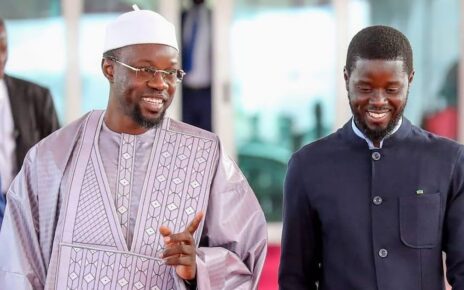
On 2 June 2026, Benin’s president Romuald Wadagni travelled to Niamey for talks with General Abdourahamane Tiani. The Beninese presidency presented the trip as evidence of warming relations and of a shared desire to revive bilateral cooperation.
Trade, travel and the confidence that holds them together
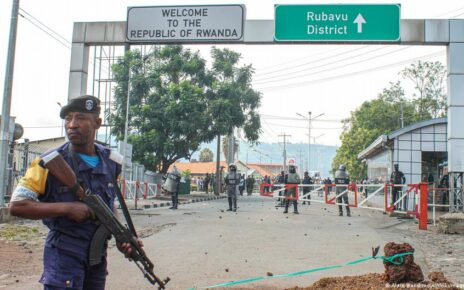
That ambition is not sentimental; it is strategic. Niger and Benin are neighbours with intertwined economic interests, communities living on both sides of the border and common security concerns. Cooperation between them underpins commercial exchanges and the movement of people and merchandise.
Any deterioration in confidence therefore carries costs that stretch well past the diplomatic arena — into transport corridors, market prices and the daily routines of border populations. That is precisely why the Kemi Seba file has landed at the worst possible moment. While both governments are trying to close the book on years of confrontation, the survival of a privileged relationship between Niamey and a man wanted by Beninese justice risks feeding new misunderstandings.
Five Nigeriens stripped of citizenship, one Beninese shielded
The contrast is difficult to overlook, and it is the part of the story with the most direct consequences for ordinary citizens.
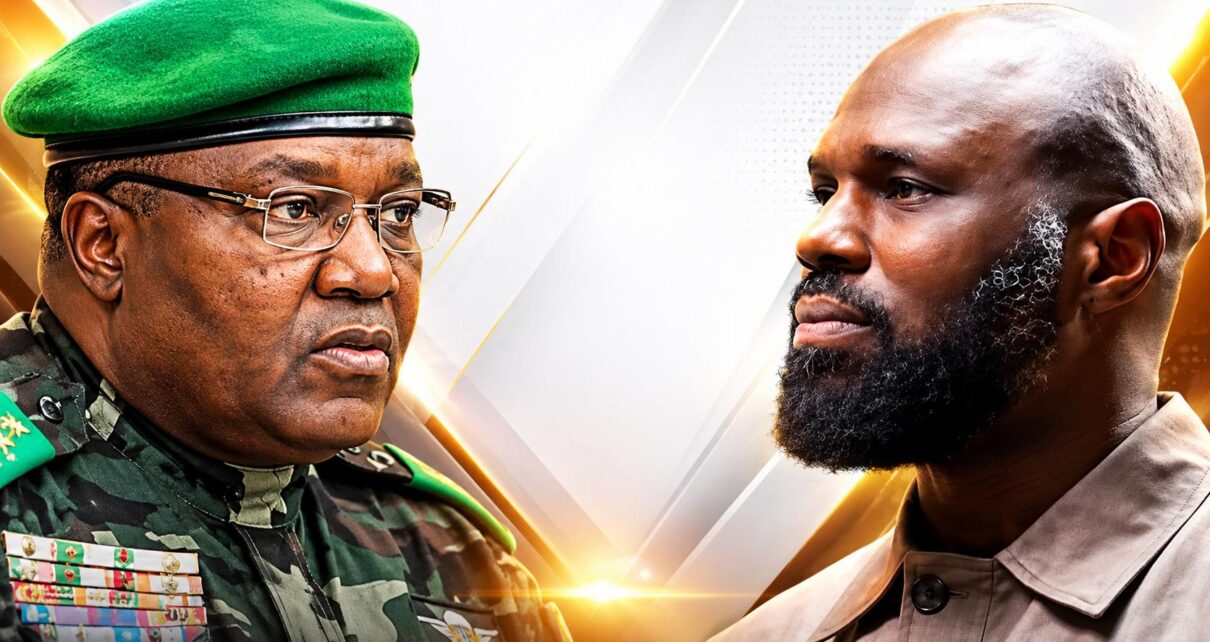
Kemi Seba holds a Nigerien diplomatic passport and the title of special adviser to General Abdourahamane Tiani, positions he obtained in 2024. It was with that same diplomatic passport that he is understood to have entered South Africa late in 2025. Niger has thus become a central pillar of his defence strategy against Cotonou’s extradition request.
That reality raises an awkward question of principle for Niamey: how can a government justify extending institutional protection to a Beninese national sought by the courts of a neighbouring state, at the very moment it is temporarily depriving several of its own citizens of their nationality?
The September 2026 decree and a growing list
On 17 September 2026, Abdourahamane Tiani signed a decree provisionally stripping five people of Nigerien nationality. Among them was the former prime minister Ouhoumoudou Mahamadou, along with four other Nigeriens, including former associates of Mohamed Bazoum and a social media activist.
The government accuses them of collusion with foreign powers, undermining state security, circulating information capable of disturbing public order, and activities liable to disrupt public peace and safety. The measures are provisional, issued under an ordinance adopted in 2024. Official figures put the total number of people temporarily stripped of nationality at 25 since the mechanism was created.
Rights groups question the procedure
Niamey frames these decisions as a matter of defending fundamental interests and national security. Their growing frequency, however, has fuelled controversy over the political use of citizenship. Human Rights Watch has warned that the mechanism raises serious concerns about human rights and procedural safeguards.
Seen from that angle, the symbolic weight of the Kemi Seba case is heavy. On one side, Nigeriens lose their nationality in the name of protecting the state and its core interests. On the other, a foreign national who has spent years railing against Western influence enjoys an official status at the side of the head of state, complete with a diplomatic passport.
From activist ally to diplomatic liability
Kemi Seba is no outside observer of the region’s political turbulence. A pan-Africanist campaigner known for his attacks on France and on Western influence across Africa, he has moved closer to the Sahel’s military governments in recent years, a rapprochement with Niamey that culminated in his appointment as Tiani’s special adviser.
His posture towards Benin has been openly confrontational. After the attempted coup of 7 December 2025, Beninese warrants were issued against him. Cotonou’s authorities contend that his public statements and certain videos circulated around the time of the events amounted to support for those seeking to overthrow the government. Benin then launched proceedings to have him extradited from South Africa.
Politically, the difficulty for Niamey remains unresolved: Kemi Seba is now tied directly to a case that touches the political stability of Benin, and the fact that he holds an official position with Niger’s president is something Cotonou cannot ignore.
The contradiction Tiani will have to explain
The question facing Niamey is not whether Kemi Seba is guilty or innocent — that belongs to the courts. What is at stake is the political signal the Nigerien government is sending.
Tiani presents national sovereignty, the defence of Niger’s fundamental interests and the fight against external threats as the core of his programme. Within that logic, Nigeriens accused of undermining state security can be hit with a measure as severe as the provisional loss of their citizenship. Yet at the same time, Niamey maintains an institutional closeness to a foreign national whose country of origin is demanding his return.
That difference in treatment inevitably invites a question about consistency. Can sovereignty be invoked to punish Nigerien citizens harshly while simultaneously serving as a shield for a foreign national wanted by a neighbouring state’s justice system? It is exactly this question that threatens to shadow the relationship between Niamey and Cotonou.
Reconciliation built on gestures, not communiqués
Normalisation between Niger and Benin cannot rest on summit meetings and statements of intent alone. It will also require gestures capable of rebuilding trust — and on the Kemi Seba file, Niamey is in a delicate position. By granting the activist a diplomatic passport and an official function, Tiani’s government created an institutional link that goes far beyond a casual relationship with a foreign campaigner. That choice is now back in the spotlight just as Benin formally asks for him to be handed over.
Niger is entitled to defend its sovereign decisions. Benin may pursue whatever judicial procedures it deems necessary. South Africa, for its part, remains sovereign in the ruling it will issue at the end of the extradition process. But politically, one reality holds: the protection extended to Kemi Seba complicates the rapprochement between Niamey and Cotonou.
The paradox is sharpened by the fact that this protection coincides with a hardening stance towards Niger’s own citizens. Between the provisional loss of nationality for Nigeriens accused of harming state interests and the diplomatic passport handed to a Beninese national sought by Cotonou, Tiani’s government will sooner or later have to answer a question of political coherence.
If Niamey genuinely wants durable relations with Cotonou, it will have to show that the rapprochement goes beyond official ceremonies. Reconciliation is also built on trust — and in the Kemi Seba affair, that trust remains visibly fragile.