Why the Niger pivot threatens to redraw regional power maps
The Sahel is no longer just a battleground against armed groups—it has become a high-stakes chessboard where rival powers are staking claims to trade routes, security partnerships, and economic leverage. At the center of this geopolitical earthquake is the Niger, where a flurry of high-level diplomatic exchanges is redefining the balance of influence across the Sahara and the African continent.
Libya and France: a silent military partnership with ripple effects
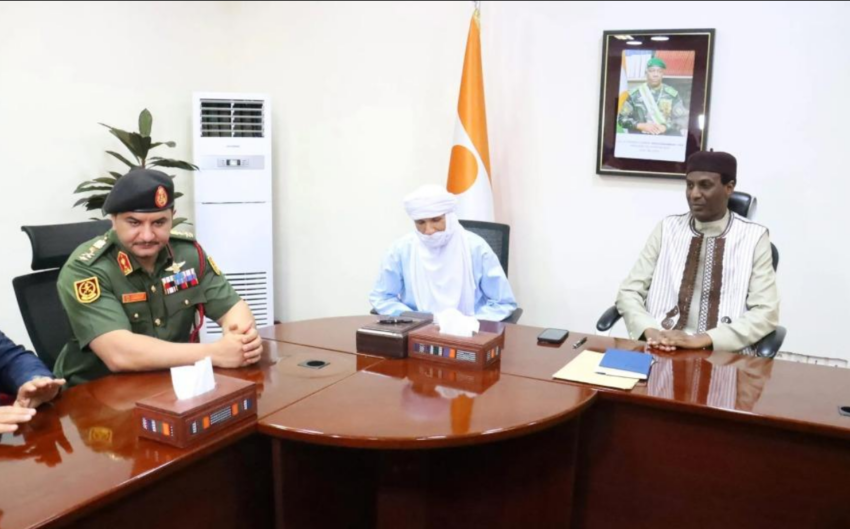
On November 1, 2026, Niger’s Prime Minister Ali Mahaman Lamine Zeine traveled to Benghazi to sign a strategic cooperation agreement with Libya’s eastern authorities. The details remain classified, but the move signals Niamey’s effort to diversify its security alliances beyond its traditional partners. Days later, Khalifa Haftar’s top military envoy met with French chiefs of staff in Paris to explore enhanced defense collaboration, including training and intelligence-sharing. While these talks were framed as general cooperation, their timing underscores a new dynamic: Libya’s eastern bloc and France are quietly aligning interests that intersect directly with Niger’s stability and economic corridors.
From oil to uranium: the economic stakes behind the diplomacy
The newfound focus on Niger is not accidental. The landlocked nation sits atop Africa’s third-largest uranium reserves, a mineral now in high global demand for clean energy. Additionally, its geographic position links the Maghreb with West and Central Africa, making it a natural transit hub for trade, energy flows, and migration. Any disruption—or consolidation—of alliances around Niamey will have immediate consequences for regional energy security and commodity pricing across the Sahel.
Algeria’s uneasy comeback in the Sahel
As Libya and France deepen their engagement in the region, Algeria is rapidly reasserting its role as a counterbalance. On November 3, Algerian Foreign Minister Ahmed Attaf arrived in N’Djamena with a personal message from President Tebboune to Chadian leader Mahamat Déby. The meeting emphasized joint security coordination, border management, and implementation of 27 previously signed bilateral agreements. This push comes as relations between Niger and Chad have grown strained, with Niamey accusing N’Djamena—without public evidence—of being involved in a destabilization plot backed by Paris. Despite the tension, Algeria sees Chad as a critical partner in containing Libyan spillover and securing its southern border.
By investing in military cooperation with Niger and strengthening ties with Chad, Algeria is not just protecting its own borders—it’s attempting to prevent a vacuum that could be filled by rivals. The Algerian Parliament’s October 25 approval of troop deployment into Niger highlights a strategic shift: Algiers is no longer content to observe from the sidelines. It is actively positioning itself to shape the Sahel’s future economic and security landscape.
UAE’s silent hand in Libya’s south: a growing concern for Algiers
The United Arab Emirates has long backed Khalifa Haftar’s forces in eastern Libya, providing political, financial, and logistical support. While Abu Dhabi’s current level of involvement is less visible than in past years, its historic ties to the Haftar camp remain a strategic wildcard. This alliance raises concerns in Algiers, where officials see any military buildup in southern Libya—especially near Niger—threatening Algeria’s southern flank and potentially opening new trafficking corridors for arms, fuel, and migrants.
For Algeria, the Fezzan region and its connections to the Agadez corridor are critical. These routes are not just smuggling channels—they are conduits for energy flows, humanitarian aid, and migration. Any shift in control or influence over these corridors directly impacts Algerian national interests, including energy transit and regional stability.
Morocco and Algeria: a rivalry that now crosses the Sahara
The decades-old diplomatic feud between Algiers and Rabat has spilled beyond the Maghreb. Morocco has been expanding its influence in the Sahel, forging new defense and economic partnerships with Sahelian states. Algeria, in turn, is leveraging its historical ties and energy leverage to maintain its dominant position. The October visit by Khaled Haftar to Morocco, where he met with Morocco’s top general, further fueled Algiers’ suspicions of a budding convergence among Rabat, Abu Dhabi, and eastern Libya.
Though these alliances may not form a formal bloc, their overlapping interests—especially around energy security and trade routes—create a parallel architecture that challenges Algeria’s traditional role. The question now is whether Niamey will align with one axis or continue playing the field, using its strategic position to extract maximum benefits from all sides.
Niger’s gambit: can it turn chaos into opportunity?
The Niger government has deftly positioned itself at the crossroads of competing ambitions. By signing an accord with Libya’s east, reinforcing ties with Algiers, and engaging with Paris through indirect channels, Niamey is building a diversified network of partners. But this strategy carries risks: over-reliance on one partner could trigger backlash, while inconsistent positioning may erode trust.
The country’s newfound leverage could translate into concrete gains—infrastructure investments, security guarantees, or preferential trade deals—but only if it maintains balance. The recent parliamentary approval of Algerian troop deployment and ongoing uranium negotiations suggest Niamey is not passively accepting alliances—it’s actively curating them to secure its future.
What comes next: a domino effect for Sahel economies
The fallout from these shifting alliances will be felt far beyond diplomacy. Each new agreement, troop movement, or economic pact has a cascading impact on local communities. Rising energy prices, rerouted trade flows, and shifting security missions directly affect farmers, traders, and families across the Sahel. Businesses investing in uranium, agriculture, or renewable energy will need to recalibrate strategies based on new power centers. Even humanitarian aid routes could be disrupted, leaving vulnerable populations more exposed.
In short, the Sahel’s future is not just being written in ministerial offices—it’s being decided on the ground, where real people live, work, and depend on stability. The Niger, once a buffer zone in regional conflicts, is now the epicenter of a realignment that will redefine economic and political power for decades to come.