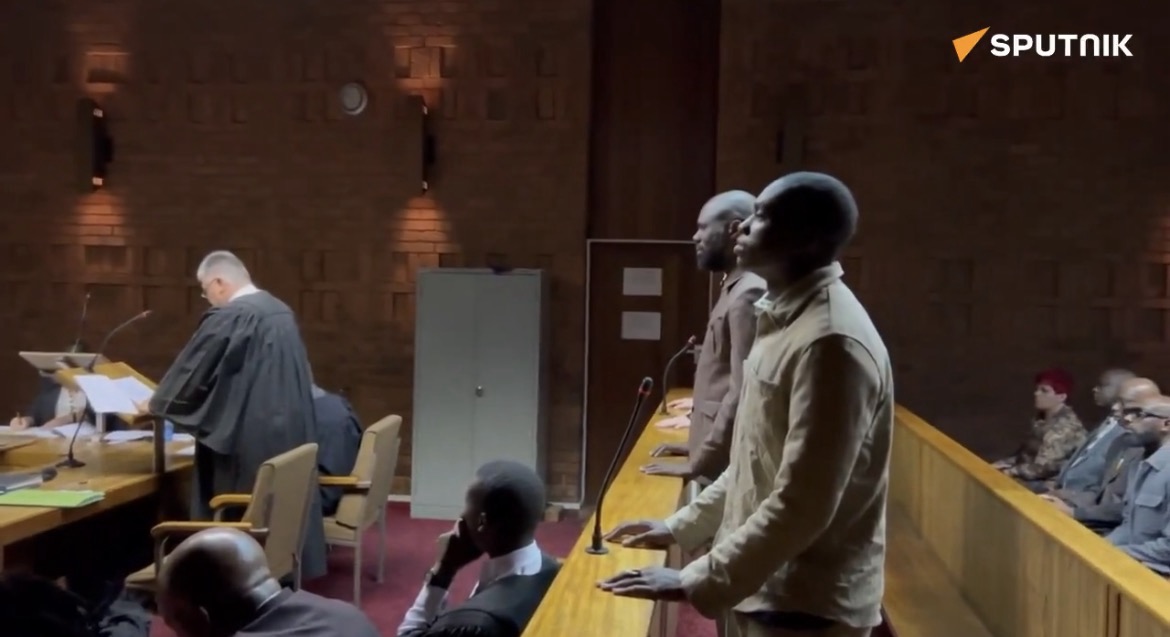
The francophone-Béninese activist Kemi Seba remains incarcerated in South Africa following a decisive court ruling on April 29. The South African judiciary denied his defense’s arguments, upholding his continued detention. The decision was influenced by the invalidity of a diplomatic passport and the presence of two international arrest warrants issued by Bénin. The case has now been postponed until May 11, marking a pivotal moment in Seba’s legal troubles.
An uncompromising judicial verdict
Despite expectations of bail, the court ruled that Seba—legally named Stellio Gilles Robert Capo Chichi—must remain in custody. The judge cited the severity of the international charges and the substantial risk of flight as justification. This decision underscores a stark shift, as Seba’s confrontational tactics collide with South Africa’s stringent legal framework in Pretoria.
The diplomatic passport gambit fails
During the April 29 hearing, Seba’s legal team attempted to leverage a diplomatic passport, claiming it provided immunity from arrest. However, the argument was swiftly dismissed. The judge clarified that such documents only confer protection when accompanied by official accreditation from local authorities. Seba could not produce a valid mission order or proof of representation for a sovereign state, rendering the passport legally equivalent to a standard travel document. The court viewed the submission as a deliberate distraction tactic.
Bénin’s extradition demands cast a long shadow
The crux of Seba’s predicament lies in his legal history in West Africa. Bénin has issued two international arrest warrants against him, alleging serious offenses that prompted Cotonou to pursue his extradition vigorously. South Africa’s decision to detain Seba aligns with its obligation to evaluate the legitimacy of these extradition requests. This places Seba in an unprecedented position of vulnerability, stripped of the public platform and fervent support that once defined his campaigns.
From political posturing to legal deadlock
Seba has long cultivated an image as a political prisoner, leveraging media attention to amplify his anti-establishment rhetoric. Yet the judicial landscape in South Africa appears impervious to his provocations. By prioritizing international conventions and procedural integrity, Pretoria has demonstrated that spectacle cannot supersede legality. The activist’s confrontational strategies, once his hallmark, now face an immovable legal barrier.
A precarious road ahead
The coming weeks will be critical as South Africa examines the validity of Bénin’s extradition requests. Should the court determine that the conditions for surrender are met, Seba may face deportation to Cotonou. His recent loss of French nationality—following his highly publicized passport-burning incident—has left him without consular protection or any legal recourse to avoid extradition. The April 29 ruling serves as a stark reminder of the consequences of sidestepping institutional processes.
The case has grown increasingly complex with allegations, supported by leaked audio recordings, suggesting Seba orchestrated plans to destabilize Bénin during the