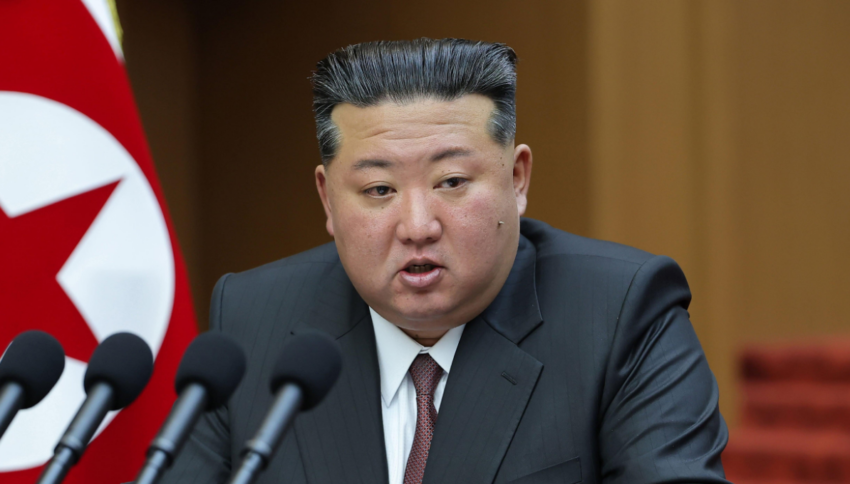
Unverified reports spark regional alarm over Pyongyang’s leadership vacuum
Speculation surrounding North Korean leader Kim Jong-un’s health has escalated after unverified reports surfaced alleging he suffered a severe cerebral hemorrhage and slipped into a coma. The alleged incident prompted an emergency medical transfer to Beijing, according to circulating claims, though no official confirmation has emerged from either North Korean or Chinese authorities. The lack of transparency from Pyongyang has left global observers scrambling to separate fact from fiction amid mounting concerns about regional stability.
Social media claims spark global speculation
The narrative of Kim Jong-un’s reported medical emergency originated from social media posts, with a Chinese dissident based in the United States, Wanjun Xie, amplifying the unverified account. The claims describe a critical condition following a stroke, necessitating specialized treatment at Peking Union Medical College Hospital—though no verifiable evidence supports the alleged evacuation. The rapid spread of these rumors underscores the precarious balance between opacity and perception in North Korea’s political ecosystem.
Public appearances cloud the narrative
State-run media countered the doomsday scenario on October 20th by releasing photographs purportedly showing Kim Jong-un attending a public exhibition the previous day, accompanied by his daughter, Ju-ae. While the images complicate assumptions of a prolonged absence, they neither confirm his medical status nor definitively date the footage. The inconsistency between official imagery and circulating rumors highlights the inherent challenges in verifying information about the reclusive regime.
Decades of health rumors fuel distrust
Kim Jong-un’s physical well-being has long been a subject of international scrutiny. Since assuming power in 2014—following the death of his father, Kim Jong-il—observers have fixated on his weight fluctuations, visible limps, and infrequent public appearances. Though South Korean intelligence agencies have previously flagged cardiovascular risks, such assessments offer no substantiation for the current crisis narrative. The secrecy shrouding North Korea’s leadership only amplifies skepticism toward any abrupt health-related claims.
A legacy of secrecy and succession fears
The dynasty’s history of sudden leadership transitions—from Kim Il-sung’s 1994 death to Kim Jong-il’s 2011 demise—feeds speculation about another potential power shift. Kim Yo-jong, Kim Jong-un’s influential sister, and his daughter, Ju-ae, have both been maneuvered into public roles, prompting analysts to ponder alternative succession scenarios. However, the absence of a stated successor or constitutional framework for leadership transfer in North Korea leaves analysts guessing.
Regional powers brace for uncertain fallout
The stakes of Kim Jong-un’s rumored incapacitation extend far beyond Pyongyang’s borders. China, North Korea’s largest ally, would face immediate pressure to stabilize the regime or risk a destabilizing power struggle. Meanwhile, South Korea and Japan would likely bolster surveillance amid fears of a nuclear crisis or refugee influx, while the U.S. would scrutinize any opportunistic moves by regional actors. The program’s denuclearization talks—already stalled—could pivot unpredictably depending on the power vacuum’s resolution.
Media frenzy vs. journalistic caution
Amid the torrent of unverified reports, critical distinctions must be made. No imaging, medical records, or independent testimonies confirm Kim Jong-un’s hospitalization, coma, or transfer. Until corroborated evidence emerges, the international community must treat these claims as speculative rather than factual. The episode serves as a stark reminder of how rapidly misinformation can destabilize geopolitical assumptions when transparency is deliberately withheld.
What comes next for North Korea’s enigmatic regime?
The coming days will reveal whether these rumors are rooted in reality or merely another chapter in North Korea’s long tradition of secrecy-fueled uncertainty. One thing remains certain: the absence of verifiable information does not equate to business as usual. As global stakeholders wait for clarity, the stakes—not just for Pyongyang, but for the entire Asian geopolitical landscape—have never been higher.