Ouagadougou urges African Union to adopt bold reforms
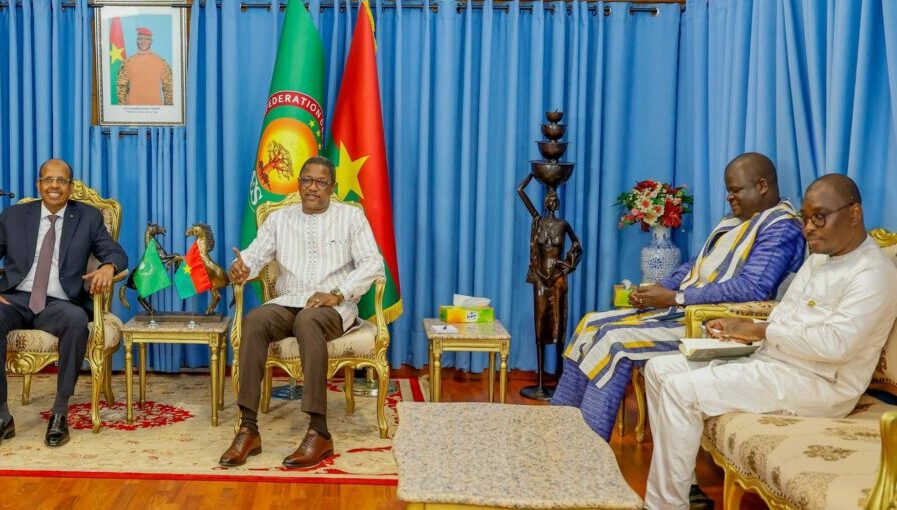
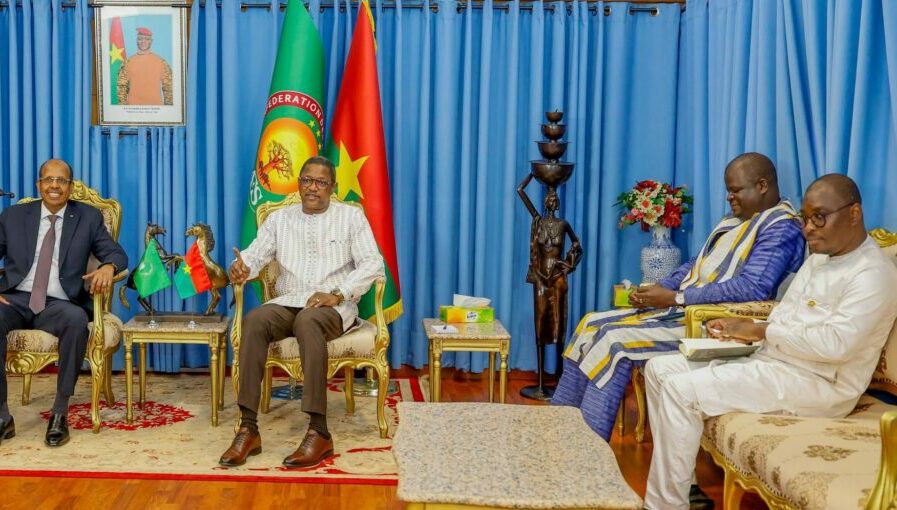
During a working meeting in Ouagadougou on Wednesday, July 15, Burkina Faso’s Foreign Minister Karamoko Jean Marie Traoré received Mahamoud Ali Youssouf, Chairperson of the African Union (AU) Commission, who is currently touring the three member states of the Alliance of Sahel States (AES).
The discussions centered on strengthening bilateral cooperation between the AU and Burkina Faso, as well as the broader relationship between the continental body and the AES alliance. According to a statement from the Burkinabè Ministry of Foreign Affairs, key areas of focus included the country’s political and security landscape, regional dynamics with neighboring countries, ongoing dialogue between the Economic Community of West African States (ECOWAS) and the AES, and critical reforms needed within the AU itself.
Building stronger partnerships in the face of Sahel challenges
Highlighting the shared challenges facing the Sahel region, Mahamoud Ali Youssouf outlined the AU’s three-pillar strategy focused on governance, security, and development. He emphasized the organization’s commitment to deepening its collaboration with Burkina Faso by activating specialized AU agencies in the country and launching initiatives that directly improve the daily lives of its citizens.
AES formation driven by continental solidarity gaps
Karamoko Jean Marie Traoré provided context on the creation of the AES, describing it as a response to the lack of meaningful solidarity from the continent in addressing security crises. To restore trust and cooperation, he called on the AU to implement bold, forward-looking reforms that prevent further disillusionment among member states forced to take independent action to protect their populations and sovereignty.
Modernizing the African Union: financial autonomy and strategic communication
The Burkinabè diplomat underscored the need for a modernized AU, stressing two critical priorities: achieving financial independence to reduce reliance on external funding that often constrains strategic decision-making, and enhancing communication efforts to showcase member states’ progress and counter external misinformation.
He also advocated for a more inclusive and accessible diplomacy within the AU, ensuring that all member states, regardless of size, have a meaningful voice in shaping the continent’s future.