On June 26, 2026, the authorities in Ouagadougou declared a definitive end to diplomatic ties with France, a move justified by accusations of “neocolonialism,” alleged interference, and purported support for networks aiming to destabilize the nation. This significant announcement not only marks a deepening rift between the two states but also reignites a fundamental discussion: what constitutes genuine national sovereignty?
Severing connections with a former colonial power is a profoundly symbolic political act, an inherent right that any independent state is free to exercise. However, the crucial question remains whether such a rupture truly paves the way for authentic autonomy or simply ushers in a new form of external dependency.
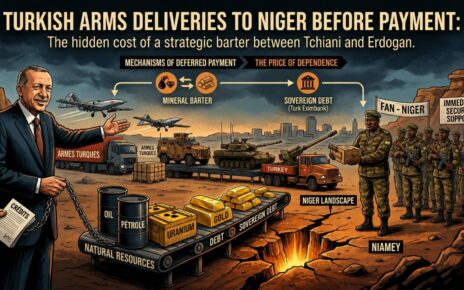
Since 2023, Burkina Faso has progressively strengthened its relationships with a diverse group of nations, including Russia, China, Turkey, and Iran. Military collaborations with Moscow have seen a notable increase, while economically, the government actively seeks fresh investors and new markets. This strategic reorientation is frequently framed as a significant “pivot toward a multipolar global order.”
Yet, the emergence of a multipolar world does not inherently guarantee a nation’s independence. True sovereignty extends beyond merely exchanging international partners. It fundamentally demands that all strategic decisions be made exclusively in the national interest, free from any political, military, economic, or ideological reliance on any foreign power, regardless of its origin.
Another aspect drawing considerable attention from observers is the potential ripple effect of Burkina Faso’s actions. Following Ouagadougou’s successive decisions, many are speculating whether Mali and Niger, the other two member states of the Alliance of Sahel States (AES), will follow a similar trajectory in the coming weeks or months. For several years, these three nations have demonstrated an increasingly strong convergence in their political, diplomatic, and military stances, particularly in their growing alignment with Russia.
Should the other two AES members adopt comparable measures, it would solidify the perception of a unified regional strategy. Nevertheless, this scenario would also raise a pertinent question: are these decisions the outcome of entirely independent choices made by each state, or do they reflect a broadly coordinated geopolitical direction centered around a single strategic partner? For some analysts, the prospect of three nations successively making identical decisions could suggest adherence to a shared geopolitical roadmap. This perception fuels a broader debate: does sovereignty truly mean shedding one influence, or simply replacing one center of influence with another?
In essence, breaking ties with Paris only to become heavily reliant on Moscow, Beijing, or any other partner does not automatically equate to achieving full sovereignty. Such a move might merely represent a reallocation of influence. International history consistently demonstrates that major global powers, without exception, primarily pursue their own geopolitical, economic, and strategic interests.
Therefore, the critical challenge for Burkina Faso will be to demonstrate that this rupture extends beyond a mere shift in alliances. It must be accompanied by a tangible capacity to finance its own development, secure its territory, process its natural resources domestically, fortify its institutions, and conduct an truly independent foreign policy.
Sovereignty is not solely gauged by the number of embassies closed or the rhetoric of separation. It is primarily measured by a state’s ability to freely determine its own future, to diversify its partnerships without succumbing to a new dominant influence, and to consistently prioritize the interests of its population over those of its allies.
The core question thus remains unresolved: if a nation severs ties with one power only to forge an intimate relationship with another, does this signify a break from dependence, or merely a change in the nature of that dependence? History teaches that a truly sovereign nation does not trade one tutelage for another; instead, it actively constructs its own freedom of decision, irrespective of its international partners.