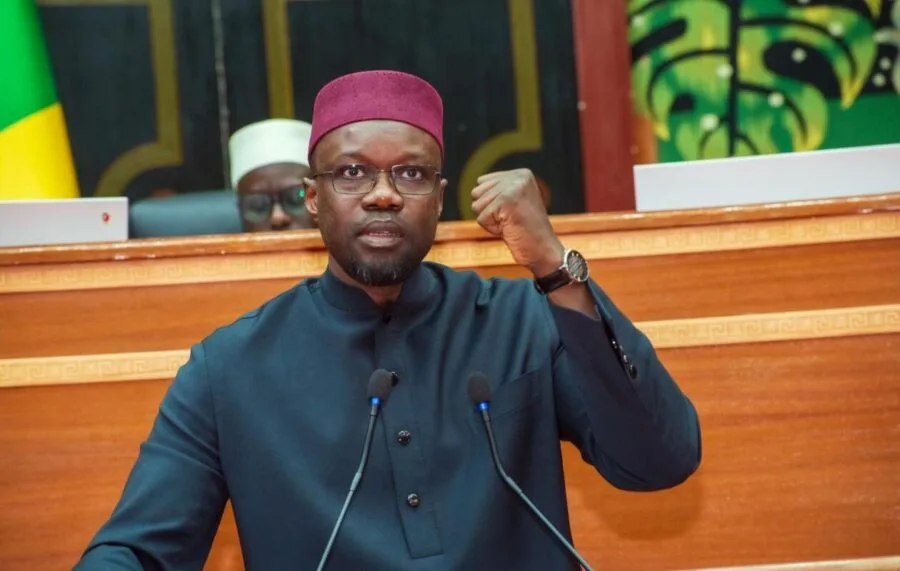
Senegal’s Prime Minister to address pressing national issues before parliament
The Prime Minister of Senegal, Ousmane Sonko, is set to appear before the National Assembly this Friday, May 22, 2026, for the highly anticipated session of Questions to the Government. The event, confirmed by Assembly President El Malick Ndiaye, will see Sonko and his cabinet members fielding questions from lawmakers on critical national matters.
While the session is a standard parliamentary exercise designed to scrutinize government policies and public concerns, this year’s gathering carries heightened political significance. Beyond routine economic and social queries—such as rising living costs, youth employment, infrastructure development, agriculture, and budgetary priorities—several contentious political debates loom large over the proceedings.
Political tensions and electoral reforms take center stage
The most pressing issue expected to dominate discussions is the controversial reform of the Electoral Code. Opposition factions have sharply criticized the proposed changes, alleging they were crafted to favor the ruling party, Pastef. Critics have gone so far as to describe the reforms as a “custom-tailored law” designed to consolidate power for Pastef and its leader, Ousmane Sonko. The Prime Minister may be pressed to clarify the government’s stance on these allegations and address concerns about democratic fairness.
In parallel, the government’s push for institutional reforms—presented as essential for modernizing governance and strengthening democratic mechanisms—will also be under the spotlight. Opposition lawmakers are demanding greater transparency and warning against reforms that could be perceived as skewed or exclusionary. Sonko’s responses will be closely scrutinized as he navigates these contentious waters.
Economic challenges and social expectations weigh heavily
The session will also serve as a platform for Ousmane Sonko to address urgent socioeconomic concerns. With inflationary pressures squeezing household budgets, unemployment—particularly among youth—remaining a persistent challenge, and public infrastructure projects lagging, the Prime Minister will need to articulate concrete solutions. The government’s ability to deliver on its promises, nearly two years into its mandate, will be a key focus for both opposition and ruling party legislators.
Regional and international dynamics, including the ongoing crisis in neighboring Mali and fluctuating global economic conditions, will further complicate the discussions. Lawmakers are expected to seek clarity on how the government plans to navigate these external pressures while maintaining stability and progress at home.
Clarifying leadership dynamics and future elections
Another layer of complexity stems from recent public remarks by President Bassirou Diomaye Faye, who emphasized the need for Pastef officials to prioritize governance and fulfill their commitments to the people. These statements have sparked varied interpretations in political circles, with some viewing them as a subtle reminder of executive authority and others as an attempt to steer the party’s direction. Sonko’s appearance presents an opportunity to dispel speculation about internal party tensions, including persistent rumors about his potential resignation as Prime Minister.
With local elections looming and the 2029 presidential race on the horizon, this parliamentary session could serve as a defining moment for the government’s trajectory. The Prime Minister’s performance will not only shape perceptions of his leadership but also influence the political landscape ahead of these pivotal events.
As Ousmane Sonko prepares to step into the Assembly chamber, the stakes are clear: this is more than a procedural exercise. It is a chance to reinforce public trust, counter opposition narratives, and demonstrate the government’s commitment to addressing Senegal’s most pressing challenges—both at home and abroad.