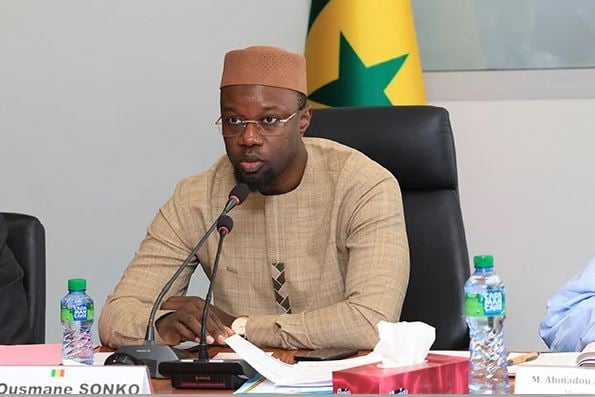
Senegal’s PM accelerates major reforms in markets, agriculture and digitalization
In a decisive move to modernize Senegal’s economy, Prime Minister Ousmane Sonko unveiled a sweeping reform agenda during Wednesday’s Council of Ministers meeting. The initiatives target three critical sectors: public markets, agriculture, and digital transformation, backed by a 57.5 billion FCFA investment plan aimed at boosting efficiency and accountability in governance.
Modernizing public markets: a structural overhaul in progress
Ousmane Sonko opened the session by highlighting the urgent need to restructure Senegal’s aging market infrastructure. Many commercial facilities dating back to the 1970s are now obsolete, posing significant safety risks. The Prime Minister pointed to alarming statistics: between 2013 and 2024, 53 markets were destroyed by fires, exposing deep systemic vulnerabilities.
The government’s Modernization and Market Management Program (PROMOGEM) is central to this transformation. With a strategic plan spanning 2025 to 2029, the program aims to renovate 528 existing markets and construct 67 new, state-of-the-art facilities nationwide. Sonko emphasized the need to reinforce PROMOGEM’s operational autonomy, calling for stronger administrative and financial independence. The four-year public investment plan allocates 57.5 billion FCFA to fund these critical upgrades.
Ministries have been tasked with establishing a network of modern markets managed collaboratively by local governments and private stakeholders. The goal is to create a more efficient, transparent, and resilient trading ecosystem across Senegal.
Preparing for the 2026-2027 agricultural season: transparency and digital tools at the core
Turning to agriculture, the Prime Minister acknowledged progress in certified seed and fertilizer production, particularly through the Institut Sénégalais de Recherches Agricoles (ISRA) and Cooperatives d’Intérêt Collectif (ICS). However, he stressed persistent challenges, including incomplete seed autonomy, inefficiencies in targeting agricultural input beneficiaries, limited access to farm credit, and insufficient storage capacity.
Sonko called for accelerated digitalization of the agricultural sector, citing successful pilot programs in Tivaouane and Nioro. He urged greater price transparency for inputs and a more equitable distribution system to ensure all regions benefit equally. Strengthening supply chains and modernizing storage infrastructure were also emphasized as priorities for the upcoming farming season.
Flood prevention: urgent measures ahead of the rainy season
With the rainy season approaching, the Prime Minister prioritized flood prevention and emergency preparedness. He mandated inter-ministerial coordination to address critical infrastructure gaps, including the cleaning of drainage systems and reinforcement of retention basins. Local disaster management plans must be updated, early warning systems strengthened, and a nationwide simulation exercise completed by June 15, 2026.
Sonko stressed the importance of proactive measures to protect lives, livelihoods, and public infrastructure from flooding, calling for a collective and coordinated response.
Senegal Connect Park: clearing path for digital sovereignty
The Senegal Connect Park, a flagship project for digital sovereignty and innovation, was another key focus. Designed to propel the country’s digital economy, the park has reached 95% physical completion despite facing financial and contractual hurdles. Sonko directed relevant agencies to finalize realistic timelines and accelerate negotiations with the Banque Africaine de Développement (BAD) and Banque Ouest-Africaine de Développement (BOAD). He also emphasized resolving concession terms to ensure timely project delivery.