Ousmane Sonko’s shifting political communication strategy
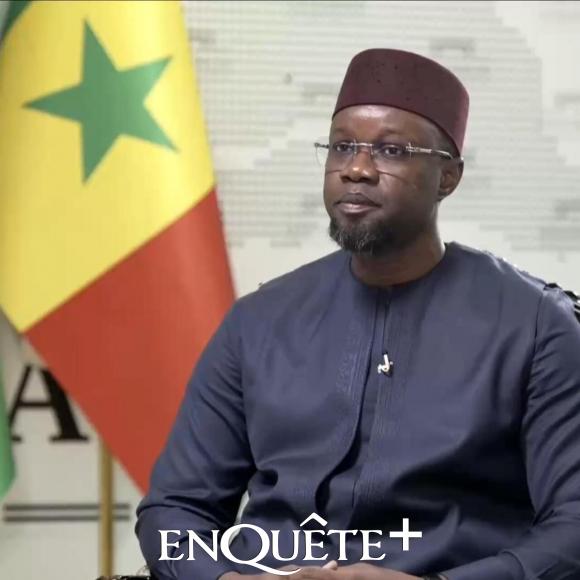
Since departing from his Prime Ministerial role, Ousmane Sonko has undergone a noticeable transformation in his public discourse. Where he once commanded a fiery, confrontational tone, the Pastef leader now adopts a more measured, nuanced approach—one that emphasizes reconciliation over confrontation. This shift in rhetoric has sparked debates about whether Sonko is genuinely evolving as a statesman or merely recalibrating his strategy ahead of future political milestones.
The evolution of a political figure
At a recent party congress in Diamniadio, Sonko addressed Pastef’s most ardent supporters, urging them to temper their rhetoric in public spaces. “Pastef is now a mature party,” he declared, emphasizing the need for discipline and restraint. “Our words carry weight—remember that religious leaders, families, and citizens alike are listening. Insults and provocations only weaken our cause.” His appeal for moderation signals a deliberate departure from the combative posture that once defined his political identity.
Observers note that Sonko’s recent interviews, including those with international media outlets, reflect this newfound restraint. Gone are the sweeping declarations and uncompromising stances; in their place, a more pragmatic and flexible approach to governance has emerged. One analyst remarked, “Sonko is no longer positioning himself as a revolutionary firebrand but as a pragmatic leader, leveraging his new role as National Assembly President to redefine his political trajectory.”
Contradictions and the art of political nuance
Yet this transformation is not without its ambiguities. Sonko’s shifting positions on critical issues—particularly the country’s debt restructuring—reveal a leader navigating between past rhetoric and present realities. Once a vocal advocate for debt cancellation, he now speaks of “examining the situation with lucidity,” acknowledging that “a wild restructuring is not what we seek.” His responses during interviews have been notably cautious, at times contradicting his earlier stances while attempting to justify his evolving views.
When pressed on the concept of “odious debt,” Sonko initially downplayed his past statements, attributing them to his role as party leader rather than Prime Minister. “That was an opinion shared in passing,” he claimed, before later conceding that “part of the debt is indeed odious.” His attempt to reconcile these positions only underscored the complexity of his political repositioning.
Similarly, his comments on homosexuality have shifted from outright condemnation to a more legally grounded justification. Sonko now cites historical legal precedents, arguing that arrests predated recent legislative changes and were motivated by public health concerns—specifically, the transmission of HIV. This reframing, though controversial, aligns with a broader effort to present himself as a leader who weighs facts over rhetoric.
From confrontation to conciliation
Sonko’s recent interactions with President Bassirou Diomaye Faye further illustrate this transition. Gone are the accusations of betrayal; instead, he frames their differences as mere political divergences. “There is no personal feud,” he asserts. “We are simply operating from different perspectives.” This conciliatory tone extends to his party’s messaging, where he now champions Pastef as a “party of ideas, science, and intellect”—a deliberate shift from the confrontational activism of the past.
At the heart of this evolution is Sonko’s desire to project an image of stability and maturity. He warns his supporters against falling into traps set by opponents who seek to portray Pastef as a party of conflict. “Do not repeat the mistakes of 2021–2024,” he cautions. “Our strength lies in discipline, not provocation.”
As Senegal navigates a period of political and economic uncertainty, Sonko’s recalibrated communication strategy remains a subject of intense scrutiny. Is this a genuine evolution—or merely a calculated move to secure his political future? The answers may well shape the trajectory of Senegalese politics in the years to come.