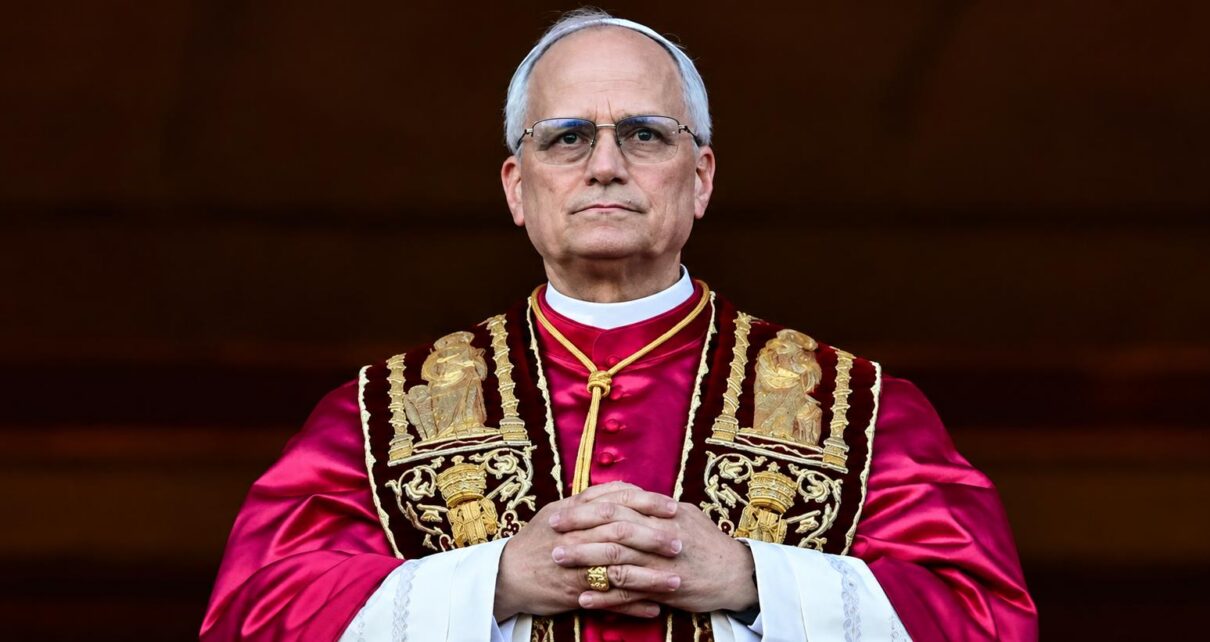
Starting Friday 25 September 2026, France will host one of the most closely watched religious and diplomatic events of the decade: the arrival of Pope Leo XIV. It is his first official journey to the country since his election, and the four-day programme running through Paris, Saint-Denis, the Marian sanctuary of Lourdes and the city of Metz is built to leave a mark well beyond the Church itself. Parishes, local economies and the ordinary rhythm of public life in every host city will feel the effects.
That scale is why the trip is being handled as a national logistical operation as much as a spiritual one. Bells, crowds, transport, security and hospitality are all pulled into the same orbit, and each stage of the itinerary carries its own practical weight.
Friday 25 September: a capital mobilised from Orly to the Stade de France
The papal plane lands at Paris-Orly at 10:00. The instant he steps out, church bells across France ring for seven uninterrupted minutes, a signal that travels far past the airport and tells millions of people that the visit has begun.
Élysée, diplomatic corps and UNESCO
Political and institutional consequences follow straight away. The pope meets the French president at the Élysée Palace, then addresses the diplomatic corps, before a much-anticipated speech at UNESCO headquarters at 15:00, a stop that puts education, culture and heritage at the centre of his message.
A papamobile route through the Latin Quarter
From Notre-Dame des Champs church to Place Saint-Michel, the pope travels in an open papamobile through the capital’s busiest student districts. For shopkeepers, cafés and residents along the route, the convoy means both an extraordinary day and a heavily disrupted one. Vespers at Notre-Dame cathedral close the Parisian sequence.
75,000 Young people and the Holy Tunic
In the evening, the Stade de France in Saint-Denis hosts a vigil with more than 75,000 young people, and the Holy Tunic of Argenteuil is displayed for the occasion. The gathering turns Seine-Saint-Denis into a focal point for a single night, with knock-on effects on transport, hotels and local traders.
Saturday 26 September: the vulnerable, the synod and an outdoor mass in the heart of Paris
The second day shifts towards those usually kept on the margins. At the Maison Bakhita, in the 18th arrondissement, the pope meets people in vulnerable situations. He then exchanges with the synodal assembly at the Institut catholique de Paris, before celebrating a solemn open-air mass on the vast axis between Place de la Concorde and the Champs-Élysées, a setting that turns one of the world’s most visited stretches of urban space into an open church.
Sunday 27 September: Lourdes, where numbers redefine the local equation
On Saturday evening, a special Air France flight carries the pope to Tarbes-Lourdes. The whole of Sunday is given to the Marian sanctuary: prayer at the Grotto of Massabielle, Sunday mass on the Prairie before more than 150,000 faithful, encounters with the sick, and the torchlight procession. For a town the size of Lourdes, a crowd of that magnitude is an event with immediate economic and logistical consequences, with accommodation, food, care services, transport and security all under intense pressure.
Monday 28 September: Metz and the European horizon
The journey ends in Lorraine. In Metz, Leo XIV takes part in an ecumenical meeting built around the roots of Europe, peace and unity, before presiding over a final mass at Saint-Étienne cathedral and returning to Rome in the early evening.
What the four days will leave behind
Beyond the images, the visit sets several things in motion at once: renewed public visibility for the Church, a short but intense boost for the host cities’ economies, and a diplomatic signal about Europe’s role and its spiritual heritage. How much of that survives once the bells stop ringing is the question the coming months will answer.